 People like collecting things … from simple inexpensive things like postcards to more precious items like Faberge eggs or rare coins. There seems to be an innate part of us that likes to find, keep, and collect things we like. Small children pick up pretty stones, leaves, or pinecones almost instinctively to take home and put on a shelf. On trips to the beach kids love to collect shells, which I still like to find and bring home even now. As children grow older they often begin to collect other small items and toys they can purchase inexpensively like stickers, stamps, coins, bracelets, small cars, or stuffed animals.
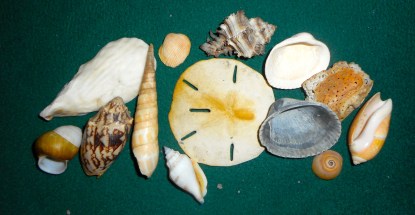 Amateur versus serious collectors may collect items of all different kinds simply because the subjects interest them. They may not care about the monetary value of the things they collect at all.
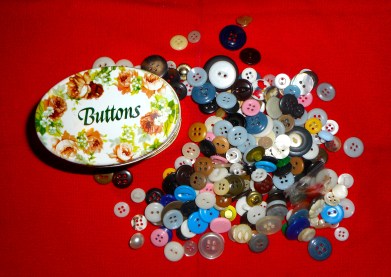
 I’m not sure of all the reasons why people collect things but I seem to remember nearly everyone in my family collecting something at one time or another. My mother collected pitchers; she liked pretty colored glassware – and she collected Fiestaware, which I inherited. She also collected buttons because she liked to sew. I remember loving to get out the metal tin boxes filled with the buttons she’d collected to play with them. My father collected tools because he liked to fix and
  make things. I remember he collected National Geographic Magazines, too. As an engineer, they appealed to him and he enjoyed them. Dad also had a few carved birds. He liked to whittle. I inherited two of his birds and I later picked up a few beautifully carved and painted birds over time that I love, too.
My husband J.L’s mother had many collections. She collected baskets, roosters, dolls, Depression glassware, and quilts, among many other things. I inherited one of her butterfly quilts, which I really cherish. As a boy J.L. loved baseball and collected baseball cards. I know he wishes he still had some of those cards now.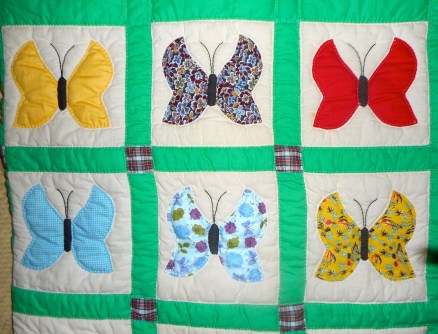
Because I played outdoors so much, I’m sure I collected many outdoor treasures in my romps around the countryside. I remember making a “leaves” book with all the different leaves I collected one summer. I collected Betsy McCall paperdolls, too, from the back of Mother’s McCall’s magazines every month. Neither of these collections cost me anything but they were fun. I also collected small character dolls I received for birthdays and Christmas over the years…. Madame Alexander dolls, Ginny dolls, Betsy McCall dolls, a Miss Revlon and a Bob doll, and some Skipper dolls.  I never really got into Barbies as my daughter Kate did later. But I created a fine fantasy family with my big collection of dolls. Dad built me a dollhouse for them and I spent many happy hours decorating and making furniture for that house and inventing play stories about that family.
I soon started other collections, as did most of my school friends. I collected Nancy Drew books and, along with my friend Paula, started a collection of glass and porcelain horses. Both of us were very “horse crazy” in those schoolgirl years. Like most teens, I collected records and Teen magazines and charms for my charm bracelets. The Nancy Drew books, records, and magazines are long gone but I still have many of the horses and my old charm bracelets.
One collection I inherited was of small teacups and saucers, which were my mother’s. She’d received them from the minister and his wife she lived with during her college years at Elon College. I kept these to honor the memory of that pastor and his wife who put my mother through school and let her live with them—very special in her time, when from a family of twelve children.
As an author and avid reader, I admittedly have always collected and still collect books. Many I treasure and re-read again and again. I like the idea of collecting books because you can enjoy them over and over, and I learn from them every time I re-read  them … unlike so many items I collected but have now let go. I have many old books in my collection, passed down from others, many reference and academic books, novels by favorite authors, spiritual and devotional books. I’ve also started collecting a few glass paperweights. I admit I’m drawn to them when we’re traveling or when I see special ones at a crafts fair.
J.L. and my daughter Kate are not very avid collectors but my son Max likes to collect things. He has taken many of the old collections of his youth home with him to New Orleans from our house. Some he’s sold on eBay; some he’s kept. He likes comic books and always has. He also collects vinyl records and displays old toys, action figures, and Matchbox cars in his office.
There are a lot of interesting studies about why people collect and why people collect the things they do. Although collecting can have a dark side and can become obsessive and unhealthy, for most people collecting is normal and fun—like an adventurous hobby. One of my friends, Jayne, collected small bells all her life; she enjoyed finding new ones when she traveled, and she could tell special stories about each one she had.  A lot of people say they don’t collect anything and yet their closet is filled with forty pairs of shoes, their hobby room overflows with fabrics or art supplies, or their garage is piled high with sports equipment. So, probably all of us collect one thing or another whether we realize it or not.
I am not the buyer and collector I once was in my youth. Today I look around and realize I need to get rid of excess things in my home rather than adding more. Although I recognize the personal value of the small things I’ve collected and kept over the years, they will probably have little sentimental value to my children someday. Now I am more of a collector of experiences, adventures, and stories. I tend to collect “moments” now more than things. … However, I think collections tell a lot about the individuals who have them. I also think homes with collections are always more interesting than homes without them. So, should people collect? My answer is yes, and I love this quote about collecting to close: “Collect things you love, that are authentic to you, and your house becomes your story.”
 In my June and July blog posts, I talked about my husband J.L.’s and my visits to the wonderful state parks in East and Middle Tennessee, and this month I walk to talk about our travels to the West Tennessee parks. We explored all the 56 state parks in Tennessee over a two-year period to write our state parks guidebook Discovering Tennessee State Parks. If you’ve missed buying it, you can pick a copy up or order it at your favorite bookstore or online at:
  With these parks, further from our East Tennessee home, we planned trips of several days at a time. On these travels we stayed mainly at park lodges as we could so we could take late evening walks to enjoy the sights and pleasures around the park grounds even after dinner. Park lodges and cabins offer discounts of several kinds, like senior and military discounts, and anyone can get on an email list from the state park office to receive discounts being offered. We used these at almost every visit to the park inns and lodges.
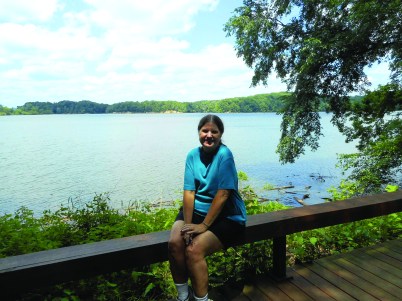
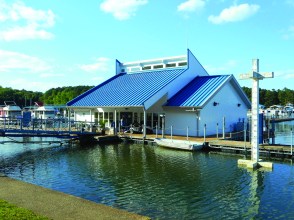 Landing, Big Cypress Tree State Park, and Natchez Trace. Paris Landing proved to be one of our favorites … a boating, fishing, waterskiing, and swimming paradise on a gorgeous expanse of the Kentucky Lake near Tennessee’s northern border. The marinas and view of the lake here were stunning, and we enjoyed staying overnight at the lodge.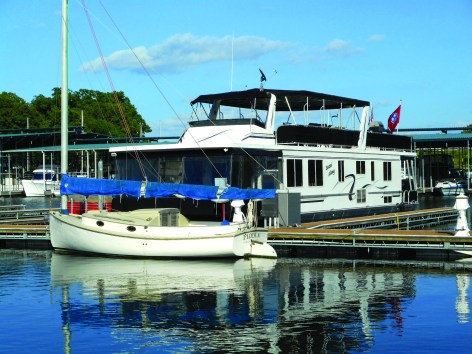
 We talked to many visitors who come back to this park year after year to vacation. I enjoyed learning, too, about the interesting history of Natchez Trace which helped to explain all the kudzu we saw—often encroaching over the hiking trails we wanted to try and nearly covering many trees.
 The kudzu invasion was nothing, though, compared to the insect invasion at Pinson Mounds State Park. It is a historic, archeological site in Madison County below Jackson, but the park spreads across a low lying, rather swampy area, a haven for wetlands insects. To see this park, you have to walk on paths and raised bridges through the grounds and cypress swamp areas. Shortly into our walk, the mosquitoes and swarms of large black dragonflies found and attacked us. Youch! We spent a lot of time swatting mosquitoes, running from the dragonflies, and regretting we had not taken a bath in insect spray before setting out! So be sure to douse yourself in repellent when you visit! This park is interesting historically, and you will see Indian mounds and barrows in the 400 acres of the archeological complex. Also, the park visitor center and museum building [below], was built to look like a giant mound and is filled with great artifacts and exhibits.
 We loved exploring Chickasaw State Park, Big Hill Pond, and Pickwick Landing near the Mississippi border.
 In contrast to all the other parks in West Tennessee, Big Hill Pond and Big Cypress Tree Park were both very small parks with few amenities, and the Big Hill Pond showed signs of neglect with most of the trails overgrown and picnic areas poorly maintained. The draw of Big Hill is for those wishing to trek for miles into the park’s rugged, snaky backcountry trails, that wind their way through Dismal and Cypress Swamps. Visitors shouldn’t attempt either if not properly dressed for hiking and a backcountry adventure.
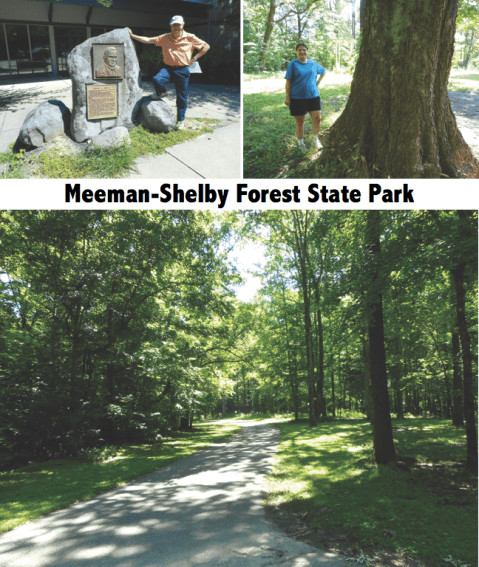 If you are visiting historic downtown spots in Memphis like Beal Street and Elvis’s home at Graceland, T.O. Fuller has a beautiful campground to consider and the park is as clean and neat as a pin. Up river Meeman-Shelby spreads over 12,539 acres, an immense park, although not all of it is readily accessible to the public.
  We enjoyed hiking several of the trails there, finding immense,old growth trees with vast diameters, driving down to the river, learning the history of the area, and exploring around pretty Poplar Tree Lake.
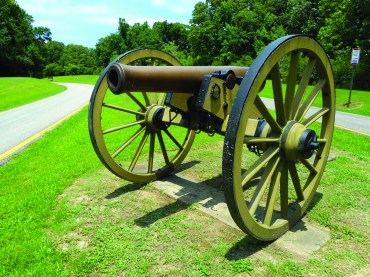 But not far from the prison you will find the little park on a high bluff above the river, and its museum and grounds, with great cannons and rifle pits, are great spots to visit, especially for history buffs.
 Even more interesting was how many species of fish had been swept into the new lake, creating a fisherman’s paradise. The old cypress trees below the new lake’s surface didn’t die out like other trees and vegetation, either, so you will see them out in the lake—a fascinating sight. In many places around the park, as at the visitor center, you can walk out on long boardwalks to see the lake, its submerged trees, and birds, eagles, and wildlife more closely.
  This park is a fun place to visit … and proved a happy ending to our trip and tour exploring all the 56 parks.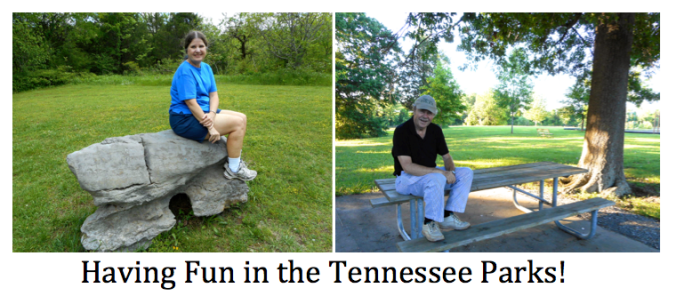
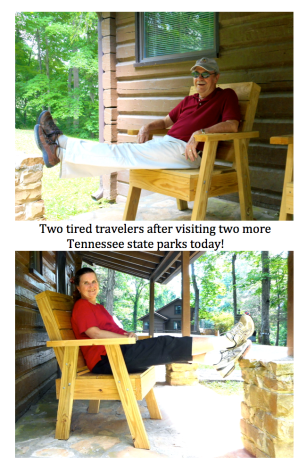 When J.L. and I began exploring the Middle Tennessee state parks, the only one of 26 parks in that area we’d ever visited was Fall Creek Falls State Park near Crossville. Even when we returned to that park in our journey across state, we found we’d only seen a section or two of this glorious park, missing many of its special attractions.
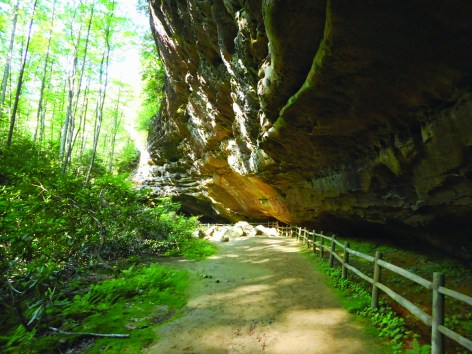 I remember spotting a sign for Rock House Trail as we started into the park. I talked J.L. into hiking down the trail—which looked nondescript at its beginning, hoping we might find the remains of an old rock settlers home. What we found instead were rock house bluffs towering over our heads and a narrow passageway twining along underneath them. This proved to be only the first of many similar incredible trails like this throughout the park, which often began like woodsy pathways, but then led to rocky stairs, bridges, bluffs, and other fun “finds.” In addition, the CCC museum, lake, and picnic areas around the park were scenic—and we learned this was the first park in the southeast to be listed as a dark sky viewing location, making us wish we could stay to look for stars and constellations later that night.
 Cumberland Mountain State Park, near Crossville, we remember mainly for its scenic beauty. It’s tucked around serene, picturesque Byrd Lake, and J.L. and I loved the long, arched stone bridge with seven arches across the lake built by the CCC, as well as the winding lake trails, rustic cabins, and gorgeous golf course. Near the park entrance we loved exploring the Homesteads Tower and Museum, too, and learning about the early history of this area.
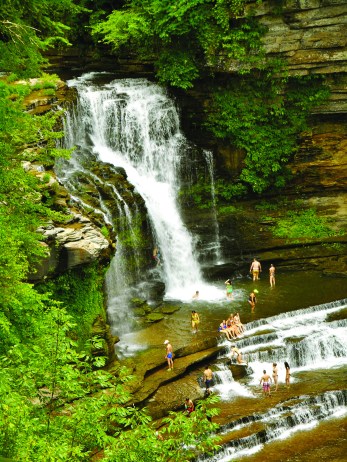 Moving across state we began to hit what we later termed “The Waterfall Parks”—a series of glorious parks with rushing cascades and tumbling falls. Among our favorites were Cummins Falls with its 75 ft curtain of water falling over a rocky bluff, Burgess Falls with its multiple waterfalls spilling over rocky ledges, all viewable from a riverside trail, and Rock Island with a glory of stunning falls scattered all around the park.
 Surprisingly, one state park sat right in the middle of downtown Nashville, the Tennessee Bicentennial Capital Mall State Park. Even with the city skyline all around it, the park still provided an oasis of green and offered an interesting glimpse into Tennessee history.

 Nearby, we had fun visiting Dunbar Cave, Port Royal, and Johnsonville State Historic Park on the Tennessee River. This park had a great museum and many Confederate structures, old cannons, battlefields, and monuments.
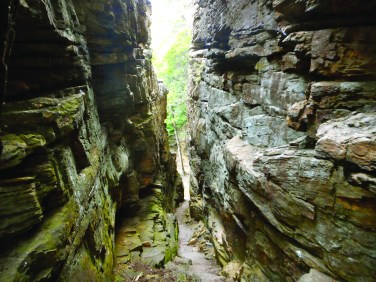 Our favorite spot in this park was the Stone Door area in the Savage Gulf section of the park near Beersheba Springs south of McMinnville. From the Stone Door Ranger Station off Hwy 56, we walked to Laurel Falls and then took the two-mile round trip hike to the Laurel Gulf Overlook and the Stone Door, where rocky bluffs create a deep slit, or door, between them. The views across the gorge and mountains here made a great finale to our day.
 In my August blog next month I’ll talk about the parks in West Tennessee—and spotlight more memory photos, too. I hope you’ve been enjoying this summer journey around Tennessee’s parks.
 For the summer, I’m going to tempt you to discover the wonderful state parks in your home state by talking about our adventures visiting all fifty-six of Tennessee’s state parks. For June, I’ll talk about the East Tennessee parks, in July the Middle Tennessee parks, and in August the West Tennessee state parks. … My husband J.L. and I had such a fabulous time for two years visiting all our state’s parks.

 J.L. researched the best driving route to each park and studied our maps, the state park website, and other information, as well. For every large state park, we planned a four-page write up and for smaller parks we used a two-page spread. Our goal was to tell readers about the most interesting things we found within each park, along with providing a good general description of what any visitor would find.
 The lake views throughout the park were gorgeous and we ate our first picnic sitting at a picnic table on the hillside above the marina, watching the boats come in and out. We generally took picnics to the parks, so the only cost to us was a little gas and time. The park had ten great hiking trails, a stunning golf course, a riding stable, cabins, campgrounds, a beautiful Olympic swimming pool, and an award-winning children’s park with wonderful play structures including a giant tree house—a favorite of all the children. If there hadn’t been so many children playing in the tree house the day we visited, I’d have climbed up in it myself…. And I loved the interactive walkway around the park with statues from The Chronicles of Narnia.
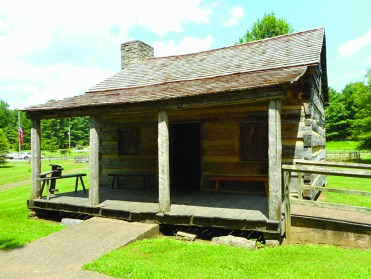 J.L. and I learned a lot of history at this park as well as having a good time … and felt guilty for all the times we’d driven right past the entrance to this park while working sales and deliveries in the area. Traveling to David Crockett Birthplace park another day introduced us to more history of Davy Crockett’s life. This is a replica of Crockett’s family’s cabin above. Later we would visit another park dedicated to Crockett in middle Tennessee and stop by the last home where Davy Crockett lived in west Tennesse before he was killed at the Alamo.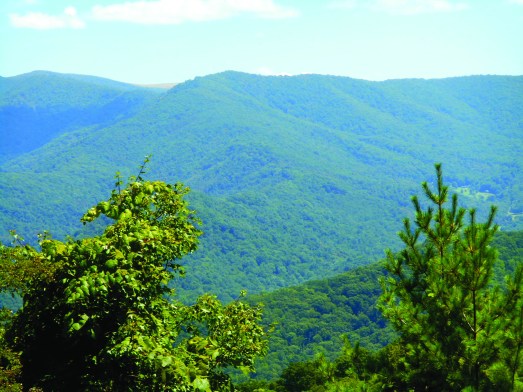
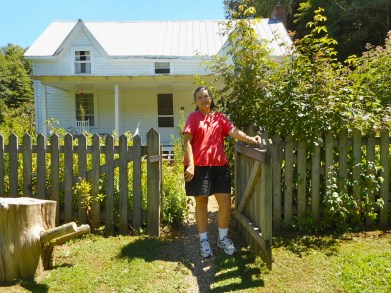 Roan Mountain land for only $25 an acre. He mined iron ore, farmed, and built a lavish resort on top of the mountain called The Cloudland Hotel which we enjoyed seeing old pictures of. It was incredible to imagine all this vast property once belonged to one man.
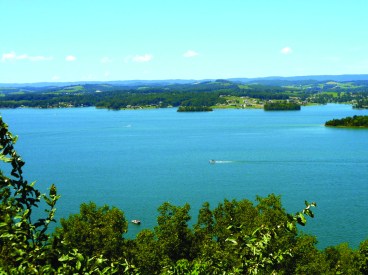 Panther Creek proved to be a big surprise for us. We’d expected it to be low along the Cherokee Lake with lots of lake access, but instead it sprawled across high hills and bluffs above the river. Our favorite trail there was The Seven Sinkholes Trail wandering along deep natural sinkholes in the earth, the first time we’d seen geologic structures like these. We ran into more sinkholes at later parks, like at Pickett State Park near Jamestown, in Cedars of Lebanon Park, and in the South Cumberland State Park.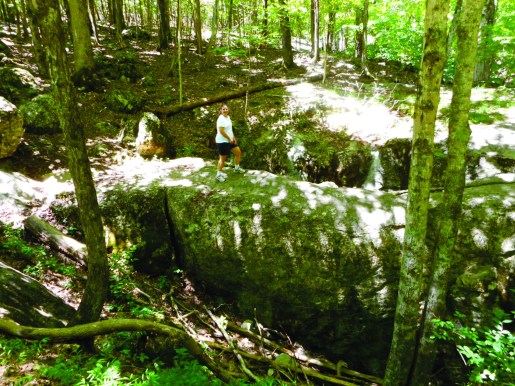
 We loved Fort Loudon for its huge fort and scenic beauty on a peninsula in the Tellico Lake and we found Red Clay fascinating, too. It sits on Cherokee sacred ground where the last Cherokee councils were held before the Trail of Tears began. Hiking up The Council of Trees Trail at Red Clay through the woods, J.L. and I turned a corner to suddenly see this huge limestone structure on a hill in the middle of nowhere. This tall castle-like structure, called The Overlook Tower, sits high on a ridge literally in the middle of the forest. No one knew how it came to be there, who built it, or why. Unexpected wonders like this were some of the factors that made exploring every park so much fun.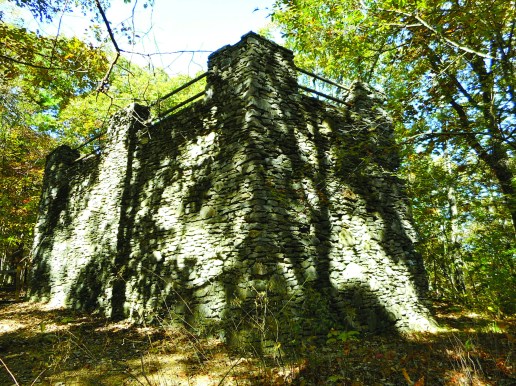
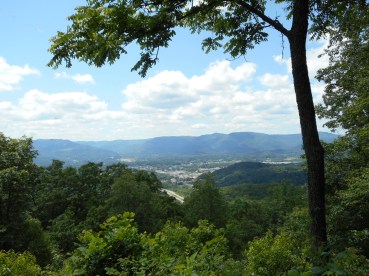 Somewhat like the more familiar Appalachian Trail, the trail will span over 330 miles through Tennessee with plans to some day link into a north-south trail tentatively called The Eastern Trail. When we finished our book over 95% of the land for the trail had been purchased and about 65% of the trail had been completed. We learned a lot about this projected trail, its history, and all the volunteer groups who had and still are working on it. We visited several sections of the completed trail to sample it, starting at the head of the trail at Cumberland Gap. There we hiked up past the Iron Furnace to the Tri-State Peak Pavilion where the borders of Tennessee, Kentucky, and Virginia meet—an interesting spot with fantastic views. We visited other spots along the trail in middle Tennessee near Cove Lake and near Crossville at 110-foot Ozone Falls.
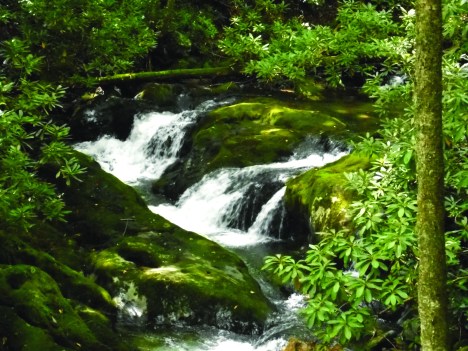 Like Roan Mountain park, the trails feel like those in the Smoky Mountains, climbing along rushing mountain streams with cascades, waterfalls, and wildflowers in the spring. The Rocky Fork Trail is an easy, broad, well-developed trail to follow along the stream passing several falls and leading to a historic site.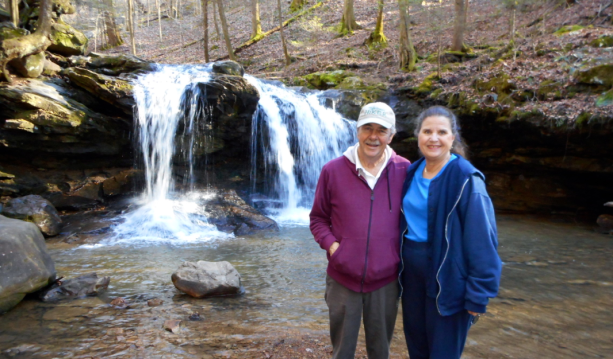
 I was born in Chattanooga, Tennessee. My mother, injured in a car accident, had been advised not to have a second child—so I was a risk. My father, a prudent man, bought cemetery lots as the doctor cautioned that one or both of us might die. I still have those lots in the Greenwood Cemetery in Brainerd—in case you need them—and obviously my mother and I cheated death and God had other plans for us.
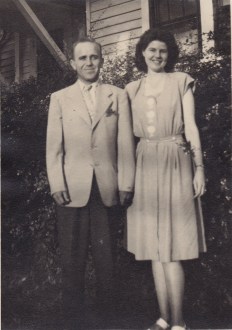 My mom, dad, my older brother David (eight years older than me), and I lived in Chattanooga for only a short time after I was born before my dad got transferred to the survey office in Knoxville. Our new home was in South Knoxville in Colonial Heights at the end of a dead end street called Chalmers Drive.
 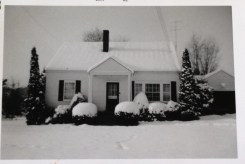 Few people had big homes then as now, but we had a fantastic yard with wonderful shade trees for climbing, a big vegetable garden, and an abundance of flowering shrubs and plants all over our yard.
 A small freight train ran by our property every day and we loved waving to the engineer and getting him to pull the train whistle for us as he passed. My young life was filled with outdoor fun—playing in the woods and fields nearby, taking hikes up Browns Mountain, coloring pictures and cutting out paper dolls on quilts under a shade tree, roller-skating and riding our bikes on the street and sidewalks, playing croquet or kick-the-can on warm summer evenings, giggling and telling stories at spend-the-night parties.
  My dad helped me build a big dollhouse in the converted playhouse that I peopled with character dolls—all with rich personalities and individual stories… obviously the “writer” in me at work at an early age. My friends say I always created great “pretend” stories and dramas for us to act out and came up with great play ideas. I remember those young years growing up as good and happy days.
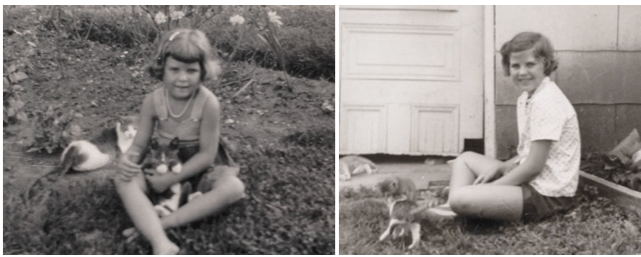 You can see a couple of girlhood photos here with some of our cats and kittens.
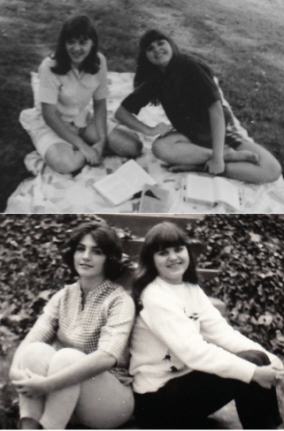 As I headed into high school, my father accepted a transfer to Arkansas, which did not prove a happy change for me. We moved to a more city environment and I missed the mountains and countryside of East Tennessee and my friends. I made some good friends and memories, of course, in those years in Arkansas but returned to Tennessee for college, eager to “come home.” I went to Maryville College for a year on an art scholarship but found the school, at that time in its history, heavy-laden with rules and restrictions, and I transferred to the University of Tennessee the next year, changing my major to education.
 In my heart, I wanted to write and illustrate, but my dad had closed the door to all the colleges I’d been accepted to for commercial art and illustration programs. In those years, a lot of decisions and choices were dictated by others—by parents, advisors, and authorities. It was a limiting time for women as well—in the midst of the age of domesticity—when most girls were pushed more toward gaining their “Mrs. Degrees,” marrying and staying home to raise kids, than pushed toward more ambitious career goals and dreams. Being overly ambitious then made me a bit of a black sheep. Still does sometimes.
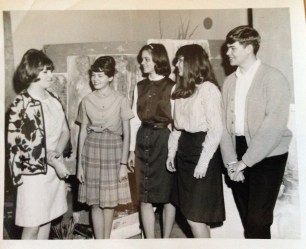 I remember adolescence as an emotional roller coaster season with a lot of pressures and disappointments. I feel blessed that I met J.L. in my college years with relationships bouncing up and down like yo-yos. I’m grateful he doggedly pursued me, loved me, believed in me, and married me. I am sure that living with an artist and dreamer [for all writers are essentially artists and dreamers] has not been easy.
 Both of us had a lot of growing up to do in those early married years, too—even after the children came. But with time and sharing our lives and dreams, we have become not only sweethearts but the best of friends.
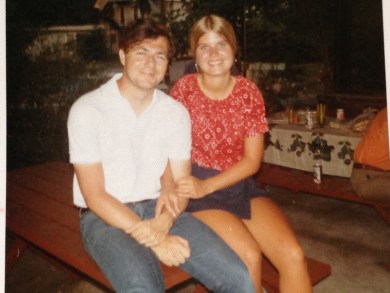 first house. My artistry goals had shifted to more practical educational goals and I was studying to work in higher education in career services when I got pregnant with Max. I remember with humor getting “the college job offer of my dreams” when I was six to seven months pregnant, as big as a tank and battling toxemia. It wasn’t a day and age when pregnant women were hired for power jobs—or any job. But I loved being a mother to Max and then about two-and-a-half years later to Kate, after we’d moved to our current home in West Knoxville.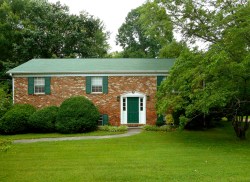
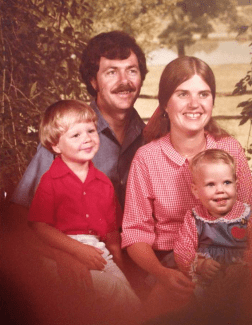 I found motherhood a wonderful, creative adventure, and J.L. and I sacrificed a lot for me to stay home as much as possible in those years, with me always carrying a wide variety of part-time jobs to help out economically.
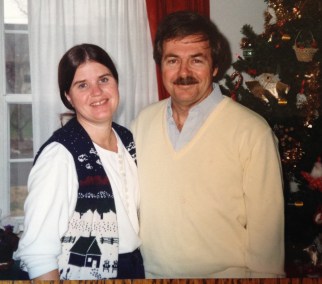 The term for that “change experience” is not as important as finding and having this needed experience, but we were indeed “reborn” at this time. We found that faith filled all the empty places in us and began to make of us something new and better, especially as we read the Word and grew in understanding. Knowing God and growing in God is still the richest and most rewarding part of our lives.
 On right you’ll see me in one of my typical professional suits with my dad, mother, and brother.
 Teaching and sales pushed me forward in developing leadership skills, speaking and marketing abilities, creative initiative, and good time management competence.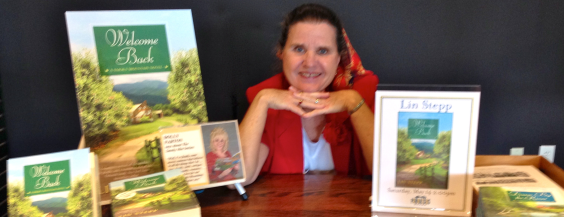


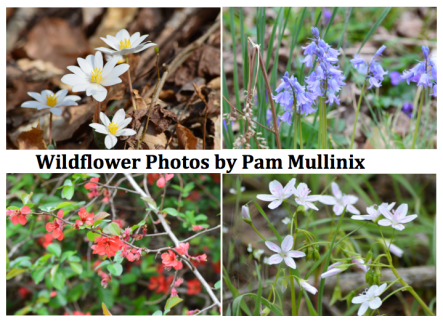 Other early wildflowers in the mountains include white rue anemone, bloodroot, and pink spring beauty as in Pam Mullinix’s photos. Pam’s other shots are of flowering quince and dwarf blue larkspur.
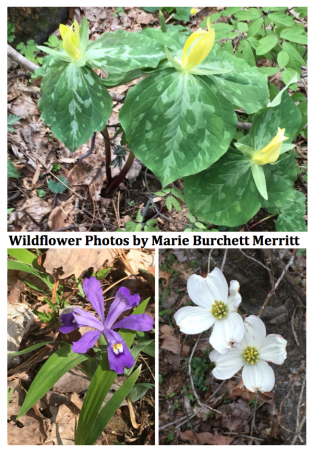 Marie Burchett Merritt’s photos on the right show dogwoods in bloom, yellow trillium, and wild dwarf iris—that I always love spotting on the trail.
 and in other park areas you will find purple ironweed and orange butterfly weed, also in Jim’s photos, which the bees and butterflies love. We were delighted to spot our first pink ladies slippers on a quiet side pathway off the Porters Creek Trail, too.
  Another treat in the spring further up the Porters Creek are the white fringed phacelia which spread across the ground like a delightful carpet along both sides of the trailside.
 But remember that anytime you explore the woods, parks, and fields near your own hometown in the warmer seasons that you will find wildflowers, too. This month, I hope you will head outdoors—and get out of your car and walk up a trail—to enjoy the beauty you will find at every turn.
 Lin Stepp