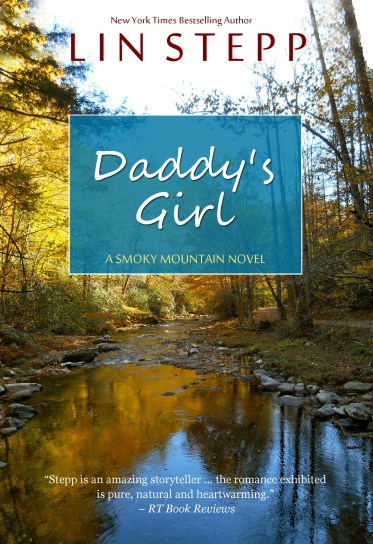
 J.L. and I first drove through Bryson City, North Carolina, on the southern side of the Great Smoky Mountains, while hiking trails out of the Deep Creek Campground and working on our hiking guidebook. Charmed by the glimpses of Bryson City we spotted driving through, we stopped to explore on our return and fell in love with this quaint little North Carolina town. While many downtown areas are in decline today, due to suburban sprawl, Bryson City is still the hub of its community. Trees and baskets and tubs of flowers and seasonal decorations line the downtown streets, and every shop and building oozes charm. Downtown Bryson is still where people gather, shop, and stop by the local diner or drug store. The gold-domed court house welcomes visitors into town with an American flag stirring on a flagpole in the breeze and the Tuckaseegee River flows right through the town, a scenic sight, as does an old time railroad line offering excursion rides. We loved hearing the woo-woo of the train as it headed into town and enjoyed eating a banana split in the 50s-60s Soda Pops café.
After our visit I told J.L. “I’m going to have to set one of my Smoky Mountain books here” … So later, when a wonderful new story idea began to bubble and develop we headed to Bryson City again to see more of the town and the area, to learn its history and talk to townspeople. My readers said they loved this small town book … and I love remembering how many of my fans planned road trips to visit Bryson City after DADDY’S GIRL published.
In psychology courses I taught in college, especially Developmental Psychology and Educational Psychology, my students often talked at length about peer pressure stereotypes that developed in the school years, especially in high school, and stereotypes that often lingered too long as labels in people’s lives. We also talked about the increasing problems of bullying in our schools today, often linked to negative stereotypes. … So I decided in this book to explore some of these issues in my story line and what better way to do that than via a high school class reunion, bringing old school mates back together and reviving past peer identities all over again.
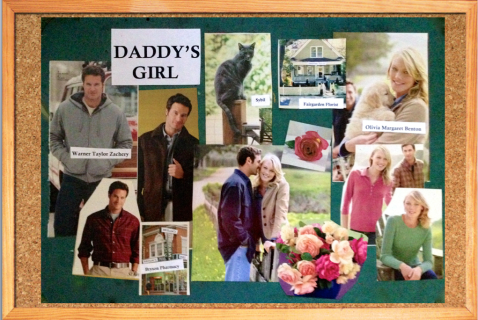 Both my main characters, Olivia Benton and Warner Zachery, grew up in Bryson City as neighbors on a quiet rural road outside of town. Behind Olivia’s home was a lavish formal garden created originally by Olivia’s great grandmother, a garden complete with winding trails, tinkling fountains, and lush flowers of all types and kinds. Here Olivia and Warner played as children—and later fell in love. But high school began to throw some curves into their relationship. Olivia, pretty and outgoing, soon became more and more popular with her peers, while Warner, a little odd and socially awkward, became one of the less popular kids, often ridiculed and soon nicknamed “Weird Warner.” Olivia and Warner’s school life and school friendships soon diverged, and although they remained friends at home, during school they ran with different crowds. In time, these differences created a wedge in their friendship and caused the breakup of their budding romance.
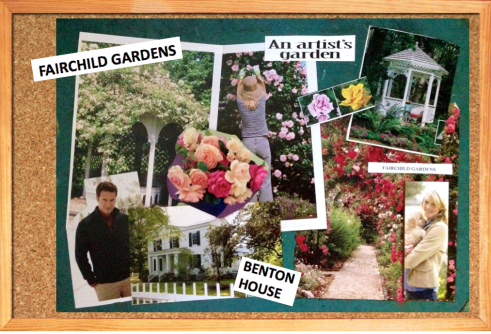 After high school, Warner left Bryson City to go far away to college. Olivia stayed. In time Warner found his way to his dreams, married, and then dropped into unexpected fame for his humorous children’s books about a social misfit boy he named Geeky Gilmore. …Olivia stayed in Bryson City, commuting to a nearby college, living at home with her widowed father, caring for him and the Fairchild Gardens. In time her work at a local florist led Olivia to open her own small floral shop in downtown Bryson City.

As the book begins, Olivia is working with her high school friends to plan their ten-year reunion. As she and three girlfriends share lunch in a downtown drugstore, Warner Zachery walks into the store and Olivia knows as soon as she sees him she still loves him, even after all these years. .. As for “Weird Warner,” he’s now become the famous and successful W. T. Zachery but still harbors old bitterness from his Bryson City past and he is quickly reminded of that past. In addition for Warner, two years ago, his wife was killed in a New York store robbery and he’s still working past that hard time, too. He’d hoped coming to Bryson to spend time with his family would prove restful but instead, Warner is soon thrown back into old problems and old feelings for Olivia Benton he thought he’d left behind .
Mixed into this ongoing drama of two old friends reuniting are the stories of several interesting side characters, each packed with small joys and surprises. The book also features beautiful hikes and travels around the Bryson City and Smoky Mountain area. Continuing problems occur, too, with the community’s concern over a vandal defacing public property, leaving angry messages and frightening people. Mysteries and dilemmas seem to unfold on every corner throughout the plot while Warner and Olivia try to navigate their feelings and unresolved issues amid it all.
I loved writing this book—showing how old stereotypes from school years often follow long into adulthood—and how limiting and hurtful they can be. My past academic teaching experience came into play with this story, helping to show how people grow and change and yet still carry the past along, too. I worked to spotlight as well the dangers and problems of bullying and I worked to reveal through several other characters’ stories, how damaging hidden pasts and secrets can be. 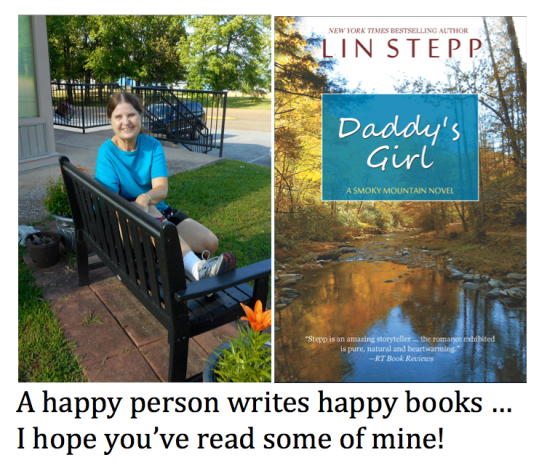 Admittedly, I also had a blast creating Warner’s zany Geeky Gilmore characters that peopled his books and I loved developing his journey to success as a writer and illustrator. I also enjoyed creating Olivia’s lavish family gardens, so cherished by the women of her family, and had fun developing her small downtown floral shop in Bryson City. I studied extensively to make the gardens and florist believable and even spent a day at one of my Lenoir City fan’s florist learning the business and observing her staff at work. Many scenes in Olivia’s floral shop reflect Pat McCarter’s store. …As a final thought, like Olivia, I grew up with a mother who loved flowers and the garden, and I drew from those warm memories often in writing this book. I’m sure mother would have loved it.
I hope you’ll have fun visiting my fictional Bryson City world in DADDY’S GIRL.
[Note: All photos my own, from royalty free sites, or used only as a part of my author repurposed storyboards shown only for educational and illustrative purposes, acc to the Fair Use Copyright law, Section 107 of the Copyright Act.]
 Because my husband J.L. and I had spent many happy days over in Western Carolina hiking trails and exploring the area, I decided to set one of my novels there. I decided on Maggie Valley for my primary setting—a quiet valley and resort town tucked up against the eastern boundary of the Great Smoky Mountains National Park. Maggie Valley is a small, peaceful mountain community not far from nearby Waynesville and Asheville. The Western Carolina area is also “apple country” and home to many apple orchards like Barber’s Orchard that we’d often visited outside of Waynesville. So I decided to create a family apple orchard as a part of my Maggie Valley story. I called the orchard the Cunningham Farm Apple Orchard and enjoyed many happy hours reading about orchard farming and just the right apple varieties for the orchard to grow.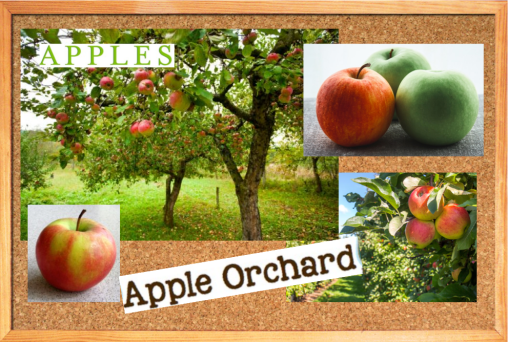
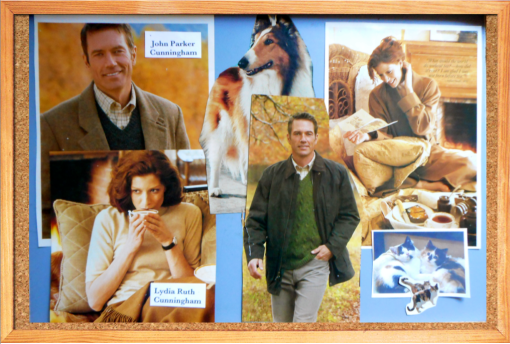 He and his sister Holly had grown up with their mother’s controlling and dominating ways, each finding their own ways to cope with her. But when John brought his new bride Lydia into the family, things didn’t go so well. Lydia, a warm, friendly, and loving woman kept trying over and over again to win over the love and respect of her new mother-in-law, but to no avail. As the children came and when John and Lydia moved into the big home after John’s father’s death, things only seemed to grow worse. When John and Lydia’s three boys began to enter their teens, they developed their own interests and ideas for their life—none to Estelle’s pleasing—as she expected them to stay and work the farm. Lydia came under more attack from Estelle at that time, also, for going to work to help with the family’s debts.
 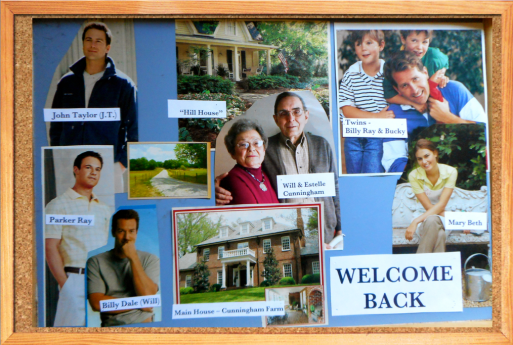 …In a turning point, with Lydia’s unhappiness growing, she decides to separate from John and take a job offer in Atlanta. Not long after, with increased pressure from Estelle and their mother’s support gone, the boys move to Atlanta to live with their mother. Now as the story begins, Lydia has a fine job opportunity back at home in North Carolina. Estelle has passed away and Lydia decides to take the job to see if she can patch up her relationship with her only daughter. Her sons accuse her of going home to try to patch things up with John, too, but she denies it—even to herself.
 The questions, of course, are: (1) Can Lydia and John reunite after all these years apart? (2) Are there still loving feelings remaining? (3) Can they work through the bitterness and anger they both hold about their relationship and the past? … And in addition, can their children—now grown—give up their old anger and resentments they’ve carried for so long? From these questions, you can see that one of the book’s central themes revolves around the hurtful past of this family and whether they can ever recover, forgive, and love one another again.
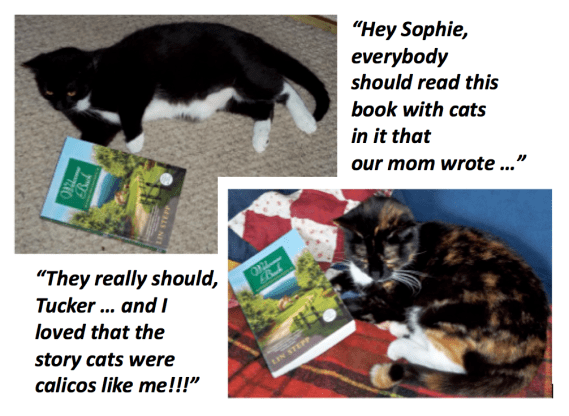
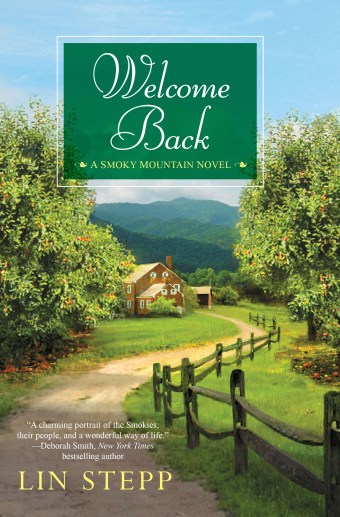
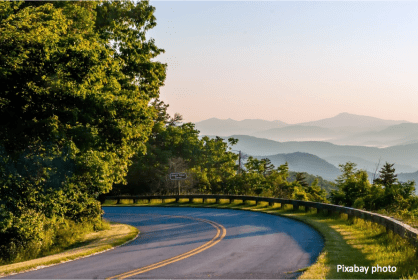 I loved taking readers over to the Western Carolina area in this story … to scenes in downtown Waynesville, on hikes in the Cataloochee Valley, to nearby Balsam Mountain, and to visit the campus at Western Carolina University in Cullowhee where Lydia has taken her new job as career services director. To my joy, this book also was a finalist for the Selah Awards—a nice honor and a coveted one by authors of inspirational books. The Selahs are awarded annually by the Blue Ridge Mountains Christian Writers Conference for best books…. If you’ve missed reading Welcome Back, I hope you will look for it soon!
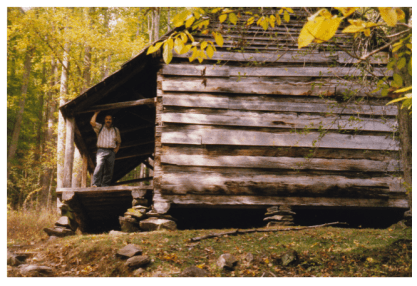
 As my husband J.L. and I hiked trails around the Smoky Mountains, and as I researched the mountain areas where we hiked, I read many stories about how the Appalachian lands were settled. I learned about the early settlers and then about the latter wealthy northerners who came to the area for the clean air and outdoor beauty of the mountains. Many resorts grew up in this era, often on old assembly grounds or in spots where mineral waters bubbled out of the ground. These mountain resorts were often lavish with beautiful buildings, fine dining and entertainment—places where the wealthy came in their opulent clothes, with their new Model T automobiles and industrial wealth of the time, to get away from city life and the smoke and filth of growing industry.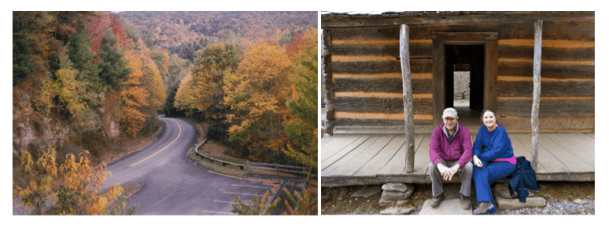
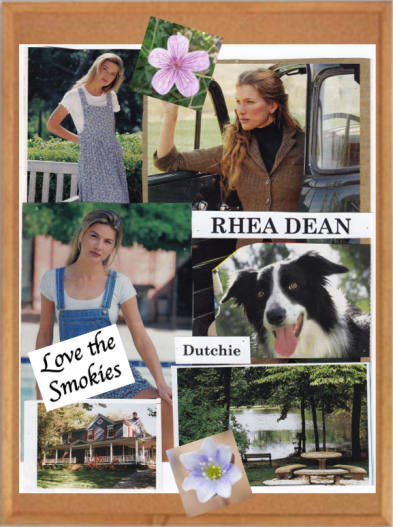 Carter Layman and Rhea Dean grew up at Laurel Springs, ran and played all over the resort and mountains in the area, and dreamed as children—and later as teens and sweethearts—of one day restoring the old resort and campground to its former glory. But time and angst drew them apart. Carter went away, married another, had a child. Rhea stayed, making her life at the resort.
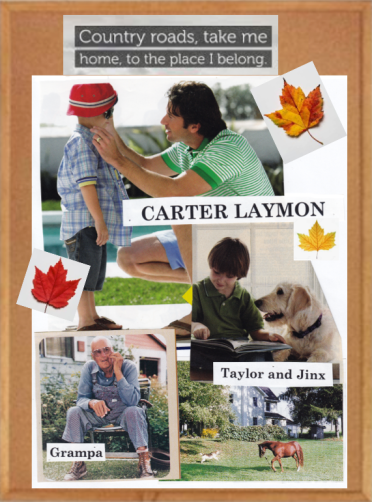 I had a joyous time creating these two stubborn, independent, smart and strong willed characters who’d known each other since early childhood. There is something about the bond with long-time friends you’ve known all your life. They “knew you when”—and in many ways know you now with a depth others don’t. In addition, Rhea and Carter’s deep ties are also linked to a place they both know and love. No place at the old resort doesn’t hold rich memories for them.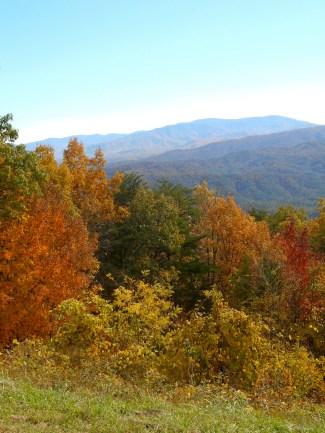
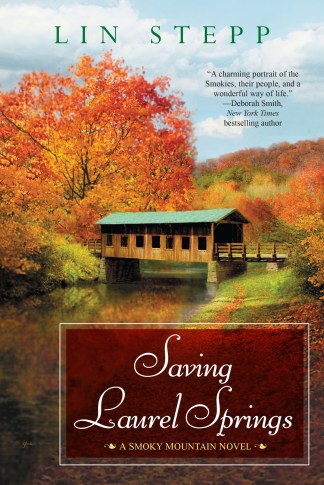
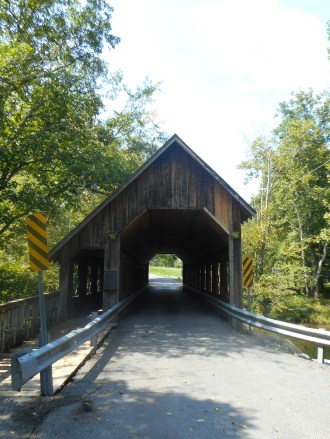
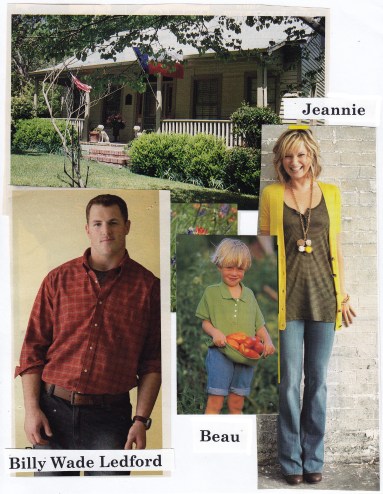 Carter and Rhea also share the love of strong old friends Billy Wade and Jeannie Ledford. Their son Beau bonds quickly with Carter’s young son Taylor. … I painted many sweet scenes with these long-time friends and with Billy Wade and Jeannie’s desire to help Carter and Rhea…. Many other memorable family members and friends around Cosby make this book a warm and welcoming story. … I researched extensively to make Laurel Springs resort’s story and background true to the history of many resorts around the area. Not all early resorts of this type remain in the mountains today but some still do. For the Dean and Layman families I created two farmhouses to either side of the resort, developed old assembly ground buildings, a historic church, and a resort store all centered around Laurel Springs Lake. Along Little Cascades Creek, running through the resort, I had fun creating an array of cute, colorful resort cabins, each with an individual name and style and on the other side of the creek a scenic, shady campground. The road into the campground passed through an old covered bridge and Kensington’s artist used that bridge concept for the book cover, since many sweet and special scenes revolve around that covered bridge.
 Cosby, Tennessee, where the book is set is a small but beautiful community tucked up against the Smoky Mountains not far from Newport, Pittman Center, and Gatlinburg. Cosby spreads over a valley area between the Great Smoky Mountains and English Mountain, rich with rushing streams, farms, forestland, and natural beauty. At its heart is a small township, tourist attractions, the Cosby Campground, and many hiking trails. Rhea, Carter, and Taylor hike one of these trails to Henwallow Falls in the book and picnic afterward at the Cosby picnic area. J.L. and I have hiked the Cosby trails many times, explored the back roads, visited Carver’s Orchard, and cooked hot dogs at the Cosby picnic area after our hikes. On one occasion we met a local bluegrass group practicing in the picnic area and I had fun bringing this memory into my story.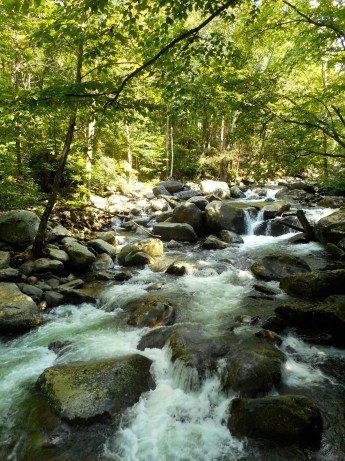
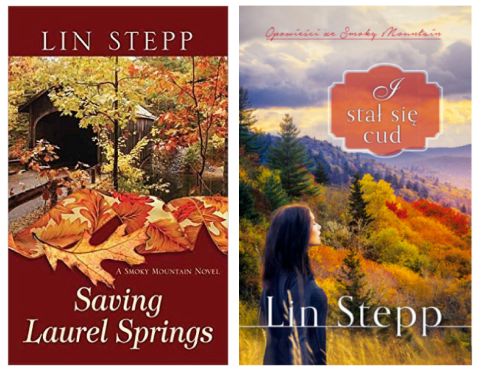
 “Dr. Lin Stepp has given us another Smoky Mountain novel — Saving Laurel Springs…a heartfelt story full of hope, small town charm and belief in second chances.” … It continues with the theme and setting of the Great Smoky Mountains, which serve as a backdrop for the small town of Cosby, populated with characters who are blessed with a strong community spirit and cherished memories…The reader will share the questions, the agony, the romance and the happiness as Rhea Dean journeys through memories, making decisions, only to examine them later in the light of truth and forgiveness. How her life comes back together with the people she cares about and the place she loves makes a “I-can’t-put-it-down” story that pulls the reader into an emotional blend of past and present… another Smoky Mountain gem from Lin Stepp.” – B. Marlowe, Cleveland Banner Newspaper article
 “A camp assembly in the Great Smoky Mountains is the setting for the eighth novel of this sweet contemporary series with a heartfelt faith message woven within the romance. The highlighted lesson behind this Christian story is forgiveness and it’s honed beautifully by the end of the story. How many of us harbor resentment for the past, never releasing ourselves into the power of forgiveness?
 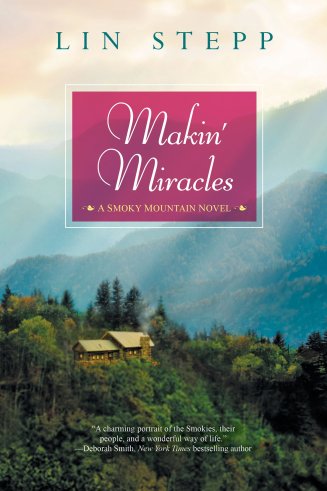 In two of my previous books, readers met a minor, cameo character called Zola Devon who always interested them. In an earlier book titled DELIA’S PLACE Zola suggested to Tanner Cross that his interest in Delia Walker might be something he should pursue. Zola told him, when she’d never even met Delia, “She’s going to be an important presence in your life.” Zola made Tanner nervous with insights like this. He’d always heard Zola was the tiniest bit odd and had a tendency to know or see things about people but now he had it confirmed. “Weird,” he said to himself, shaking his head over the incident.
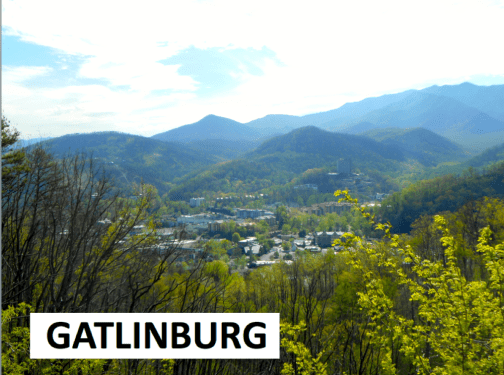 Readers, fascinated with this unusual character who could “see” things about people, kept saying to me, “Write a book about Zola, Lin” … and so after hearing many, many comments like this, I decided to do just that. MAKIN’ MIRACLES is about Zola Devon, who is part Tahitian and part Appalachian. Zola’s father grew up in the Smoky Mountains of Tennessee outside of Gatlinburg on the Devon family farms. He later became a missionary doctor in Moorea in the Tahitian islands, where he met and married Zola’s mother. Growing up, Zola made many visits to the states to spend time with her Tennessee family, and her father even renovated an old home place on the family property for his family to stay in on their visits. Later, when Zola’s mother died, Zola came back to Tennessee to stay with her grandparents and, after finishing college and opening her shop Nature’s Corner in Gatlinburg, she moved into her father’s house.
 A point I wanted to make in this book is that God always has, and still does, use people in spiritual giftings, but never for profit and only by the leadership of the Spirit of God. In the world, many claim supernatural abilities—but these are not from God, even if well-intended. Many, quite frankly, are a little shady, and some abilities are very close neighbors to “the dark side,” with their origins from the opposite end of the spiritual spectrum. So naturally Madam Renee in the book, who has a psychic business for profit in the Gatlinburg area, resents Zola and sees her as a threat. Dark and light never mix well.
 Zola yearns to help Spencer but Spencer resists help from Zola or anyone else. As the book progresses the reasons for Spencer’s grudges and issues are gradually revealed. But it is a toss-up for a long time how he’ll deal with them or if he’ll deal with them at all. … Amid the ongoing up-and-down relationship between Zola and Spencer are warm, happy scenes with Zola’s family and friends—all of whom readers will soon come to love. And additionally, problems come Zola’s way with a lost child in the mountains and a murder she finds herself involved in.
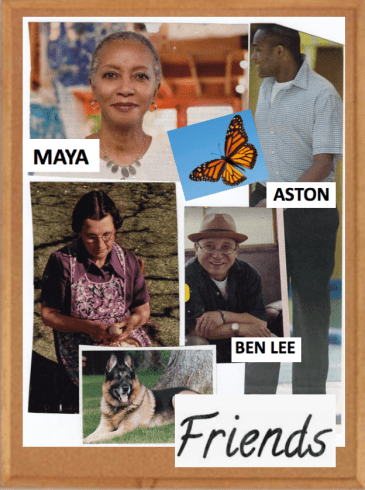 Side characters in this book showed more diversity than in many of my past books. Aston Parker, Spencer’s best friend and assistant manager of the Jackson Gallery is African American—a warm, fun-loving, smart and wise man. Zola’s assistant manager at Nature’s Corner, Maya Thomas, is Jamaican. Her wisdom and love for Zola, and sweet acceptance of her and her gifts, provide a valued friendship for Zola. And Ben Lee, the father of an Asian friend of Zola’s, seeks out Zola’s help, yearning to know what has happened to his daughter who simply disappears one day.
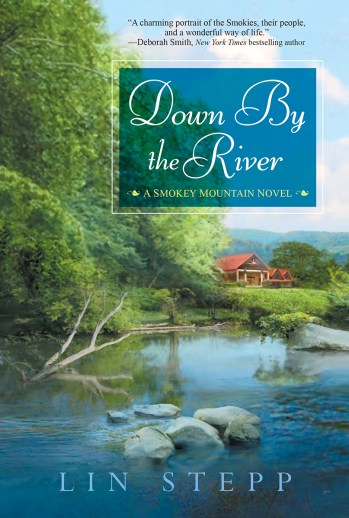 After publishing five books with my first publisher, I needed to seek a new publication route. After sending queries to a variety of different publishers, I received a call from the editorial director at Kensington Publishing in New York. She said that she loved my book submitted, and the synopses of next titles, and that Kensington wanted to write contract for my next Smoky Mountain novels. She also told me with enthusiasm that she wanted to personally be my editor because she so enjoyed my work. What a happy call that was! A year later, in the spring of 2014, DOWN BY THE RIVER, my sixth Smoky Mountain novel, published with Kensington. Like my earlier novel TELL ME ABOUT ORCHARD HOLLOW it is set in Townsend on the quiet side of the Smoky Mountains, although in a different locale and with a completely new set of characters.
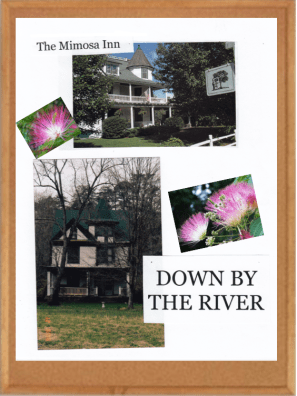 A fun note to remember about this book is that I actually dreamed the plot and story for DOWN BY THE RIVER—a first for me! My husband and I were heading through Townsend to hike one sunny Saturday and I looked over to see this charming turreted home for sale along the Little River. “Look at that gorgeous place.” I pointed toward the house. “Someone should buy it and open a shop or business there.” As we headed on to hike, I promptly forgot about the house, but a couple of weeks later, I woke up to grab a pen and paper to scribble down the story plot I dreamed about that very place. In the photo, you will see a picture of the actual turreted house on the river at the bottom of my bulletin board that inspired this story and then another modified photo above it of how I changed and enlarged the original house to accommodate a gracious bed and breakfast I named The Mimosa Inn.
 Main characters in DOWN BY THE RIVER are Grace Conley and Jack Teague. As the book begins, Grace, who’d lost her husband a few years ago, is restless and looking for a new direction in life. She decides, somewhat impulsively, to buy a bed and breakfast for sale on the Little River while visiting in Townsend to pick up her daughter at a nearby college. Her family in Nashville is scandalized when she returns home to break the news. “Mom, are you crazy? What do you know about running a bed and breakfast? You haven’t worked in years … and if you move away who will keep the kids during the Vanderbilt games and host our family holidays?” But Grace does move away, even with her grown children’s disfavor, and then begins to question her own sensibility after finding herself attracted to Jack Teague, the local ladies man. She knows better than to get involved with a man like Jack.
 Jack Teague, a realtor in the Townsend area, is attracted to Grace Conley from the moment he meets her, even after seeing she isn’t the kind of woman who wants to fool around. Busy with his life and his twin girls he’s raised alone, Jack doesn’t expect to see Grace again after showing her the inn on the river. When, to his surprise, she buys the inn and returns, it’s the beginning of many complications in his life—none of which Jack is the least bit ready for.
 To further complicate things, Grace’s difficult daughter Margaret shows up to stay with her, and the young minister of the church next door, Vincent Westbrook, thinks he’s had a sign from God he’s supposed to marry Margaret. Visiting only briefly, Margaret makes it clear she is not interested in Vincent and would never want to live permanently in a Podunk town like Townsend. … Then on top of all the other problems going on, there is a stalker in the neighborhood whose furtive, threatening actions are troubling the area residents.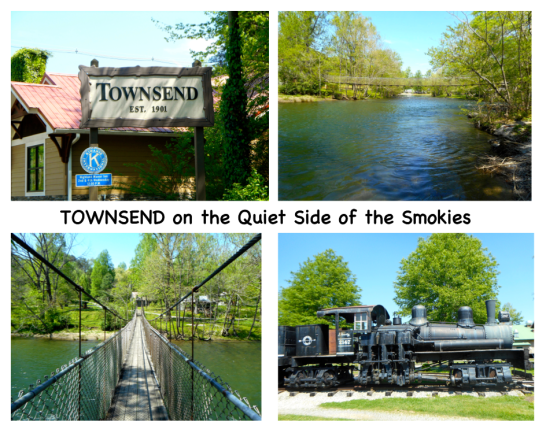
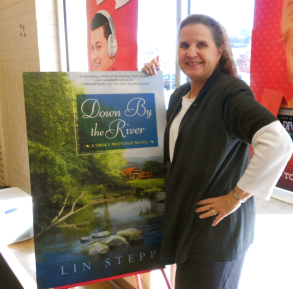 With every book published my author’s life is kept busy with … book launches, a book tour, book signings, speaking events, and the ongoing tasks of keeping up with blog posts, social media, and replying to reader emails. In addition to continuing to write more new books, authors travel to many signings and events all year round. Fortunately, I really love traveling to meet my readers and I love speaking for book clubs, organizations, libraries, literary events, conferences, and book festivals, too.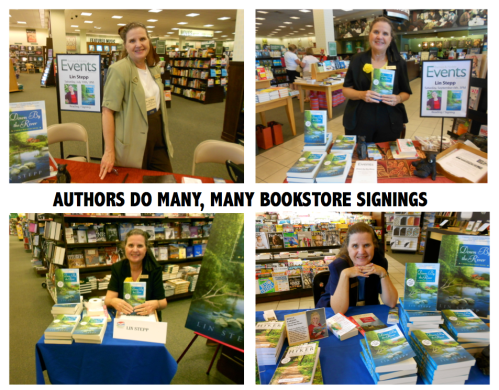
 “Stepp is an amazing storyteller … the romance exhibited is pure, natural and heartwarming.” – RT Review
 In looking back, the entire year of 2014 when DOWN BY THE RIVER published proved to be unbelievably hectic year for me and for my husband J.L., too. Our jointly written Smoky Mountain hiking guidebook THE AFTERNOON HIKER also published in 2014 in the spring as did my novella “A Smoky Mountain Gift” published in Kensington’s Christmas anthology WHEN THE SNOW FALLS in 2014 in the fall …
 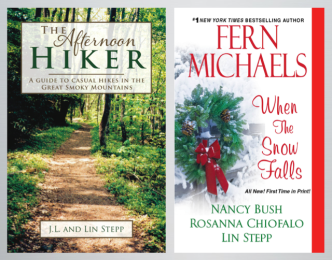 In addition, my next book MAKIN’ MIRACLES came out right after the new year in 2015. During this period, many new honors and awards came my way with books hitting the New York Times, USA Today, Publishers Weekly, and Amazon Bestseller lists. Titles soon began to go into large print, audio, and international versions and many fine interview and review articles popped up in magazines and newspapers. It was a fun and exciting time.
 “Surely a girl can be forgiven a moment of fantasy dancing with a tall dark stranger? And surely nothing can come of it? Wrong. Life’s chance, indulgent moments always find a way of coming back to complicate everything.”
 The following synopsis provides a quick story overview: ….. Life is sometimes hard as a widowed, single mother with three young children, a business to run, bills to meet, and debts to pay. Despite it all, Rosalyn McCreary tries to count her blessings. She cherishes her shop, Second Hand Rose, her family and friends. A practical woman by necessity, she seldom indulges in impulse and fancy—except for that crazy spring day she danced with a total stranger she’d never met. Whatever was she thinking? And then to later learn her mystery stranger, Kendrick Lanier, plans to move to Wears Valley. Great. Just one more problem she doesn’t need. …. Kendrick, however, is enchanted and intrigued with Rosalyn and soon pursues her, despite her efforts to crowd him out. He finds ways into her life, and into the lives of her children, and creates complications Rosalyn simply doesn’t want to deal with. The more she learns of the man’s life and secrets, the more she’s determined they are not well-suited…. With Rosalyn and Kendrick’s troubled pasts, and Rosalyn’s temper, you’ll find it a toss-up to decide if these two stubborn, determined individuals should—or shouldn’t—get together.
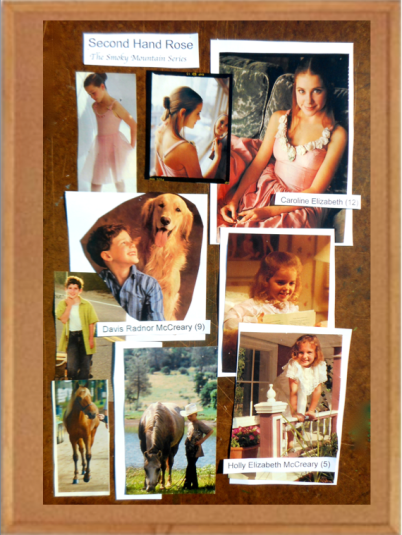 widow with three children, struggling to get by with her small shop and her penny-pinching. Rosalyn’s life, even with its difficulties, is sweet and good and she doesn’t see any place in it for someone like Kendrick—despite their attraction. Kendrick, in contrast, sees no conflict in pursuing Rosalyn and works to charm himself right past her objections and temper and into her life and the lives of her children. But their relationship is not without continual problems.
 The setting for this book is Wears Valley, a long scenic valley that lies between the Smoky Mountains and the Chilhowee Mountains. The two-lane highway through the valley, known as Wears Valley Road, connects busy Pigeon Forge to quieter Townsend, Tennessee on the west. Since its early settlement, the valley has grown from farm and mountain land to an area popular with tourists. The valley is now dotted with mountain shops, restaurants, a few historic sites, and an abundance of rental cabins. For legal reasons, I used mostly fictitious stores and businesses for this story, but I tried to pattern them after the types of stores and businesses actually found in the valley.
 Contrast comes again between the home Kendrick buys, Saddle Ridge, a lavish estate on the mountain top with beautiful views, compared to Rosalyn’s small home behind her deceased husband’s parent’s house on their farm in the valley below. The differences are easy to compare, and Rosalyn is uncomfortable with Kendrick’s wealth, further explained as the story progresses. Helen McCreary, Rosalyn’s mother-in-law, is Rosalyn’s help and rock in this story and I admit I fell in love with Nana, too. Her wisdom and counsel were always so wise and good and her faith strong and inspiring.
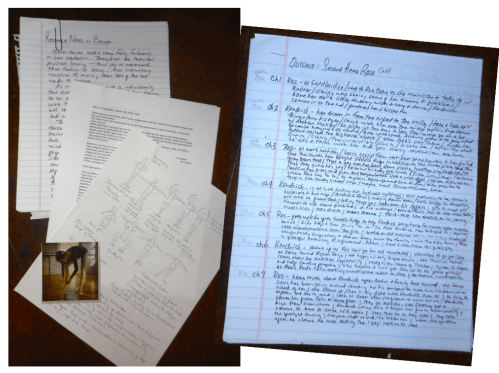 Months of research time went in before I was ready to create my chapter-by-chapter outline. Pulling out my old files again today to write this blog, reminded me of all the things I needed to research. I found over fifty pages of notes just about the ballet alone. I needed to learn so much about the ballet to create realistic scenes and dialog about Kendrick’s past. Many scenes scattered throughout the book, too, involved the ballet or reference to it. I also had to study about running a second hand children’s store. Rosalyn’s store needed to be realistic and I wanted it to be charming, as well. I visited several similar second-hand stores, studied the merchandise and arrangement of the store, and then researched online about business aspects of owning a store that I needed to know. In addition, for Kendrick and Arthur’s Mountain Realty business I had to delve into information about the real estate business.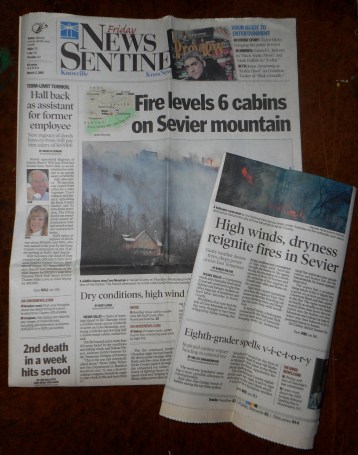
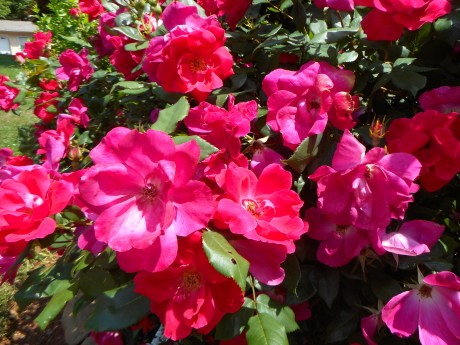 As always in my books, I took readers to scenic spots around the mountains and painted pictures of the beauty so prevalently found. Main character Rosalyn loved flowers in this story, with a partiality for roses. I read and researched a wealth of information for the scenes where Rosalyn talks about and tends her roses. While reading about old rose varieties, I discovered the sweet story of how the Madam Hardy rose got its name. Then I had fun weaving this rose’s romantic history into Rosalyn and Kendrick’s story. In our country’s early years, many vintage roses were brought to early America from Europe. Then starts of roses and other flowers were often lovingly carried into frontier and wilderness areas, planted, tended, and loved. Even after the old settlers were long gone, many of the flowers, shrubs, and old roses lived on. J.L. and I often find sweeps of daffodils, flowering shrubs, wild roses, and other garden flowers—not native to the area—around old home sites when we hike in the Smoky Mountains.
 Developing running themes to thread through a story can be fun to create and fun for readers to follow. The “rose” theme was one of those themes really apparent in this book. Rosalyn’s name had the word rose in it and her store was called Second Hand Rose. She loved growing and propagating roses, created her own perfumes and lotions from them, and several scenes with roses are scattered throughout the book’s story. At the book’s end, Kendrick delights Rosalyn with a special rose gift at their wedding to help sweeten the final scenes of the book.… And of course Caroline writes about the wedding in detail in her diary, too, letting us know everything that happened.
 “Lin Stepp is back with the fifth edition in her Smoky Mountain series, Second Hand Rose. This one doesn’t disappoint. She has once again spun a compelling story with homegrown flavor. Her words flow across the page like a soft spring breeze in the Smokies, leaving behind traces of wildflowers and wood smoke. If you’re looking for a heartwarming tale sprinkled with romance, you can’t go wrong with a Lin Stepp book. Her stories always bring to mind those long summer nights sitting on the front porch and listening to my grandmother tell stories about the family and neighbors. For me, reading her books is like going home.” ~ Andrea Chapman, Co-founder and Co-Owner of Reading Lark
