 One of the things authors are often asked to do, apart from book signings, speaking engagements, events, and book festivals, are “Interviews.” Since my first book published in 2009 … I have done many interviews for magazines, newspapers, and review blogs. I thought it might be fun for this March blog to reminisce about some of those interviews and to include some of the questions and answers given about writing over the years. I tried to pick a diversity of questions, spanning from early in my career to later … and from a variety of sources. Hope you enjoy reading some of the questions I was asked and the answers I gave.
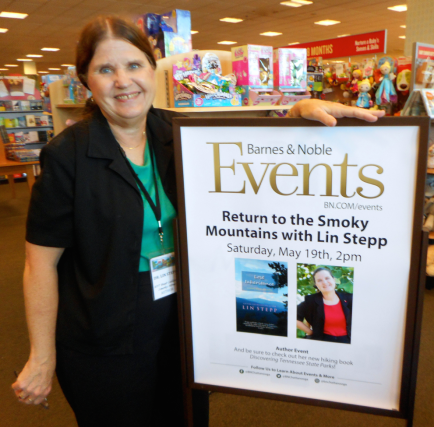
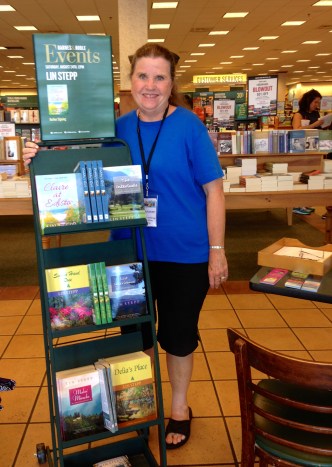
INTERVIEW 1: DIVINE DETOUR: An early interview I did in 2010, after my first two books came out, was for Kathy Harris’s Divine Detour Blog. Kathy manages the Oak Ridge Boys in Nashville, keeps an active website about books, media, detours and dreams, and is also a writer with published books of her own. In the years since this first interview I’ve occasionally done a few other interview with Kathy and last year we got to meet for the first time when she came to my Barnes & Noble Book Signing in Franklin, below Nashville.
Here were a few of Kathy’s questions and my answers:
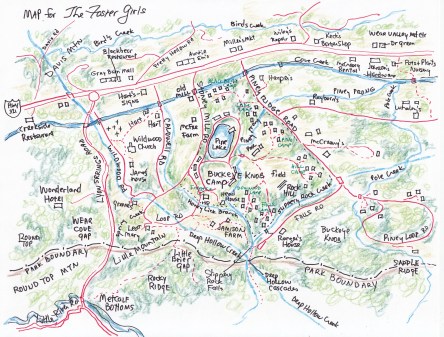
 Let’s talk about the Smoky Mountain Series. Please tell us a little about the first two books. I write warm, contemporary romances with a dash of suspense, a touch of inspiration, and a big dollop of Appalachian flavor. The Smoky Mountain novels are a series of twelve linked books all set in different areas around the Great Smoky Mountains National Park in East Tennessee. … The Foster Girls, published in 2009, is set in the rural Wears Valley near Pigeon Forge, and Tell Me About Orchard Hollow, released in 2010, is set in the Townsend, Tennessee area of the Smokies. For Six Good Reasons, the third book in the series, comes out soon in the spring of 2011. One of my college students said to me: “Oh, Dr. Stepp, I thought you’d write dark novels being a psychologist.” But, no, I write warm, charming, happy novels with a good, satisfying ending. …. Because the books are a linked series, versus a continuing series following the same characters and ongoing drama, each of my books has is its own complete story, with its own unique set of characters and plot. However, for readers who follow the whole series, I do sometimes let book characters pop back into a future book, like meeting an old friend for readers who follow the whole series. …In my novels “detour events” cause dramatic changes in several characters’ lives—and I like showing how my characters work through and past those events to create a richer and stronger future.
Did you begin writing as a child? What draws you to writing as a creative outlet? From the earliest years I remember, I loved words in print. To this day, I love the sights, smells, and feel of a library or bookstore. I read extensively as a child and doodled at writing in fun ways for pleasure as I grew up. Writing has always called to me like a misty siren and tangled me up in its embrace. … On my Facebook page recently I wrote: “Something I love about writing novels – unlike life – you can determine what happens.” That’s a happy truth. It’s a joyous creative outlet for me to construct worlds, characters, stories and conflicts, and make everything in that world turn out as I want.
How does your faith play into your writing? My faith plays into my writing in two ways. First, I feel strongly that we are each meant to use the talents God gave us – and in ways that bring honor to Him. Johann Goethe wrote: “The person with a talent they are meant to use will find their greatest happiness in using it.” … Second, writers are more powerful leaders than they may realize. They can touch and influence lives by what they write. I plant “seeds of faith” in my novels, simple examples of how people of faith live their lives by what they believe mixed with a wholesome, entertaining, and engaging story. …In truth, I can’t really separate my writing, my life, and my works from my faith. As Dolly Parton says: “God is in everything I do and all my work glorifies Him.”
INTERVIEW 2: SOUTHERN WRITERS MAGAZINE: In 2012, my first interview with Susan Reichert for SOUTHERN WRITERS MAGAZINES appeared in the magazine’s May/June issue – right between publication of Delia’s Place and Second Hand Rose. This was my first introduction to Susan, who had been reading and enjoying my books, and later I wrote several articles and Suite T blogs for Susan’s publications. Here are a few of Susan’s questions and my answers:
 Did you choose your genre or did it choose you? A little of both. As my husband and I hiked and explored the Smokies for our hiking guide THE AFTERNOON HIKER, I kept stopping in gift stores and book shops along the way looking for light, contemporary novels set in the area … you know, good Southern stories, with a little romance, a little suspense, rich characters, and a happy ending. There weren’t any—only guidebooks to the area, old-time biographies, historical novels, pioneer tales, and mountain recipe books. I asked a bookseller one day, “Where are your contemporary novels set in the mountains?” …He shook his head. “There aren’t any. I wish someone would write some. People ask for them all the time.” I guess that seeded the idea for me. I hated the idea that there weren’t any contemporary novels set in the Smokies when the Great Smoky Mountain National Park is the most visited national park in America. As we hiked that day, I started thinking, “Maybe I could write some.”
Later, traveling and doing marketing work for Huntington Learning Center at schools in a locale near the mountains, the idea for the whole series of Smoky Mountain novels simply walked into my mind while driving down the highway. I could see the first book clearly, in vivid detail, and the idea for subsequent books tumbling along behind. …I couldn’t wait to get home to start writing everything down. I’d wanted contemporary books in the mountains and perhaps those books wanted me to write them!
How do you find the time to write? I make time and I think that is true for all authors. When I started to write seriously at mid-life, I knew, in order to be successful, I had to think of writing as a “real” job. Since I carried other jobs—as a faculty member at Tusculum College (at that time teaching eight to nine courses a year in psychology and research) and also working as the part-time Educational Coordinator with Huntington Learning Center (making educational marketing visits to K-12 schools), I knew I’d need to plan diligently, make time some time sacrifices, and restructure my life to find the hours to write.
Most serious part-time jobs require a maximum of 20 hours a week of work, so I set that as my minimum weekly goal. I tried various methods of structuring those hours into my weeks—and gradually found, for me, that blocking five hour time blocks into four days a week worked best for me. I planned and penciled these hours into my daybook, and if I didn’t fulfill them, I made myself shift the hours to another day I’d hoped to be “off.” This method wasn’t, and still isn’t, easy but it worked. Starting this routine in 2006, I researched and wrote two books a year this way. In 2008, I started seeking a publisher while working on book four in my Smoky Mountain series. I connected with my current publisher, then seeking a regional romance series set in Appalachia (nice match). My first book THE FOSTER GIRLS, set in the scenic Wear’s Valley below Cove Mountain, came out in 2009. The second book, TELL ME ABOUT ORCHARD HOLLOW, set on the quiet side of the Smoky Mountains in Townsend, came out in 2010, with FOR SIX GOOD REASONS highlighting the little-known Greenbrier area following in 2011. My latest release DELIA’S PLACE, published this year, takes readers to the familiar resort town of Gatlinburg. I’m currently writing book ten in the series, around edits with the publisher on book five, to come out April 2013.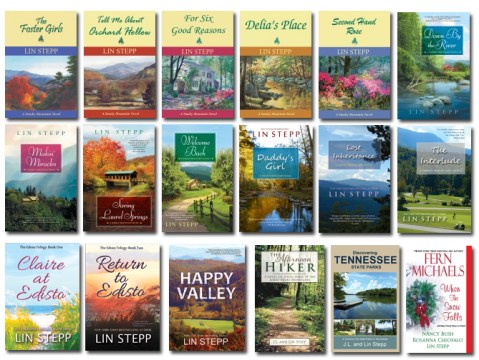 What sacrifices have you had to make to be a writer? Working 20+ hours a week writing around my other professional jobs—and now adding in publicity, marketing time, signing events, presentations and speaking engagements—leaves me less and less time for pleasures. Where I used to spend Saturdays on the hiking trail with my husband, we’re now traveling somewhere at a signing at Barnes & Noble, Books-a-Million, or some other venue. Where I used to enjoy attending a watercolor group every week to paint, I no longer have time to go. TV watching is totally eliminated from my life, since much of my writing is done at night. When people casually discuss tv shows and characters, I smile a lot. I’ve never seen them. Home projects have been put on permanent hold. Painting, crafting, and gardening projects are a thing of the past. I think I caught one movie this past year and one symphony. The writing life is a very disciplined life.
INTERVIEW 3: Nickie Simmons Review Blog: Nickie Simmons, in Sevierville, TN, contacted me to do an interview for her blog not long before SECOND HAND ROSE published in 2013. She and her mother were both big fans of my books and I now know both of them well. Nickie is a busy teacher and part-time minister and no longer does a blog, but I have gone to talk with her students at her school and will be there again this month speaking for the school’s Literacy Fair. Here are a few of Nickie’s questions and my answers:
 What age were you when you started writing? My mother was an oral storyteller and I began weaving stories in my mind at a young age. Childhood friends remember that I created the roles and plots for play games. Later, I used my writing gifts on the school newspaper and in writing a few early poems and stories. In college, not finding a major for creative writing and illustration—or receiving any encouragement to pursue either—I majored in education, a practical major for women of my era. I ended up getting three degrees in the psychology and educational arena and began to teach college and work in educational marketing after. … Writing got shelved through those busy years of college, marriage, children, and work. It wasn’t until the children were grown that I began to write with any serious intent, coming back full circle to early girlhood dreams.
How many books are you currently working on? Recently I completed the final edits for my next Smokies novel Second Hand Rose, which is now working its way into galleys and will be published next spring 2013. In between edits … I am writing on book ten in the Smoky Mountain series, a title called Daddy’s Girl, set in Bryson City. I am also involved in final editing stages for my husband’s and my hiking guide, The Afternoon Hiker, which will come out later this fall…… I am a multi-tasker and can work on several projects at once—a blessing in the writing and publishing world! I also am working on a devotional guide, a children’s book, and another non-fiction book. This weekend, I am heading to the beach to Edisto Island, SC, where—even there—I will “play in my mind” and scribble down thoughts and ideas for a trilogy I plan to set at this island where our family has visited every summer since the 1980s. Eugene Ionesco said, “For a writer, life consists of either writing or thinking about writing.” For me, I guess that is always true!
Is there a message in your novels that you want readers to grasp? As a psychologist, I weave a number of messages throughout my novels—that love heals and prevails, that forgiveness is better than bitterness, that life can offer new beginnings, that people have the capacity to help others mend and heal after sorrows. I am a positivist and an optimist and I write books full of hope and promise with happy endings. I am concerned about the current fascination today with dark and immoral topics in books and movies, and I worry about the diet of trashy, violent, and immoral images America is constantly feeding into its mind through literature, television, and online media. Like an old line from Alice in Wonderland said, “We are what we eat.” …….. .I believe it is still possible to write a compelling book readers will love and buy without throwing in excessive violence, explicit sexual content, cursing, vampires, or witchcraft. That is what I try to write. Within every book, I also plant a few spiritual seeds—that prayer works, that God is still real, that you can have a genuine relationship with the Creator, and that faith makes life richer and better.
INTERVIEW 4: ALL ABOUT WOMEN MAGAZINE: An interview article came out in the ALL ABOUT WOMEN MAGAZINE at a busy season in 2014 after the release of several books with Kensington Publishing, including DADDY’S GIRL, MAKIN’ MIRACLES, SAVING LAUREL SPRINGS, and WELCOME BACK…. And after the publication of our hiking guide THE AFTERNOON HIKER and a novella titled “A Smoky Mountain Gift” in Kensington’s Christmas anthology WHEN THE SNOW FALLS. Here are a few of the questions in that interview:
 What is your favorite thing about creative writing? My favorite thing about creative writing is getting lost in the creative world of my imagination, and in developing rich characters, settings, and stories to share with others. I also love bringing readers from all over the US and abroad to visit the beauty of the mountains of Tennessee and No. Carolina.
What is your writing process? Generally, I write two books a year around my other jobs and life commitments. I spend a minimum of 20 hours a week—usually much more—working on my writing. It usually takes me about three months to plan, research, lay out, and outline a new book and about three months to write it.
What is most challenging about writing? I believe the most challenging thing about being a writer is protecting one’s time to get the writing done. Many people carry stories in their hearts or minds but never get them on paper. It takes disciplined, dedicated effort to write a book. Then it takes courage and persistence to find a publisher and to work through the many stages of editing required to make the book the best it can be. Additionally, once a book is published a writer’s time becomes even more challenged because of the ongoing and time-consuming demands to market and promote every new book published. Book signings, book talks and presentations, interviews, and media promotion take an inordinate amount of a writer’s time—and there is also fan mail to answer and social media to engage in to stay in touch with readers and fans. ….. In many jobs, the hours and tasks of the day are structured—and policed—by another, but the writer’s day is, by-and-large, self structured. And at the end of a hard day of self-imposed, extensive hours of work, there is no one to say “well done” or to pat an author on the back and offer praise for the long hours put in. Because of this highly entrepreneurial process, an author’s work ethic must arise from within. Each author must become his or her own taskmaster—a truly daunting challenge every day.
INTERVIEW 5: Panel Questions for ROSE GLEN LITERARY FESTIVAL In February of 2018 I was asked to be on a panel with two other regional authors Sam Venable and Steven Lyn Bales. We were given interview questions to think about and prepare answers for, although we actually answered many other questions instead straight off the cuff. I have been on several other festival panels and these are always fun opportunities to share speaking with other authors and answering reader questions after. Here were a few of the questions we were given:
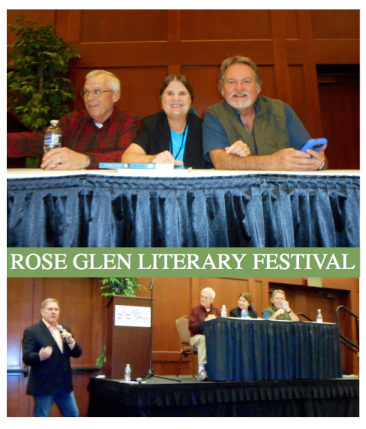 Have you ever written a story in which someone disputed the details? No, not that I can remember … I do a lot of research about each of my novels set around the Smoky Mountains, so I don’t get much argument about the details in my books—real or fictional. And in our guidebooks, taking readers up the Smoky Mountain trails … I can’t recall anyone has ever disputed anything about the trails we described or the occasional bit of area history we tucked in. ……. I’ve taught research classes for over eighteen years in college, and we “research teachers” tend to rather closely mind details. You can see I’m the one out of the three on the panel with notes written out – which is telling! …. Actually, I spend as much time researching a book as I do writing it … and that probably helps the accuracy of my books. I laughed recently over a novel by a well-known author set in Gatlinburg. The book characters ran down to the hospital in Gatlinburg in one scene .. .and anyone who’s spent some time around here knows there’s no hospital in Gatlinburg … and they also frequented a lavish, Hollywood-type spa downtown—the type of facility you might find in Beverly Hills, but certainly not around the Smokies!. … I tend to set my books around here locally and write about what I know. It keeps me out of trouble more.
What have you written about that you vowed to never write about again? An academic Dissertation! That experience, while doing my doctorate, is not on my list of joyous remembrances. Academic committees thrive on having students rewrite and rework their dissertation topics and writings again and again, needed or not. It’s the expected academic experience. In one of my last meetings the committee proposed that I come at the topic from yet a different angle and they asked if I had a problem with that. I said, “No. That will be an easy change because that approach and write-up was the one I presented in the very beginning a year ago.” Fortunately because I said it rather sweetly rather than as a smart ass – and because they all realized it was true – they let me move along then. …. But the research, the writing, and the APA adherence to format with a dissertation is a rigid, very uncreative process. …. Fortunately, once a Doctor always a Doctor … so I don’t have to pass that way again. I’ll always remember Dr. Connelly on my committee, a real battle-ax in the classroom and a legal stickler … said in her typical droll way in my final defense meeting, “I read a lot of these dissertations, generally dry and dull, but I have to say Lin’s was the exception. It read almost like a novel … I think she might have missed her calling.”
Have you ever written anything that you wished had never been published? No. And I hope I never do. …. I keep a little quote by L.M. Montgomery taped by my computer in my office: “Never write a line you would be ashamed to read at your own funeral.” … I try real hard to do that.
INTERVIEW 6: Interview for Carrie’s blog READING IS MY SUPERPOWER Carrie Schmidt, an avid Kentucky reader and blogger, discovered my books because of her love for the Smoky Mountains. Carrie is a gifted and multi-talented woman who works for an educational testing service and is also the co-founder and partner for JustRead Publicity Tours for authors. I am participating in one of Carrie’s company’s five-day tours later in March before my upcoming books HAPPY VALLEY and RETURN TO EDISTO publish on April 2nd.. The questions below were from an interview done last year in 2019 just after publication of THE INTERLUDE and CLAIRE AT EDISTO.
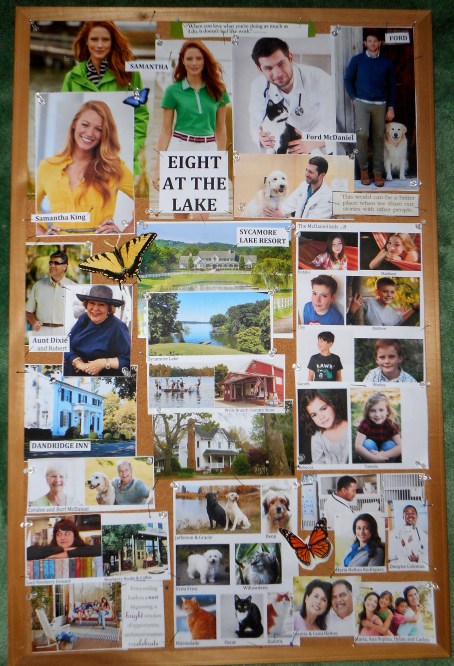
 Writing spaces are as diverse as authors and books. Where is your favorite space to write? …. Although I’ve been know to scribble out book ideas while traveling or on napkins in restaurants … when I settle down to write a new books, it is always in my home office. Like the old line by Virginia Woolf saying a woman needs “a room of her own to write” … I am grateful to have a full room for my office and a dedicated place in which to write. In my room are bookshelves of references, resources, and favorite titles, an old desk handed down in my family I cherish, and a long computer desk that holds my big iMac and printer. Around the room are mugs full of pens and pencils, stacks of papers and folder related to ongoing books, and behind my desk is a big bulletin board on the wall collaged with magazine and internet pictures representing the characters and places in my ongoing book … When I come here, the world goes out. And I write.
Which of your main characters is most like you? Professionally, Vivian Delaney—in my first published book THE FOSTER GIRLS—was a professor and a writer, so I felt in tune easily with the challenges she faced in both jobs … Also in my latest book CLAIRE AT EDISTO, I related easily to Claire, a busy young mother with little time to develop her own talents. I still remember those younger years raising my children and how hard it was to pursue my own dreams while helping my children pursue theirs, and while working and keeping the home front running smoothly.
What do you most want readers to take away from your books? I’m tempted to just say “a sigh and a smile.” … I love bringing readers to the rich story settings in my books along with a good heart-warming story. I always want readers to stay entertained from start to finish in every book I write, to fall in love with the characters, but also to never be quite sure what will happen next in the story. … I also want readers to feel like they have visited in the settings of my books—in different areas around the Grreat Smoky Mountains, where most of my novels are set, or at the beach at South Carolina, where my new trilogy takes place. It’s such a joy to me when I get fan mail saying “Your books made me feel like I was there” or when readers come to my book signings telling me about making road trips to places around the Smokies because they read about them in my books. One fan called me ‘a great ambassador to the Smokies’ and I loved the idea of that title…Because I put seeds of faith in all my books, I also love when readers tell me how some spiritual seeds I planted into my story encouraged their faith. These are the best compliments of all … Most of all I want readers to regret when the book ends because they enjoyed it so much.
CLOSING: I hope you enjoyed reminiscing with me and remembering some of the many interviews I’ve had over the years. … See you next month in my April blog and I hope to see you at one of my events in the southeast area. Find all of those scheduled for 2020 so far on the Appearances page of this website. And remember my new books publish on April 2nd and are available for pre-order on Barnes & Noble and at Amazon now.
See you then! __ Lin

[Note: All photos my own, from royalty free sites, or used only as a part of my author repurposed storyboards shown only for educational and illustrative purposes, acc to the Fair Use Copyright law, Section 107 of the Copyright Act.]
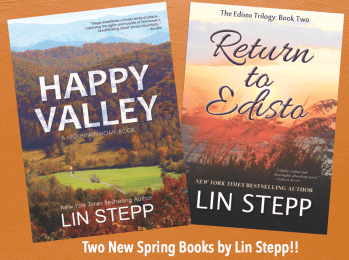 As April begins—two new books, HAPPY VALLEY and RETURN TO EDISTO, are being “born” into the world of books on April 2nd… and celebrating their “First Birthday.” I often feel like sending out Birth Announcements after new books publish. So much time, planning, patient work and labor goes into each one… and it’s always such a special thrill when a finished book is finally birthed and those first print copies finally come to my door—and to yours!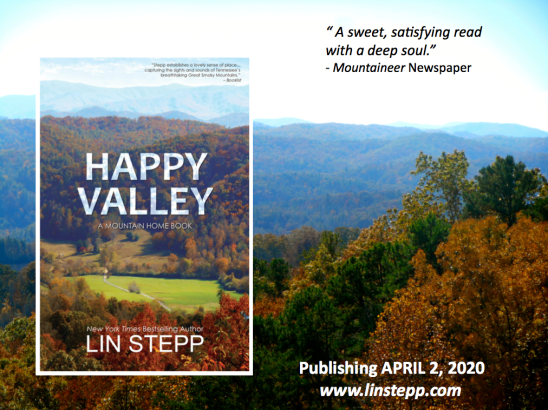
 Happy Valley is actually a “real place” set between the Chilhowee and Smoky Mountains in an unincorporated community called Tallassee, Tennessee. If you have ever visited the Abrams Creek Campground area of the Smoky Mountains or hiked the trails there, you drove through Happy Valley to get there. We’ve always loved this rural valley, dotted with picturesque homes, farms, and old churches… and I’d often wished I could think of a book idea to set there. “This area is so pretty,” I told J.L. one day while driving through Happy Valley to go hiking. “But I can’t seem to envision a good story idea set here. The area is so small, there are no businesses, and it’s rather far away from most areas. What could I write about set here?” J.L. laughed and said, “It’s a great place for survivalists.” He began to entertain me with stories about survivalists he’d met on his travels delivering fishing and hunting guide magazines as we drove to the parking area of our hiking trail.
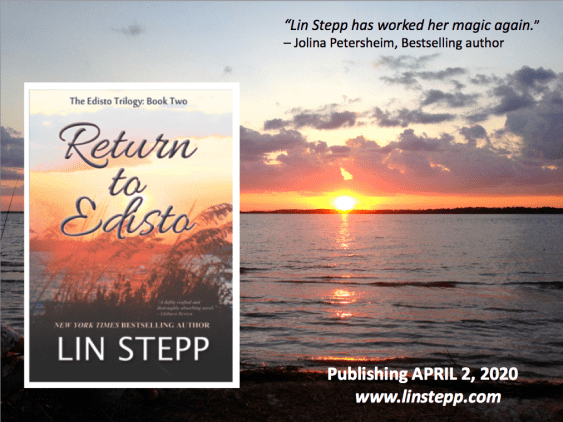
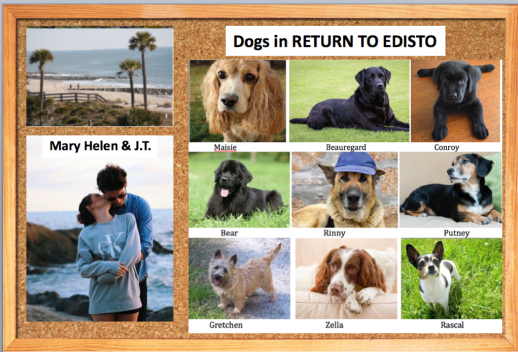 The story of RETURN TO EDISTO could be read as a stand-alone novel but it is much more fun to read it as a sequel—since many of the characters from the past book wind their way into this new story, too…. You will meet many old friends you’ll remember from the first book and many new characters, too … including quite a few dogs!… While working on RETURN TO EDISTO, I posted pictures of these story dogs on Facebook and asked my readers to help me name them—and many of those names found their way into the story…. I often find readers give me great ideas that I can use in my books.

 So many of my readers, fans, and friends have asked how I think up my story ideas and write my books, so I thought I’d talk about “How I Write” in this February blog post. Every artisan—author, painter, photographer, composer—develops a different method, so what I’m sharing here is my method. It evolved as I began to write from my own personality, my own academic and personal background, and my own study about the methods that worked best for successful authors I admired.
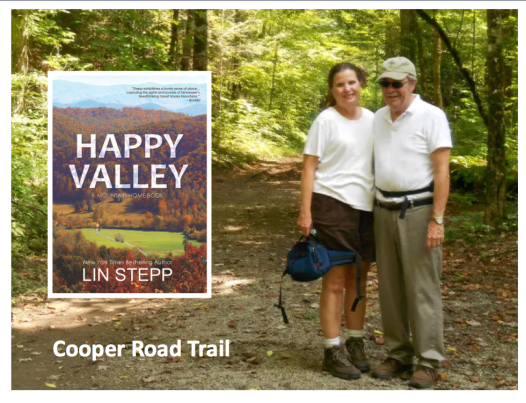 Another book idea actually came to me while hiking with my husband on the Cooper Road Trail out of Abrams Creek Campground. We’d always loved the scenic, rural Happy Valley area we drove through in order to get to the Abrams trails. I said to J.L., “I’d love to set a book here but there’s little here but rural farmland and no businesses, not even a store.” He laughed and said, “You could put some survivalists in your book to spice it up. They love backwoods places to live.” He told me some stories about survivalists he’d heard of and met delivering his fishing and hunting guide magazines. I forgot our conversation while hiking, but started laughing on the way back down the trail. “I’ve just had the best book idea for Happy Valley,” I told him. “With a store and with some survivalists tucked into the plot.” … And that’s how the idea for my upcoming book HAPPY VALLEY, publishing in April, came to be.
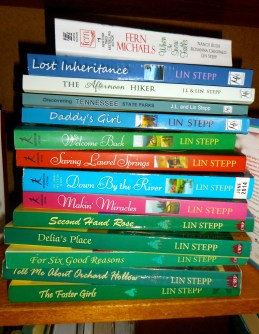
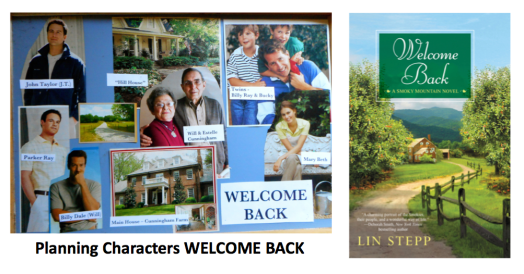 In my book LOST INHERITANCE a sweet young girl gets cheated out of an expected inheritance by a flaw in the will, with everything going to a somewhat nasty nephew. I wanted the readers’ hearts to go out to Emily and their anger to go out to Leonard, mean for no good reason. In my book WELCOME BACK, I wanted the reader to feel the heartache and dilemma Lydia faced living with a truly dysfunctional mother-in-law. Difficulties with family members are often some of the hardest situations we all face.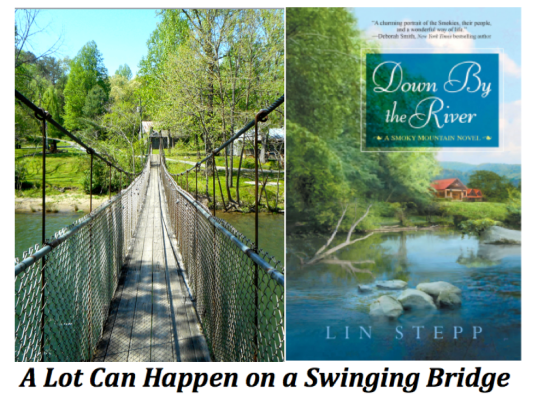
 After J.L. and I discovered the charming small mountain town of Bryson City, North Carolina, while hiking trails near there, I was purposed to set one of my upcoming stories there. And in this case, the town itself helped to inspire the story for DADDY’S GIRL. Seeing a beautiful old white turreted home for sale and a lovely old swinging bridge, both on the Little River in Townsend, gave me the vision and dream for a bed and breakfast and the story for DOWN BY THE RIVER set there.
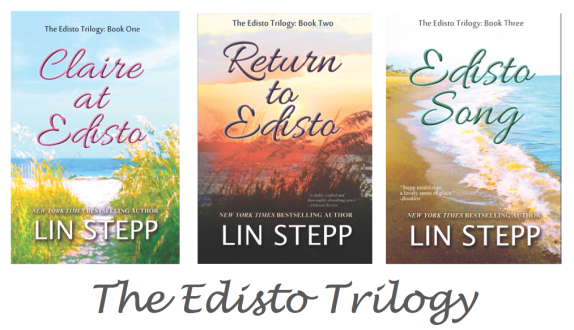 With my Edisto Trilogy, this process proved even more complex as the three books planned are a continuing series. While writing CLAIRE AT EDISTO, my mind had to “plot ahead” the next books in part to lay hints and factors that would link from the first book into the subsequent novels. As I wrote the next two books RETURN TO EDISTO (publishing this April) and EDISTO SONG (publishing next year) all my facts had to coordinate. I found this harder than my other stand-alone books. In those books I occasionally let a side character from a past book wander in again, as in MAKIN’ MIRACLES where a side character from two past books became the story’s main character, but the story was new and there was little to coordinate in plot. It takes a lot of planning and work to develop a good plot that will keep readers engaged in the story until the end. Many call this the most difficult stage in the writing process.
 I have tried many writing patterns, and I have had to vary my writing times around other ongoing work schedules in my life. When I first started writing I was teaching 8-9 college classes a year at Tusculum College, working with my students, helping my husband with his business, and carrying a part-time job as the educational coordinator for Huntington Learning Center. My usual writing hours then were from right after dinner to bedtime or after because those were the only blocks of free time I had. My minimal writing goal, even then, was to put in 20 hours a week. This is still my minimal goal every week although I put in much more time than that now. My early writing goal was to write two books a year; that is still my goal. And it’s rare that I haven’t achieved it. But it takes dedication and discipline. Much of a writer’s time is spent alone in front of a computer working and writing. Anyone who doesn’t love creating stories and sharing them will probably quit as soon as they realize how much work writing is.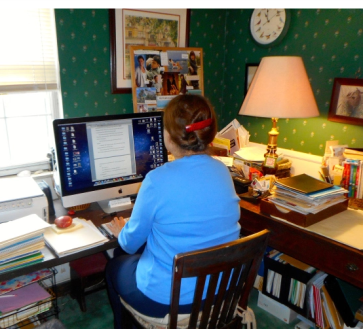

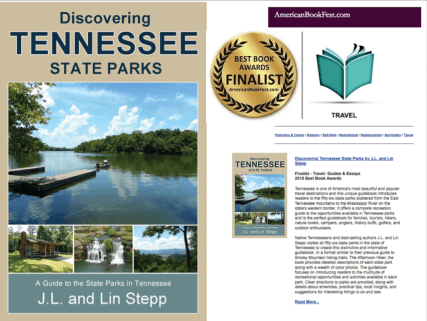
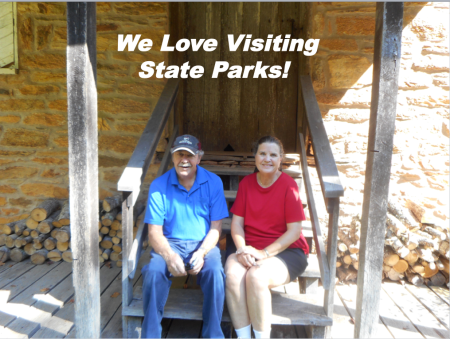 In 2018, my husband J.L. and I published a guidebook to all the fifty-six parks in Tennessee. We had such a wonderful time visiting and exploring state parks for two years before this guide published—and enjoying seeing it become a Best Books Award Finalist in Nonfiction: Guidebooks in the 2019 American Book Fest Awards—that we were soon hungry for another adventure. Because I’d started a trilogy of novels set on the coast of South Carolina, we began to receive encouragement from new fans in South Carolina to do a guidebook for their state. One reason that we wrote our DISCOVERING TENNESSEE STATE PARKS guidebook was because we couldn’t find a single guide to the wonderful parks in our home state. … Surprisingly, we now found the same thing to be true in South Carolina, one of our favorite states to vacation in. There was no guidebook to their state parks either.
 The push to write a South Carolina guidebook continued while we were in coastal South Carolina this August 2019, where I did five bookstore signings and events for my new book CLAIRE AT EDISTO while on tour. “We don’t have anything like that,” one of the managers at Barnes & Noble in Charleston told us. “You need to write a guidebook about our parks in South Carolina like you did for Tennessee.” Considering the idea more seriously now, we decided to visit Edisto Beach State Park since we were staying at Edisto. To start our first visit, we drove down a quiet side road to find the park’s environmental education and visitor center—only to learn that to explore any park in South Carolina you had to pay an entrance fee. This was a big surprise to us as in Tennessee all the state parks are free. The ranger told us if we planned to visit multiple parks we might want to buy a park passport, good for a year of free park visits… so we looked at each other, smiled, and decided to bite the bullet and do just that. “Well, we’re committed now,” J.L. said, but it has proved to be a good commitment!!
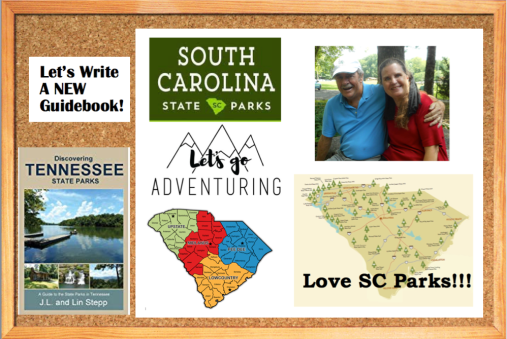
 On our first visit to South Carolina in September we visited eight parks in three days in the Upstate area of the state. I tend to think of South Carolina more in terms of the flatter, lowland areas of the state, but this part of South Carolina along the border of the mountains looks much like the high country areas around East Tennessee’s Smoky Mountains. Our journey began traveling down SC Highway #11 in the far northwest corner of the state on the border of the Mountain Bridge Wilderness. The first park we visited was Jones Gap State Park at one end of the 13,000-acre wilderness area, where we enjoyed especially hiking along mountain creeks to several water falls, followed by Caesars Head State Park at the other end of the wilderness area. At Caesars Head, we were blown away by the incredible views at Casear’s Head Overlook and enjoyed walking through the Devil’s Kitchen crevice in the huge granite rocks piled there.
 We returned to Greenville to explore Paris Mountain state park before spending the night. Paris Mountain, on the outskirts of Greenville, offered us the chance to hike two nice trails, one around Lake Placid to the spillway dam. And then on our last day we journeyed further down Highway #11 to Oconee Station, a small park with historic sites and then on to Oconee State Park, with fine campgrounds and a wonderful old waterwheel by the dam at the end of Oconee Lake. Then we drove home over the mountains back to Tennessee.
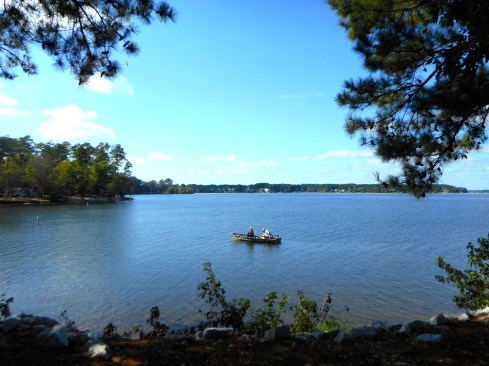
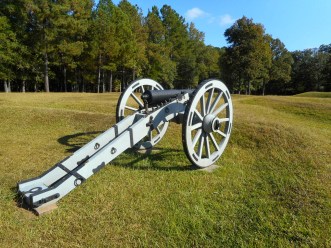 Our next three-day trip in October followed a similar pattern, and we visited eight parks, most along the beautiful lakes on the border between South Carolina and Georgia. If I owned an RV or camping gear, and loved to boat or fish, I’d head to one of these parks for a weekend visit as most had lovely campgrounds looking out over stunning lakeside views. The lake parks we visited included Baker Creek, Calhoun Falls, Hamilton Branch, Lake Greenwood, Hickory Knob, Lake Hartwell, and Sadlers Creek. On this trip we also enjoyed exploring the interesting Ninety Six National Historic Site where a pivotal battle of the Revolutionary War was fought
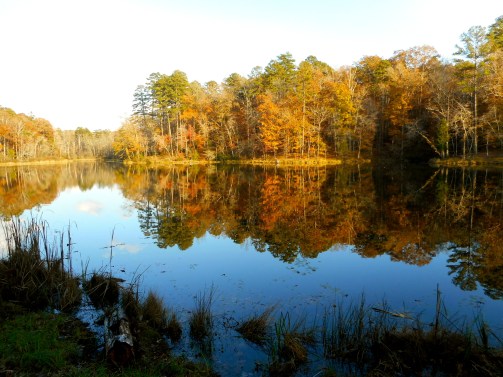 In November we took our final 2019 trip to South Carolina—this time traveling to nine parks in our three-day journey. This trip took us to a greater diversity of state parks, to historic parks like Cowpens, the Kings Mountain parks, Andrew Jackson, Landsford Canal, and Musgrove Hill State Historic Site, on to family parks like Chester State Park and Croft State Park, and even to a beautiful old antellebum home at Rose Hill Plantation State Historic Site.
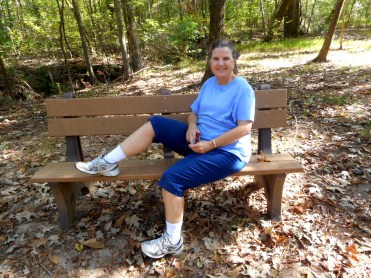
  We especially enjoyed Cowpens and Kings Mountain, their museums and battlefield trails, learning about the history of the Revolutionary Battles fought there. Chester State Park, centered around a 160-acres lake, was especially scenic and Croft Park had delightful trails leading to scenic creekside scenes, old bridges, lakes and springs. This park is especially known for its equestrian show ring and many fine horse trails, and we ran into many riders while there, even on a weekday.
 This spring, when the trees green up again, when the weather grows fairer and the days longer, we’ll travel further into the Midlands and Pee Dee regions of South Carolina to explore more parks and then down to the coastal regions to the Lowcountry parks. South Carolina is topographically diverse and we’re enjoying traveling around its backgrounds to see all its picturesque parks and sights. J.L. and I hope before next year to complete our SC guidebook and to see it published.
 Stop back by my blog in February and March and I’ll talk about our new books publishing at the first of April, what inspired them and photos from each.
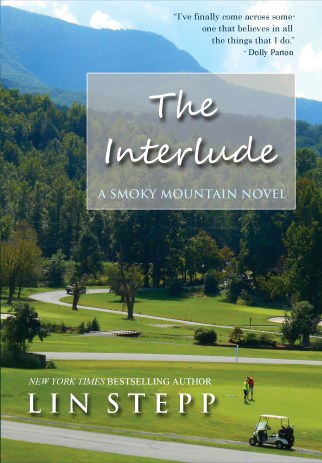 This month I’m writing about the 12th and final book in the Smoky Mountain series. It seems incredible to me that twelve books in this series, once just a dream and a vision, have now been published and loved by so many. Thank you all for reading and loving these books set around the Great Smoky Mountains I love so much.
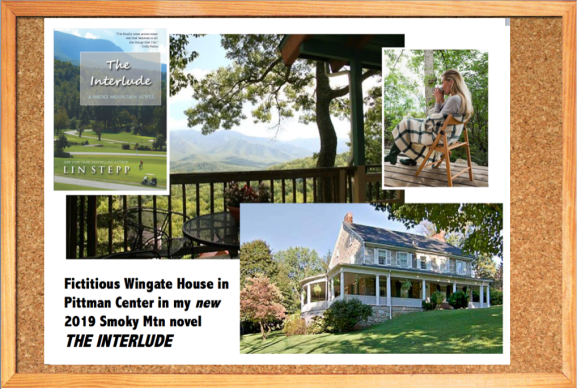 Mallory Wingate, Beau and Nonnie’s granddaughter, has spent many summers and holidays with them—and comes to them as a young woman, as this story begins, for a needed rest after a breakdown. Too much care with a dying mother, too much stress, work, and heartache led to her breakdown, which by necessity, has sent her away from her job as an editor with a publishing house to recover and heal.
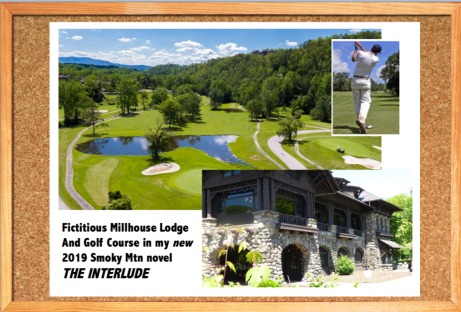 On the plane, hoping only for quiet, Mallory sits by a handsome, charismatic young man, a golf pro, traveling back from an event. Despite her reluctance to be congenial, he charms his way into her company—drawing her into a flirtatious interlude that Mallory enjoys, despite her problems. Of course, she never expects to see the man again—but to her shock, he shows up at her grandparents’ home the day after she arrives, and she learns he’s the resort’s golf pro! And so the story begins.
 Reviewers noted the mental health issues in some of the book’s many reviews: “The Interlude emphasizes and demonstrates the importance of family … Stepp’s background in psychology no doubt played a part in both illuminating the emotional problems Mallory and Lucas had as well as providing believable solutions.” – B. Mushko, blog reviewer … In The Interlude “ serious mental health issues including bipolar disorder, suicide and mental breakdowns are addressed, and this is excellent. It’s so important to shed more light on these conditions to remove the stigmas attached to them… The Interlude … is a heartwarming thoughtful story.” – J. Lynn, Amazon reviewer
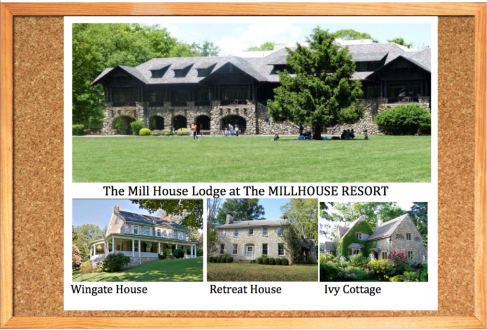 Many happy pleasures went into writing this book. I loved creating the outdoor scenes in the Greenbrier area … taking readers around the town of Pittman Center, to Emerts Covered Bridge, to the Pittman Center Museum at the elementary school – all real places. I also enjoyed creating the wonderful rock resort lodge at Millhouse Resort, and the its beautiful stone structures from quarried rock in the area—Wingate House, Beau and Nonnie’s home, with the Butterfly Tea Room behind it, Retreat House for rent for groups at the resort, and Ivy Cottage, where Lucas James and his little daughter Suzannah live.
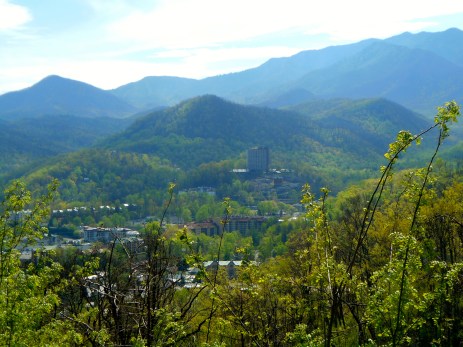 There really is a wonderful Fourth of July Parade every year in Gatlinburg, as pictured in the book, and readers often head to see places depicted in my novels when visiting in the Smokies.
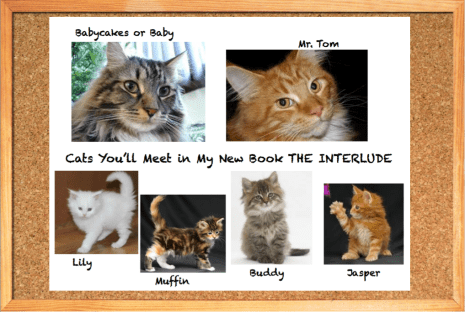 I admit, I’d still like to take home all four of Babycake’s and Mr. Tom’s offspring—Lily, Muffin, Buddy, and Jas
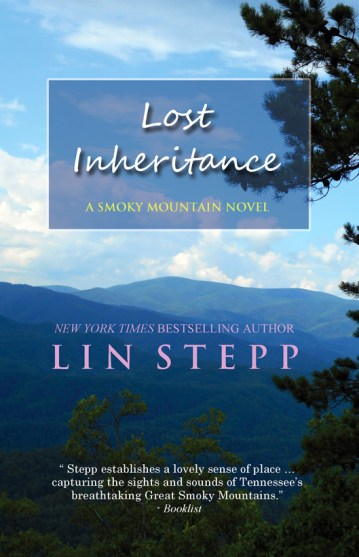 The idea for my novel LOST INHERITANCE came from a true story. My college friend Jayne was very close to an aunt and uncle who had no children. She spent many summers and holidays with them and lived with them for a time after she graduated from college. They always told her they planned to leave their home, properties, and business interests to her, but when they died it was discovered that the will hadn’t been property executed. It went into probate and all her aunt and uncle’s property was dispersed to a long list of other relatives, leaving Jayne out completely. She couldn’t even go into their home to get things she’d stored there but had to bid on them at auction if she wanted them. … This sad story stayed with me for years and finally found its way into the concept of this book.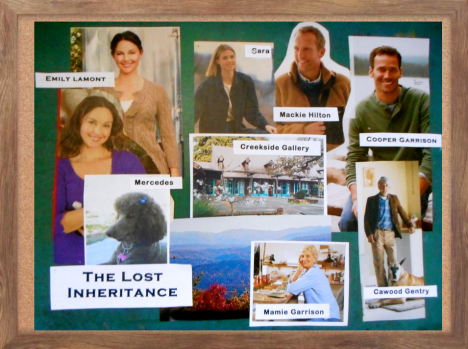
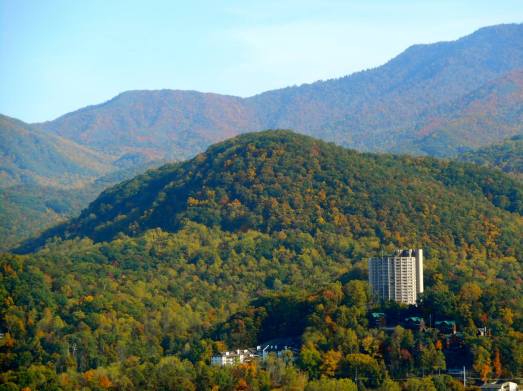
 Of course, this is only the beginning of the story. Cooper has his own difficult past and issues to deal with and immediately resents his attraction to Emily, too. Emily has her own adjustments to contend with, linked with her past and the new gallery in Gatlinburg. The “lost inheritance” theme plays out in other ways, also, as the story moves along … and the book is full of unsolved mysteries, friendships, love interests, and the lovely world of a beautiful little art gallery, all amid the colorful setting of Gatlinburg and the Great Smoky Mountains.
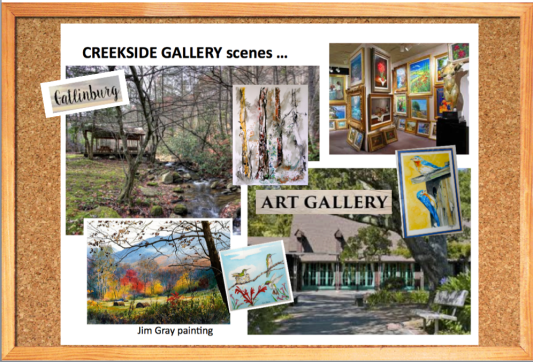
 An extensive amount of research went into this novel to create the book’s settings—first in downtown Philadelphia, Pennsylvania, and then in Gatlinburg in the Smokies. I placed the Creekside Gallery on Gatlinburg’s River Road and I spent many hours creating the “fictitious” artists who showed their work in this mountain gallery. I put my characters’ homes in different spots around downtown Gatlinburg — all in the midst of all the real sights any visiting tourist can see and enjoy there. Gatlinburg is a fun city to visit … and I worked hard to help my readers feel they were “right there” in the Burg with Emily, Cooper, Mamie, Mackie, Sara, and all the other colorful characters that found their way into this story.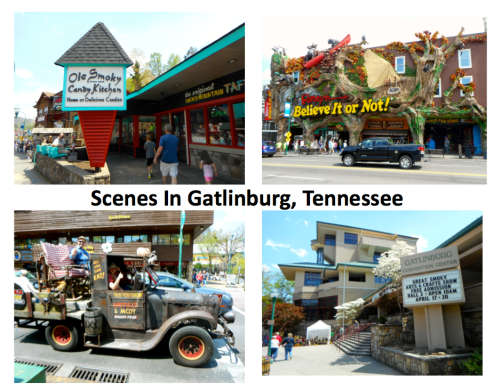
 I believe all stories are enriched with beloved pets, and four wonderful pets help to make this story special. Emily’s well-behaved gallery dog Mercedes comes with her to Tennessee from Pennsylvania and right away has a spitzy confrontation with the Creekside Gallery cat Sugar Lips. The real Sugar Lips is owned by my Sevierville fan and friend Charlene Povia and Mercedes was based on another fan, Lisa Keever’s, gray poodle Sadie. Cooper’s golden retriever Brinkley is named after Steven Zacharius dog with the same name. Steven is the CEO of Kensington Publishing in New York and was pleased that Brinkley found his way into a novel. And finally little Buster looks very much my next door neighbors, the Owens’, two Bichon Frise feisty, little dogs. So I had actual pets to observe to create all these fun story pets. …and Mercedes and Brinkley even get to become heroes in the story.
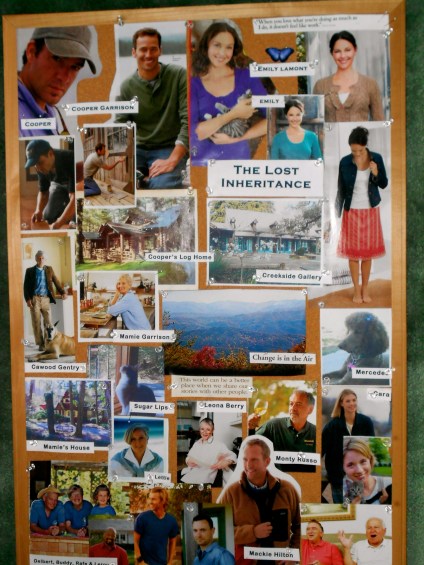 I loved working on this book set in Gatlinburg… and many of the side characters I created became as dear and beloved to me as the main characters….the elusive, eccentric artist Cawood Gentry, the fun-loving Bolinger brothers who ran the coffee store next door to the gallery, Cooper’s long-time friend Mackie Hilton and his wise father Delbert, and Venetta Renaugh, roaring up on her motorcycle and stirring up bad memories for Cooper. I also loved Daniel Stelben, valiantly trying to keep the Newmans’ Philadelphia gallery going and struggling to keep Leonard Newman from destroying it.