 Although all novels are fictitious, many are based in full or part on real facts. They often detail genuine historic times and the lives of real people. I find I often enjoy novels more than true autobiographies or biographies about famous people. They weave the history of remarkable lives into story—which is often more engaging and enjoyable to read. As a woman, my favorites are about other women. I like reading about how they became the heroine of their own lives and not the victim, of how they juggled the problems of multiple roles and the minority status of being a woman to reach for more and to accomplish more. Audre Lord once wrote: “I am not free while any woman is unfree, even when her shackles are very different from my own.” Books about women who have overcome obstacles, made their way in the world against unusual odds, or bravely chosen an untraditional route for their lives inspire and empower other women to also reach for more.
For my November blog I wanted to spotlight some books and novels that tell the stories of some remarkable women. The ones below are contemporary books, some set in the past, some more biographical than others, but each tells the story of a woman who followed a different drummer to a unique destiny. It should be remembered that this is never an easy road for any woman to follow and the success of any woman who makes a difference and leaves a legacy should always be celebrated.
The first book I remember reading about a remarkable woman was actually about a young girl on the brink of womanhood. Her name was Anne Frank and the book I read was a diary Anne kept—which of course was not planned as a book to be published. Annelies Frank, called Anne (1929-1945), gained fame after her death through the publication of her diary in ANNE FRANK: THE DIARY OF A YOUNG GIRL. 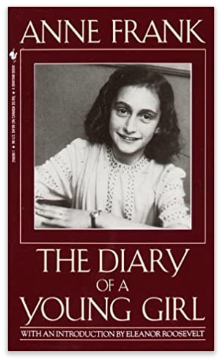 As a Jewish girl, thirteen-year-old Anne penned her thoughts in a dark time of hiding during the German occupation of her Amsterdam hometown. After two years Anne’s family was found, arrested, and sent to Auschwitz, and later to another concentration camp where Anne died. Anne’s diary was found, given to her father after the war, and eventually published. … Most know this story as the book became a classic and was made into a film. But to me as a young girl reading Anne’s dairy brought a time of history alive to me in a painful, personal way. For Anne’s private account made me “feel” and imagine that time in a way history book accounts never did. In addition, Anne’s incredible optimism in a harsh, cruel time, her desire to “think of all the beauty still left” and her belief, in spite of the evil and cruelties she saw, that “people are really good at heart” stayed tucked deep into my spirit and still influences my thinking.
From the serious to the humorous, I also loved Ree Drummond’s book THE PIONEER WOMAN: BLACK HEELS TO TRACTOR WHEELS. I discovered and enjoyed this light-hearted novel long before Ree Drummond’s fame rose as high as it is today. The book is a fun and delightful love story of how Anne Marie (“Ree”) Drummond, a city girl, heading to Chicago to pursue a law degree, unexpectedly meets, falls in love with, and marries an Oklahoma rancher. 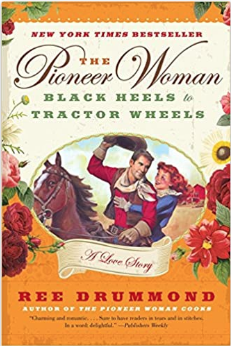 She called Ladd Drummond The Marboro Man throughout the book, making you laugh at the unlikely match Ree makes to a fourth-generation rancher on a remote, 430,000 acre spread. The book shares the hard transition Ree faced in settling in to this new life, the teasing, the adjustments, and the difficulties –all in a warm-hearted story … The book doesn’t share the story that follows, though—and I’ve always wished Ree would write another. Extroverted and hungry for company, Ree started a blog later in her life, around raising four kids, feeding cowboys, and living on her Oklahoma ranch. Amazingly, it took off like gangbusters. The blog’s popularity soon morphed into a TV show and a stack of cookbooks, all filled with Ree’s own recipes and personal photographs of her home and life on the ranch. Today, more success has followed, and Ree and her family have a restaurant, hotel, retail store, and bakery in Oklahoma along with a huge fan base. Although many people have seen Ree’s TV shows or picked up one of her cookbooks, I’ve found that few people have read her personal novel and how it all began… so look for this book and expect a lot of laughs and smiles!
Another humorous novel I very much enjoyed is by Peggilene Bartels, who is the reigning chief of the town or Tantum (or Otaum) in Ghana, Africa. As a young woman in her twenties, Peggy moved to the United States to work as a secretary at the Embassy of Ghana in Washington DC. 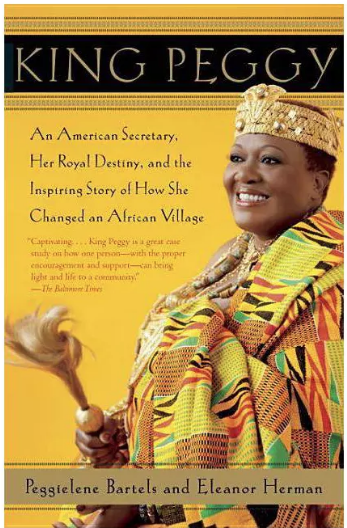 Amazingly after she had worked at the embassy for nearly thirty years, she got a letter one day, and then a phone call, telling her that due to a death in her family that she’d become “king” of her hometown village of 7,000 people in West Africa. “You are now the new king of Otaum!” the caller told her. The novel tells Peggy’s story of returning to her village and taking up the difficult job of becoming a ruler in what she soon learns is a very problematic situation. This is a wonderful story about what one woman with courage and determination can do. Be sure to read this one for a peek into a very different culture from ours in America. You’ll love it.
Stepping back into the past again, I also greatly enjoyed a novel celebrating the life of Elizabeth Hobbs Keckley, a Black woman who was President Abraham Lincoln’s wife’s dressmaker. The book MRS. LINCOLN’S DRESSMAKER is written by Jennifer Chiaverini, a New York Times Bestseller. 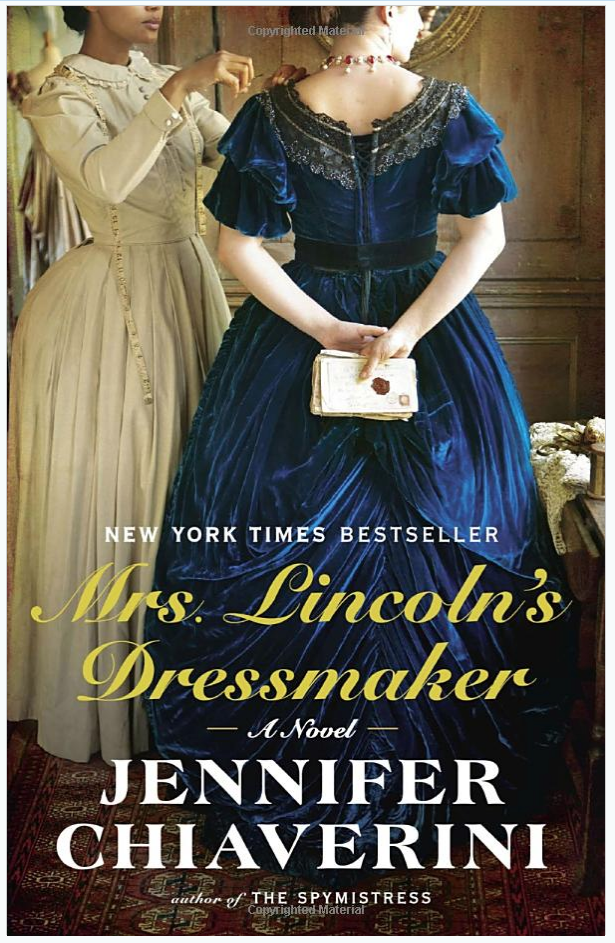 The story dips into the very private life of Mary Lincoln, and her family, from the fictional perspective of her dressmaker and trusted friend. It’s a marvelous story, spanning a lengthy period of history, and following the relationship of these two women into the White House, through the trials of the Civil War, and almost to Mrs. Lincoln’s death. Other books have been written about the unlikely friendship of Elizabeth and Mary but this was my first to discover. Elizabeth, a former slave, who endured great hardship in her earlier life, became not only a skilled seamstress and friend to Mary Todd Lincoln, but established a successful dressmaking business, became a civil activist, an author, and served on faculty at Wilberforce University in Ohio. For a glimpse into a slice of history you might not know much about, this is an interesting, well researched and well-written book.
Another novel about a remarkable woman I enjoyed reading was THE AVIATOR’S WIFE, by Melanie Benjamin, about the early life of Anne Morrow Lindbergh. In my review of the book on Goodreads I wrote: “A really interesting fiction and history mix about Anne Morrow Lindbergh – Charles Lindbergh’s wife – and the daughter of the U.S. Ambassador to Mexico. After they married, many do not know that Anne learned to fly like Charles, traveled with him on many flights, and became the first licensed female glider pilot in the U.S. 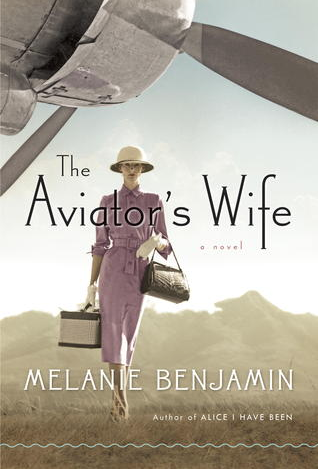 I liked learning more about the Lindberg’s lives … and about Anne’s life. Her book GIFT FROM THE SEA has always been a favorite of mine … but I learned a new side of her in this novel. I loved her spunk in learning to fly with Charles and in being his navigator on many harrowing trips.” The book uncovered aspects of this prominent woman I knew little of. We often assume women of great prominence and wealth enjoy only happiness but they also have their personal trials to battle. Although much of Anne’s life is well known, like the kidnapping of her son, the truths given in this novel were new to me. After reading this book I can more easily understand why Anne wrote: “I would like to achieve a state of inner spiritual grace from which I could function and give as I was meant to in the eye of God. …Woman must come of age by herself … She must find her true center alone.”
When I read GRANDMA GATEWOOD’S WALK I had never heard of Emma Rowena Gatewood (1887-1973). In 1955, she told her Ohio family she was going on a walk but didn’t mention where she planned to go or how long she might stay. She wore sneakers, simple clothes and packed her extra clothing, supplies, an army blanket, an old shower curtain and some money into a pillowsack tote and set off to walk the 2,168-mile Appalachian Trail (AT). “I thought it would be a nice lark,” she told reporters later. 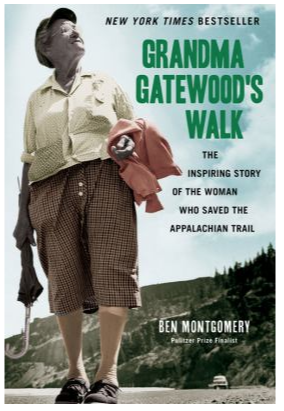 She was 67 years old, the mother of 11 children and 23 grandchildren, and she became the first woman to hike the AT alone in one season. Emma survived many perils and problems, which the book details beautifully, but the book also delves into the hardships of Emma’s life before she set out on her hike, helping you to see the courage she displayed as a younger woman that she, undeniably, drew on to later hike the AT. I was privileged to meet the book’s author Ben Montgomery, the journalist who gathered all Emma’s story and then wrote it. As a hiker myself, the book was truly humbling to me. I hike and walk only maintained park trails and would never brave, at midlife, the overnights and hardships of hiking the full length of the Appalachian Trail as Emma did. This book is a great read about a heroic woman. Don’t miss it!
I read the book KISSES FOR KATIE with my Book Club group, my first time to learn about Katie Davis Majors. A Nashville Tennessee girl, Katie, with every advantage, was senior class president and homecoming queen, ready to head away to college, when she went on a short mission trip to Uganda. In Jinga, Uganda, the orphan children touched her heart. 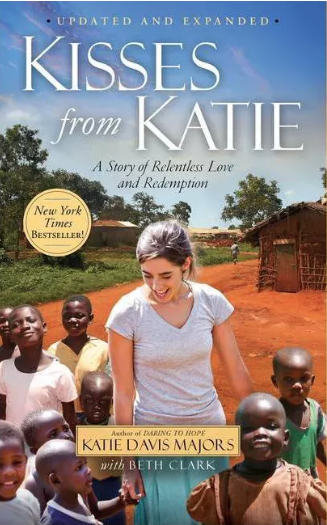 Against her parents’ judgment and all her friends’ advice, Katie returned to Uganda at the end of her senior year to work teaching with the orphans. Life in Uganda was not easy and the way was hard – and you can’t help but think of Katie’s youth, as you read her story, and that she traveled to Africa alone and without family or friends. But she persevered and in time founded Amazina ministries and fostered thirteen children. “Courage is not about knowing the path,” she wrote. “it’s about taking the first step.” This is a beautiful story of one young girl’s courage to do what she feels God is calling her to do. Katie is now married, has adopted the thirteen children and has a child of her own, and is still working in Uganda. She has also written a second book about her work in Africa called DARING TO HOPE. You will find some beautiful YouTubes of the work of Katie’s ministry on the amazima.org website. This book will really touch your heart.
Another heart-touching book, and a better-known story than Katie’s, is Malala Yousafzai’s in the bestselling book I AM MALALA. When the Taliban came into Pakistan, Malala courageously continued to attend school and to speak out in ways women under the Taliban, were not to do. In 2012, at fifteen Malala almost paid with her life for refusing to be silenced and for continuing to study and learn.  On the bus home from school, she was shot in the head at point blank range and wasn’t expected to live. But ten days later she woke up in a hospital in England and after months of surgeries and rehab, Malala made a new home in the UK. She has continued since to vie for women’s rights and in 2014 won the Nobel Peace Prize for her efforts. Every day Malala works and fights for girls to receive safe and quality educations. She wrote, “We realize the importance of our voices only when we are silenced.” Recently, she attained a college degree to better prepare her for more work ahead. “I tell my story not because it is unique,” she says, “but because it is the story of many girls…. Do not wait for someone else to come and speak for you. It’s you who can change the world.”
To close this blog, I want to mention a sweet warm-hearted novel by Richard Maltby, Jr, called MISS POTTER about the life of Beatrix Potter. This book was also made into a movie also titled MISS POTTER and was a total delight, if you haven’t seen the movie, I encourage to find it and to look for Maltry’s book about Potter’s life. Helen Beatrix Potter (1866-1943) was born into a well to do family in South Kensington outside of London, England. 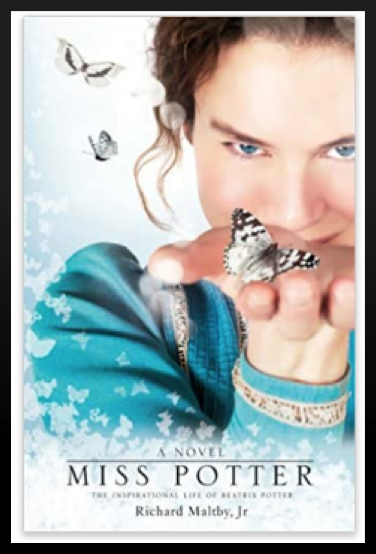 Beatrix was smart and industrious and studied under a number of governesses. She and her younger brother Bertram both loved to draw and spent hours out of doors making sketches of their many pets and of the animals around the family’s property. Her parents hired art teachers and Beatrix became an adept scientific illustrator and greeting card designer. In a time when women of her class usually simply married and stayed at home, and when working “in trade” was frowned upon by British society, Beatrix was unusual. Maltby’s book tells all of this story in a captivating way and how Beatrix went on to become as well known and beloved author of children’s books. I loved the special insights in this story of how Beatrix envisioned her book characters as so real that she conversed and talked with them and felt she could even visually see them as she worked. The movie story tweaks a few facts in Potter’s real life, but both book and movie are a delightful look at a talented, unusual, and independent young woman of her time. I love Beatrix’s quote: “I hold that a strongly marked personality can influence descendants for generations” and her more humble comment: “If I have done anything, even a little, to help small children enjoy honest, simple pleasures, I have done a bit of good.”
Happy Reading everyone. I hope you enjoy these and many other books out there about remarkable women who have made a difference in their worlds.
Note: All photos my own, from royalty free sites, or used only as a part of my author repurposed storyboards shown only for educational and illustrative purposes, acc to the Fair Use Copyright law, Section 107 of the Copyright Act.
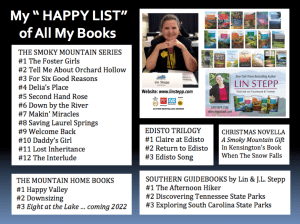 I am a Southern author and I bring my readers with every book to “My Little Corner of the World”—and to the places I know and love. In this photo, you’ll see a listing of all my published books, twenty-one titles now. You’ll also see that most bring readers to the Smoky Mountains and to the Tennessee area where I live. There are twelve stand-alone novels in The Smoky Mountain Series that take you visiting in each book to a new place around the mountains. You’ll see the book covers for those titles below.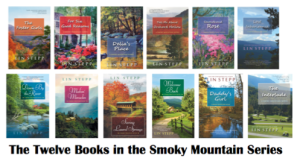
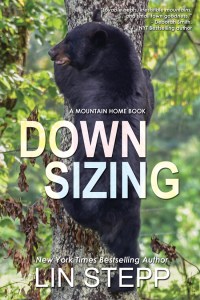 In these Mountain Home titles I’ve been taking readers to New Places … like in my book HAPPY VALLEY to the lovely valley below the Chilhowee Parkway near Abrams Creek Campground, and In my new title DOWNSIZING to the charming Glades Arts and Crafts Community in Gatlinburg. I have the added joy of joining many of the wonderful artisans and crafters from the Glades at their Great Smoky Arts & Crafts Community Spring Easter Show April 1st, 2nd, and 3rd for the Book Launch of my new spring titles. I’d love to see you there if you can come … but if you’re not visiting in the Smokies then, be sure on your next trip to the mountains to drive around the eight mile Arts and Crafts Loop Road off Hwy 321 in Gatlinburg to explore all the interesting and colorful shops there and to eat at one of the charming restaurants.

 Due to the warm reception to this book and encouraged by bookstores and fans while visiting in South Carolina, we began work on a second state park guidebook set in the Palmetto State. Completing our visits to all the parks last year, this new guide book, EXPLORING SOUTH CAROLINA STATE PARKS, has just published along with my latest fiction titles. The book has directions to each park, descriptions of each, and over 700 color photos throughout. I would encourage you to buy this book in print versus eBook, too, as the print books keep the beautiful original book format, making them so much more appealing.
 J.L. and I are delighted, that in addition to my two new novels publishing in April, we also will see the debut of our third jointly written guidebook EXPLORING SOUTH CAROLINA STATE PARKS. … Our journey into creating regional guidebooks began with the publication of our hiking guide THE AFTERNOON HIKER, celebrating 110 of our favorite hiking trails in the Smoky Mountains. When the national parks closed for a long stint one year, we started looking for a Tennessee parks book for ideas for new places to hike and explore near our home in Knoxville, Tennessee. Finding nothing, we began our next adventure of visiting all of the 56 state parks in Tennessee over the next two years. It was more fun than we ever could have imagined and DISCOVERING TENNESSEE STATE PARKS published in 2018.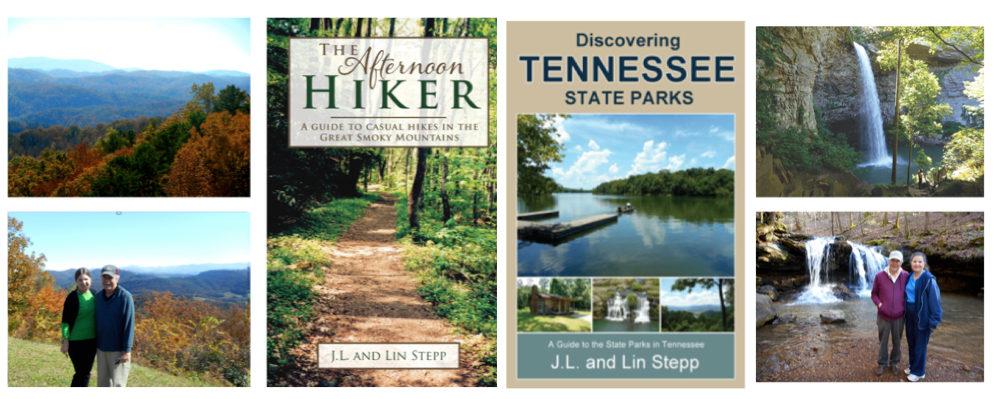
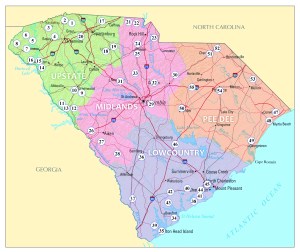 In preparing to create this new guidebook and after researching the state of South Carolina and its 47 state parks, we decided to break the guidebook into four main regions—Upstate, Midlands, Lowcountry, and Pee Dee. Each area tends to have its own unique flavor—and dividing the parks into regions gave us an organizational method for grouping the parks by proximity.… As we studied about SC’s parks, we found the state also had seven national parks, one we broke into two parks, to make eight. Since many of these were smaller parks spotlighting historic or natural sites near many of the state parks, we decided to also add these national parks into our guidebook, bringing our overall total to 55 parks.
 J.L. and I started our journey of exploring South Carolina’s parks in the Upstate area. Thinking of SC as a flatter and less mountainous state than Tennessee, we were surprised to find many of the Upstate parks reminded us of areas around the Smoky Mountains, rich with hiking trails, waterfalls, rugged heights, and sweeping mountain views. About seven of the Upstate parks lie in a string near the SC and NC border along Highway #11, the Cherokee Foothills Scenic Parkway. Parks along this route included lovely state parks like Jones Gap State Park, Caesars Head, Table Rock, Devil’s Fork, and Oconee State Park.

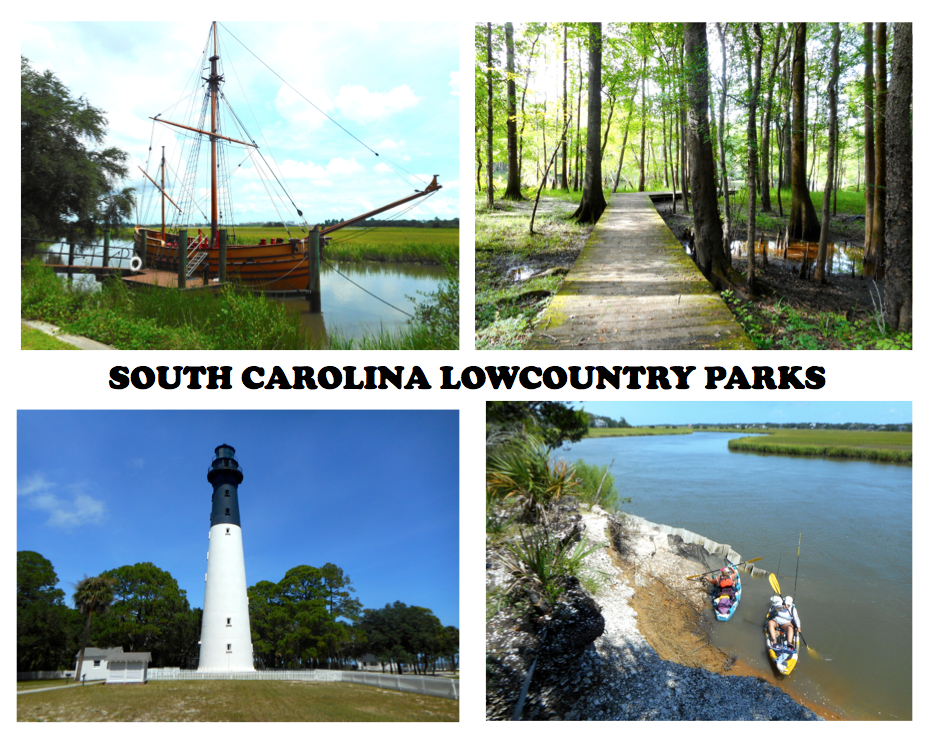

 J.L. and I found our trips all over South Carolina to be a pleasure—and now we find ourselves already plotting and planning the next Southern state we hope to explore for another guidebook! Traveling around to state parks is a beautiful way to sample the scenic wonder of a state and to just enjoy time out of doors.
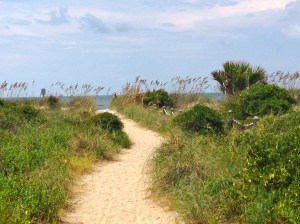
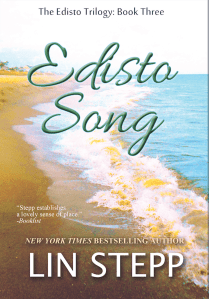 Some years ago when I was talking with my editor, at the time, Audrey LaFehr at Kensington Publishing, I asked her, “Do you think my readers, who have loved all my Smoky Mountain titles, would follow me if I also wrote a few books set at the beach?” She asked what I had in mind and I told her about my idea for a trilogy of books set at Edisto Beach, South Carolina, my family’s favorite vacation spot. She reacted positively, “I think your readers will love going on vacation to the beach with you. The books will still be the kind and style of books they like—and, besides, most everyone loves to take a little vacation to the beach.”
 As the book begins, she is dragging with illness and wisely listens to the counsel of her neighbor to head to the concert hall to talk to her agent Jonah about taking time off after this performance to heal. However, some new shocks send her life spiraling in a new direction.
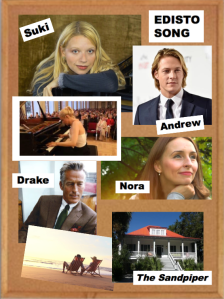 I won’t tell you more now about this new story, but a special pleasure I can tell you is that you will re-meet many of the characters from the first two books again—Claire and Parker Avery, Mary Helen and J.T., all the gang at Edisto, Kizzy Helton, and other island friends. You’ll also get to visit at Andrew’s beach house, The Sandpiper, at Edisto … and get to know his mother Nora Cavanaugh better.
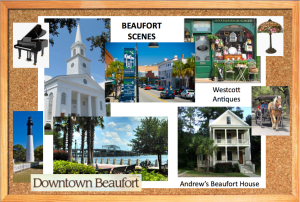 You’ll also learn more about the Westcott Antiques store and get drawn into the lives of many new Beaufort characters as well as being swept into an exciting new mystery that threads its way through the story. Beaufort is a delight –as is Edisto—and you’ll be wanting to visit both places after finishing this book filled with love, warmth, friendship, suspense, and an array of fun, unexpected events. I hope you’ll all enjoy this “finale” book in the Edisto Trilogy.

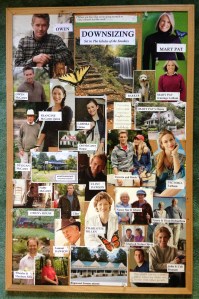 In my new novel DOWNSIZING, publishing in April 2021, my main character is Mary Pat Latham. At midlife, Mary Pat’s life is settled and comfortable. She’s been married for thirty-four years to her husband Russell, a successful heart surgeon. They are comfortable, own a beautiful home, and have four children who have recently finished college and started settling into new careers and homes. Mary Pat’s life is rich with interests, social clubs, and philanthropic activities. She looks forward to a future with married children, grandchildren, and more times for trips and travel when Russell’s medical practice slows down. The last thing she expects is for Russell to come home in the middle of the day and to announce, out of the clear blue, that he wants a divorce.
 All of this discussion only gets worse as Mary Pat catches a change in tone as Russell talks about the realtor he’s been working with. His quick defense when Mary Pat quizzes him about the relationship tells her all too much. In some heated words to follow, when Mary Pat pushes to ask if he’s given any thought to where she should move or what she should do now … Russell throws out that she can move up to her parents’ old cottage in Gatlinburg for a time if she wants. He never wanted to buy their old place when her parents moved anyway. So after an afternoon of weeping and shock, Mary throws some things into a bag to head to the small mountain house of her childhood, too upset and humiliated to even think about seeing or talking to any of her friends or family right now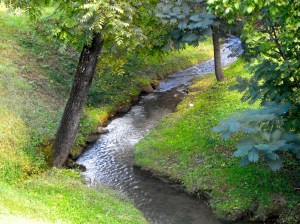
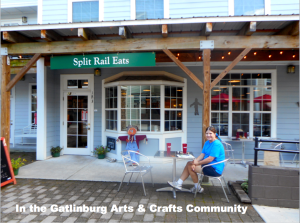 Readers will soon run into a rich, colorful cast of characters in the Glades Arts and Crafts Community of Gatlinburg, Tennessee, where Mary Pat’s small family home sits on a quiet mountain road. I’ll leave all these new characters’ stories of love and loss for you to learn about as you enjoy this new book, and be assured that a host of unexpected events, shocks, and surprises await you as you turn the pages and follow the plot through its ups and downs.
 Angry at all that happens, one thing Mary Pat does after her shocks settle down is to decide to start some improvements and changes in her own life. One of these is to work on “downsizing” herself. Russell’s hurtful words bring home to her that she, in truth, has let her appearance go. These efforts become an interesting part of the book as Mary Pat’s earlier life goals and education were actually geared to nutritional behavioral counseling, the irony not escaping her now. So Mary Pat reaches back to reexamine those old goals and dreams.
 When I was working on planning this book originally, I had to create a fictitious weight loss business and a diet for Mary Pat to follow for the story, so I created a center called Diet Options for the book and pulled out all my old diet notes from successful dieting I’d done in past to design the Diet Options weight loss program and the diet Mary Pat becomes involved in. Fans around this area, knowing what I was working on then—and watching me lose twenty pounds trying out my own diet plan again—began to push me to put the diet at the end of the book. So at the end of the book will be a link taking readers, who are interested, to pieces of Mary Pat’s Diet Options Notebook, with a little inspirational teaching and the complete diet laid out, including food lists, recipes, and more, in case you want to try a little “downsizing” of your own.
 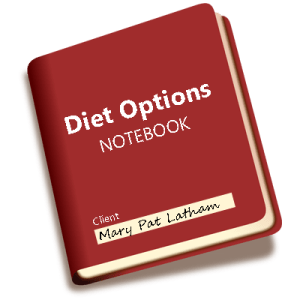 It’s a great almost 50-page resource you can print out, if you want … and it’s Free to all my readers.
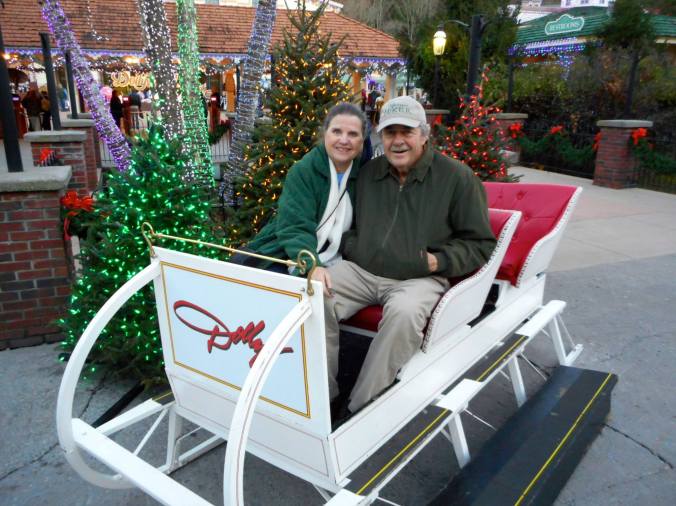 With this 2020 year such a difficult one, all of us are seeing changes in our Christmas celebrations. Those changes cause us to look back and remember with nostalgic fondness our Christmases of the past—and perhaps to cherish those memories more than we might have before. I see it as a form of “thankfulness” to look back on the holidays of the past, being grateful for the warmth, love, and good we remember about each.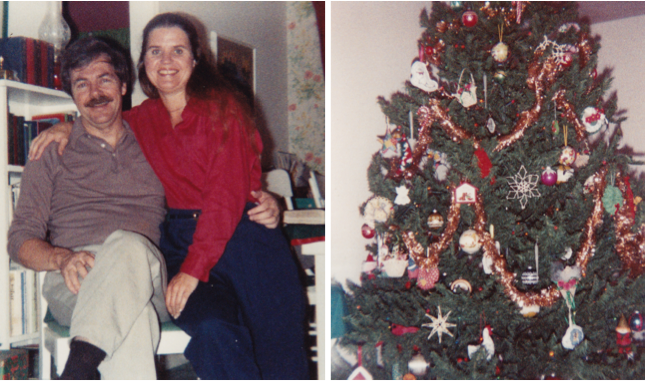
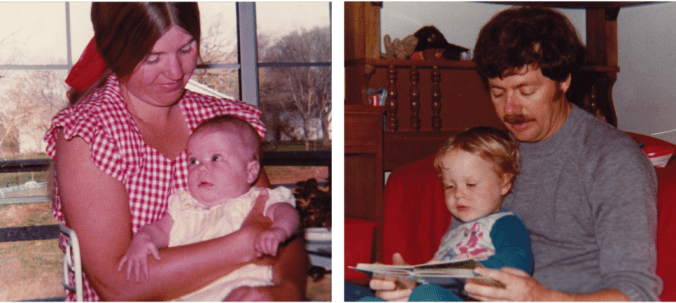
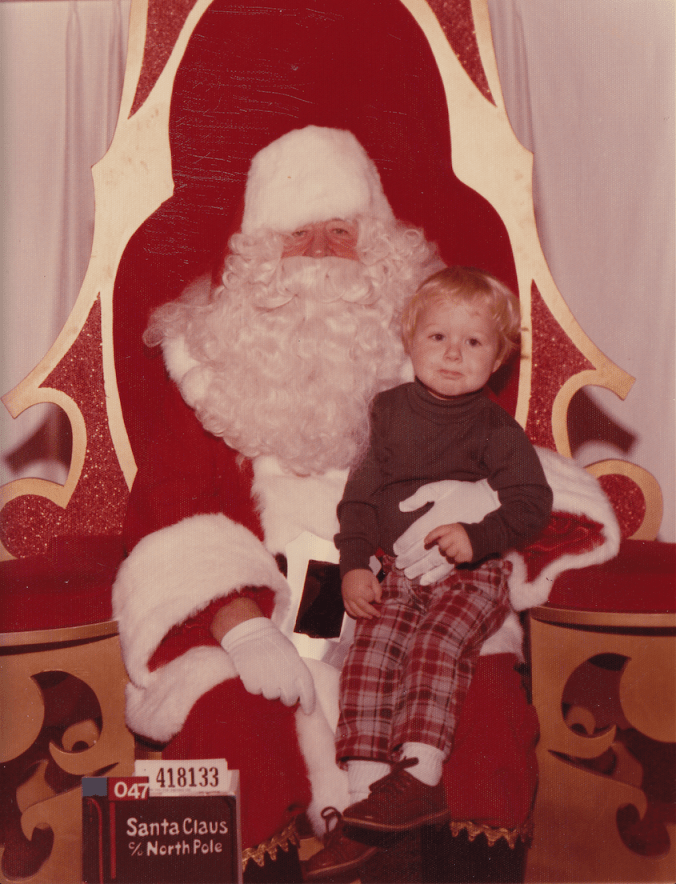 Among my memories as I write this today, I recall the excitement of decorating the tree every year—adding the old treasured and new ornaments—and then watching the lights with pleasure every night. We took driving trips around the neighborhood to see the holiday lights and went to the mall and Christmas shops to see Santa and to enjoy the lavish decorations. We also attended annual events in our area celebrating the season, in the city, at the children’s schools, and at church. Going downtown to the Christmas Parade and to see the lights was an annual trip and later we began to always attend the Fantasy of Trees in Knoxville and to take a trip to Dollywood to see the holiday lights and shows.
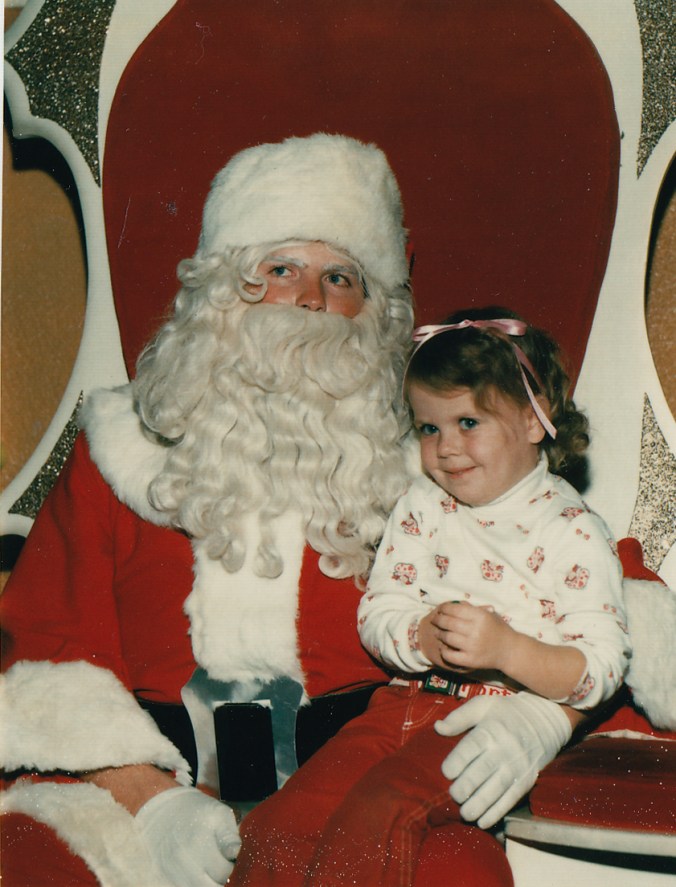 I remember fondly how the children poured through the toy catalogs as they arrived in the mail, making lists of “ideas” for gifts they might like to receive from us and from Santa. I recall, too, how they shook and rattled the gifts under the tree later, trying to guess what was inside every package. Christmas morning was always a fun time of discovery, of enjoying new toys and games, trying out new bikes or skates outdoors, and running back and forth to the neighbors to see what everyone else received. I remember the year I saved up long and hard so we could buy both the children bikes and how excited they were to ride them up and down our cul-de-sac street. Katie loved dolls, Barbies, art toys and coloring books, jewelry, and pretty things. Max loved GI Joe, Star Wars, action toys, games and toy guns. And our downstairs held a big playroom that the children and all their friends enjoyed.
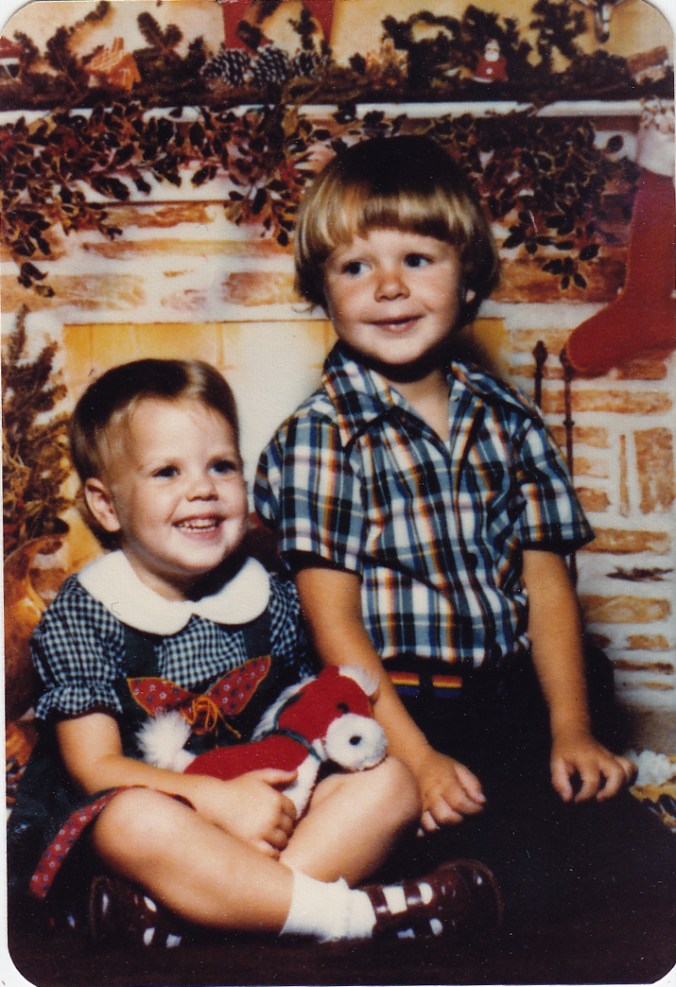 As I looked through old photo books to find a few memory pictures to add to this blog today I found Christmas pictures of the children, like this one, we took at the holidays. We gave photo copies to the grandparents, to family, and friends or tucked them into the Christmas cards I always sent. J.L. and I both laughed at the photos of Christmas past we found, the floor around the tree piled with gift wrap and boxes, family members all grinning and holding up gifts received or modeling new clothes and hats, and the cats getting into the fray by climbing into all the Christmas boxes. Before my eyes I watched the children grow from those baby years to childhood in those photo books and then on to the teenage years. It seems incredible that the years have flown past so swiftly and that now they are both grown and gone—and living so far away.