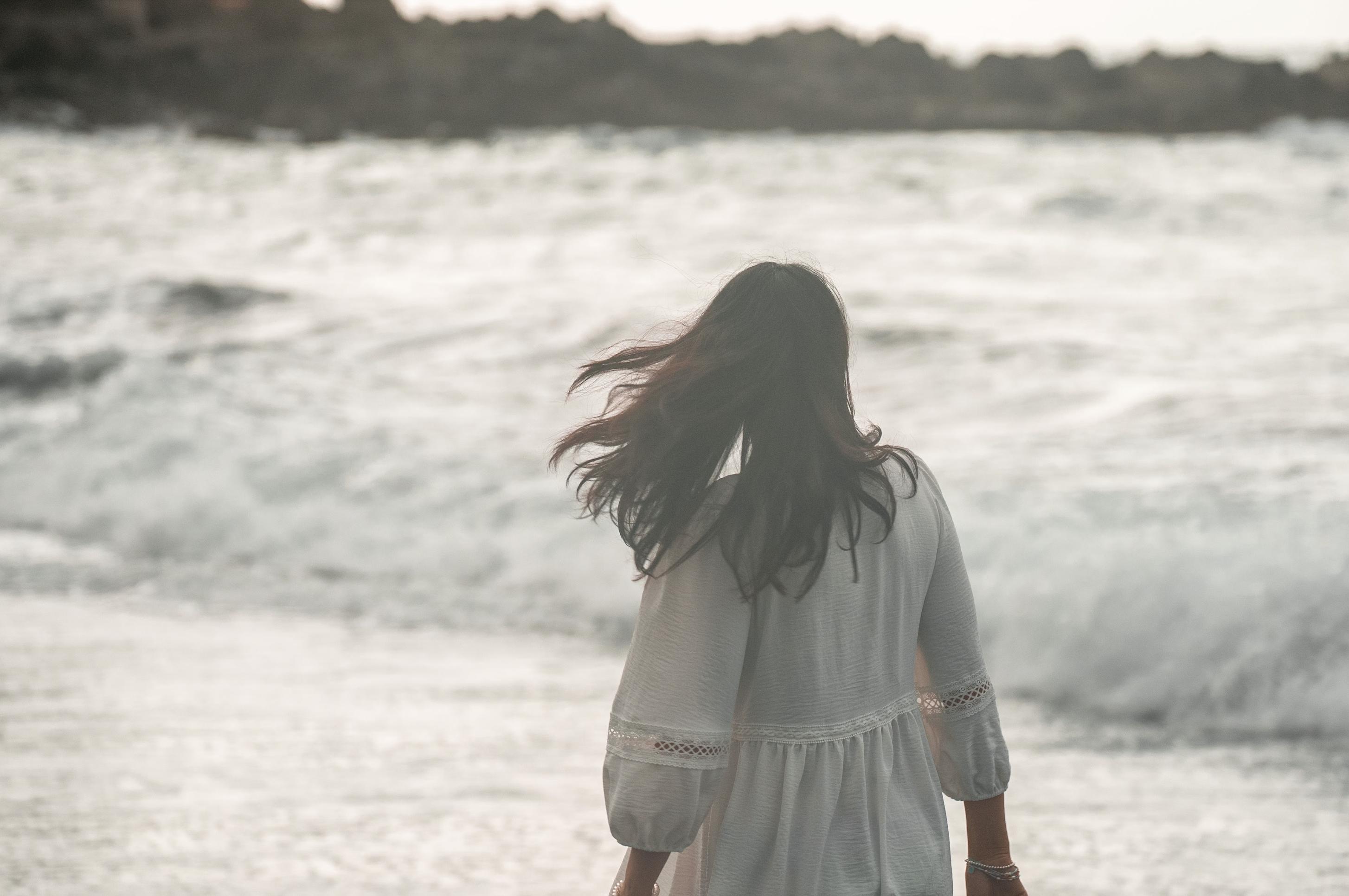
 JILLY’S ANGEL – A free story
“Anglund?” called Jilly, sitting up in the dark. “Anglund, is that you?” She concentrated on the right side of her bedroom where she could perceive her angel’s presence.
“I am here,” said Anglund, materializing more fully. He had on the familiar tunic with the sleeves rolled up over muscled arms, the waist belted with that unusual braid that looped over his shoulder, too, often glowing when he was animated. He had a long knife tucked into the top of his high laced sandals.
“I haven’t seen you for a while,” Jilly said, yawning and smiling. Anglund smiled back.
“I have been around,” he answered, in his usual evasive manner.
“Well, I’ve missed you,” Jilly said simply. She had never been afraid of Anglund, even from the very first time he appeared.
“I have come for a reason,” he stated then. “You and your father must leave here before Friday eve.”
“What do you mean, leave?” Jilly asked. “This is our home. I don’t understand.”
“You must trust. He has sent me to warn you. It is yours to obey or not to obey,” Anglund pronounced, the braid around his waist and shoulder illuminating, making his strong face to shine. His hair was bound back in a ponytail at the base of his neck, and he was holding his helmet tonight. Sometimes he wore it and Jilly couldn’t see his face. She could see it tonight though. It was serious and urgent. She felt an odd, uncontrollable shiver.
“What is it? What’s wrong?” she asked, but Anglund was already fading.
“Friday eve,” he repeated. “Remember, Jilly.” She couldn’t see him anymore but she could still feel him.
“Wait!” she called. “Anglund, I need to know more.” But he was gone, and there was only that after-feeling of his presence in the room.
Jilly felt unsettled then. Anglund had been her friend since she was small, but he had never come to her with a directive. He just made suggestions, gave her counsel, comforted her. What should she do? How could she get Daddy to leave in the height of the tourist season? He didn’t even believe in Anglund. She lay back in her bed thinking, trying to decide what to do.
The next morning, Jilly’s father Sam Lancey’s eyes softened as Jilly came walking across the room to the table to join him where he was eating breakfast and enjoying his morning coffee. At thirteen, she was getting tall and starting the change into womanhood. But her eyes were the same luminous blue as the ocean outside their window and so much like her mother Ellen’s. Sam could never see them without remembering Ellen, without a moment’s sadness and then a rush of joy to have Jilly. She was the light of his life. Sunshiny, silly, serious, smart—all those words described her.
“Hi, pumpkin,” he said, as she came to kiss him. “Did you tell Dolph what to make you for breakfast?”
“Yes,” she said, sitting down across from him. Dolph was the morning cook at Lancey’s Seafood Restaurant. He was in the kitchen gearing up for the beach traffic and the morning tourists who would soon begin milling into the restaurant. The early mornings like this were their quiet times, always special for Sam and Jilly, the time they talked before the day.
Jilly was too quiet today though, punching down Cheerios into her milk and watching them pop up again.
“What’s on your mind?” Sam asked.
“Daddy, could we get away for a while?” she asked. “You know, go somewhere for a few days. Just the two of us.” She smiled at him engagingly.
“What a dreamer!” he teased back. “The height of the tourist season and the kid suggests a holiday!”
“I’m serious, Daddy,” she said, her smiling face changing to an anxious one. “Couldn’t Bruno take over for a while. He knows what to do. Lloyd and Alice could help him.”
“I’d love it, Jilly,” he replied. “But the timing’s not right. We’ll go off together in October or November on one of your school holidays. How’s that?”
“We have to go now, Daddy—before Friday eve,” she insisted.
“What’s all this anxiousness and push to leave the island?” he asked. “Are you afraid about the hurricane warnings?”
Her eyes widened, her face turning pale under her summer tan.
“We’ve weathered these storms before,” he continued. “I need to be here to board up, to help all the panickers who aren’t used to storms like we are.” He smiled and attempted to punch her across the table, but he couldn’t jolly her up.
“Look, Daddy…” She paused, deciding to bare her cards. “This time we have to go. I’ve had a warning. Whether it’s for the storm or for something else, I don’t know but we really have to go. You need to trust me and leave the boarding up to someone else this time.”
He listened to her, smiling, obviously not taking her more seriously than any other anxious islander or tourist concerned about the storms he’d faced time and again over his lifetime on Sanway Island.
“Daddy, this is really serious,” she pressed. “Anglund came and told me we need to leave by Friday eve!” There. It was out.
“Good try, pumpkin,” he answered. “But you know I don’t pay any attention to that old imaginary friend of yours. I thought you’d outgrown him. I can understand how it started. It grows kind of quiet here on the island in the off seasons. There aren’t many kids your age. And after your mother died …” He trailed off after those words. “Anybody could understand it. I pretended with you for a while, but you’re a big girl now.”
“Anglund isn’t an imaginary friend, Daddy,” Jilly explained for the hundredth time it seemed. “He’s an angel, a big angel…”
“I know,” interrupted Sam. “With a white tunic, sandals, a brass helmet, hair like a hippie tied back in a ponytail, a bow and arrow slung over his shoulder.”
“He didn’t have the bow and arrow this time,” she said, bristling.
“Well, whatever,” answered her father. “We’ll be staying through this storm like all the others, and we’ll be fine. Quite worrying. It’s just your imagination and apprehension playing with you.”
“I didn’t even know about the storm coming when Anglund came to me,” Jilly protested.
“Well, call it Women’s Intuition then,” reasoned her father. “Your mother always had it. It was uncanny.”
“You listened to her, didn’t you?” reasoned Jilly.
His laugh told her everything.
“Be sensible, Jilly. Hurricane Henrietta, this new storm, may slip out to sea and never even touch land like they are expecting,” he replied. “You know how many times that’s happened.”
It was useless.
Even so, Jilly worked on her father all that day and into Friday morning when the rains of Hurricane Henrietta began to sweep in off the ocean.
Most of the tourists had already packed up and left by early morning, frightened by the storm warnings, the continuing rain, crashing waves, and rapidly diminishing beach. By noon, the island’s homes were all practically deserted except for a few stalwart residents. The owners of the resort, restaurants, and small businesses were closing and boarding up, too, the air full of hammering amid the winds. Most would go inland through the storm. A few always stayed. Jilly had seen five hurricanes or the edges of them. She wasn’t usually afraid, but this time her stomach rolled, her palms sweated, and her mouth felt dry. Yet, she could not get her father to even consider leaving. Frightened, she called and called to Anglund but he didn’t come.
As she stood looking out at the rolling ocean, he suddenly appeared, startling her. He hadn’t faded in this time gradually. He was dressed in full battle gear, his helmet covering his head, bucklers on his arms and shins, a huge shield strapped across his arm.
“You must go now,” he said.
Jilly began to cry. “I can’t get Daddy to go. Surely you must know that! Can’t you do something?”
“You must go now,” he repeated. “I will tell you what to take.”
“All by myself?” she asked in a whisper. “In the storm?”
“He will be with you,” Anglund said. “Will you obey?”
Jilly nodded, but the fear was almost like a living presence standing beside her. Anglund slashed his sword in the air and called out some words in what was like another language. Jilly felt an instant peace, and he looked satisfied.
Following her into the house, Anglund told her what to put in a knapsack, and she packed it—clothing, flashlights, food items, her old Scout canteen, a few camping items and her lightweight tent she could hook to her backpack.
She dashed off a note to her father, saying she was going inland. It was all Anglund would tell her. Then in heavy raingear and boots, she went out into the rain and wind. She did not see her father, still helping Clyde down on the docks.
The rain tore at her. “I won’t get far walking,” she told Anglund.
“Take the golf cart,” Anglund instructed. She and her father owned a golf cart for running errands on the island.
“Where will I go?” she asked, putting her things in the cart and starting out.
“Go inland,” he said again and then disappeared as she headed up the side of the main road off of the island, trying to see ahead of her in the sheeting rain as she maneuvered the old golf cart.
It took Jilly two hours to get to the small town of Haley’s Point. She slipped into a gas station restroom and slipped out again to find Anglund sitting on the golf cart waiting for her.
“The bus station is two blocks west.” He pointed. “Take the bus next leaving the island and travel inland. I will tell you where to get off. Buy a full-way ticket.”
“I don’t have enough money,” she told him.
“Look in the golf cart,” he said and then was gone again.
In the golf cart compartment was a clip of bills. Large bills. The money clip was an old one of Daddy’s. Jilly could only suppose he left it there unwittingly the last time he used the cart.
Jilly rode on the bus four hours. She changed into dry clothes in a restroom, bought something to eat and a magazine to read. Or at least pretended to read. The station managers were so busy with reports of the hurricane, and with travelers in and out of the station, they didn’t seem to notice Jilly being alone. She felt glad she was tall for her age. On the bus, she sat right behind the driver so no one would talk to her or bother her. She could also listen to the storm updates on the driver’s radio. Hurricane Henrietta was going to be bad. The eye was heading inland, with Sanway Island directly in its path. Jilly prayed almost continually for her father. Each time she saw Anglund she asked him to take care of and protect him.
“I am only in charge of your life,” he replied at one point.
Jilly found herself irritated at that reply. “Well, find out who’s in charge of his life and tell them to do something,” she snapped, forgetting herself. She was so wet and tired by then.
Near eight o’clock, with only a little daylight left, Anglund appeared.
“Get off at the next stop,” he said. “I will show you where to go.”
The bus had traveled over the mountains for some time, hundreds of miles inland from the coast. The rain followed them, too, until the last hour.
Her exit stop was a country station, only a small stop-over for travelers. The driver seemed reluctant to leave Jilly alone there.
“Who’s meetin’ ye here?” he asked kindly, but with a hint of suspicion. “it don’t seem right to be leavin’ you all alone out here. Maybe I should go talk to the station master.”
“Anglund is meeting me,” Jilly said calmly, noticing how the driver was fidgeting and looking around. He’s worried I’m a runaway, she thought.
“Perhaps we’ll talk to the station master…” the driver started to say, when suddenly, there was Anglund, standing by the station, dressed in a trench coat and hat, wearing tall rain boots and waving to her.
Jilly looked quickly toward the driver.
“Well, that must be your person now,” he said in a satisfied way, waving back to Anglund.
Jilly walked off in a daze. Until now, no one had ever seen Anglund except for her. She followed Anglund up a trail behind the station to the entrance of what a sign announced as Wilderness Camp.
“Look around. It’s a Scout camp. You’ll fit right in,” Anglund stated.
“That man saw you,” said Jilly.
“I noticed that,” he answered.
It was not raining here at the camp. Jilly thought that in itself was a blessed relief. Enough rain was enough rain.
Anglund led her to a small campsite with a firepit.
“Outpost Three,” Jilly read on the signpost.
“We like threes,” remarked Anglund.
“I’m not in the mood for jokes,” she said, tired now. “How’s Daddy?”
But Anglund had gone again.
Jilly set up her tent, ate some of the food she’d brought and made a little fire. It was quiet. Too quiet. Obviously she was the only Scout at Outpost Three or in Wilderness Camp as a whole. Bone weary, she finally put out her fire, crawled into her tent and slept. What else could she do?
She thought she heard her daddy’s voice calling toward morning.
“Daddy?” she called back before thinking and, amazingly, there he was, pushing open the little tent flap and scooping her up and hugging her.
“Daddy, how did you find me?” Jilly said, crying now.
“Well, that man gave me your letter telling me where you’d be,” he explained, looking at her oddly. ‘I had the dickens of a time though finding Wilderness Camp, Outpost Three, and no one seemed to know where Tulleyville was. Whatever possessed you to run away to a place like this? Did you read about it in one of your old Scout books or something?”
He rattled on, telling her about his trip by car, his talks to people along the way, his worries and problems finding her to bring her home.
“Whyever did you run away?” he asked. “Didn’t you know I’d be worried sick? Didn’t you know I’d have to leave everyone when they most needed me and come after you? You’re only thirteen. Anything could have happened. I was scared. Why did you do it, Jilly? You’ve always been such a good, sensible girl!”
“I told you, Daddy,” Jilly explained. “I had to leave by Friday eve.”
He gave her an exasperated look. “Well, what’s done is done, I guess,” he said resignedly. “Let’s go find some breakfast and then head for home.”
Tulleyville didn’t have a restaurant, so they drove on to the nearest town. It had begun to rain again. In big sheets. The storm of Henrietta was moving inland.
Inside the restaurant, the waitress and staff peered out the windows through the darkening skies as wind pounded against the glass.
“It blew the coast away last night,” said the red-headed waitress taking care of their table. “There are places under twelve to twenty feet of water. It’s all on the news there on the television.” She pointed to the TV near the counter.
Jilly and her dad went over to watch.
The destruction was beyond anything ever known on their coast. Sanway Island was completely under water. What survivors there, who could be found, had been evacuated by helicopter when the morning light could direct the search. Haley’s Point nearby was severely damaged and the whole coastal area declared a National Disaster Area. The Red Cross and other emergency groups were heading inland to the coast to set up help stations for the hundreds of homeless.
A shiver went up Jilly’s arm and she reached over to find her Daddy’s hand. He gripped it a little too harshly, his eyes still searching the aerial flood views on the television for familiar landmarks. All that was recognizable of Sanway was the tip of the old lighthouse sticking out of the water. It was scary to think of your home floating somewhere under those muddy, angry waters.
Her father sighed and shook his head. “I don’t have much money with me,” he said suddenly, practically, as people often do, concentrating on seemingly trivial matters in an overwhelming emergency.
“I do,” Jilly said as they went to sit back down at their table. “I have all that money you left in the golf cart in your money clip.” She held it out to him, twenties and hundreds waded together under the clip.
“I didn’t leave that there,” her daddy said in an odd tone. “I lost that old money clip at sea the last time Clyde and I went deep sea fishing.” He stared at Jilly in a glassy way.
“The guy who gave you my letter earlier at the island,” Jilly asked, “did he by any chance look like a hippie with his hair tied back in a ponytail?”
She knew the answer by the way her Daddy gripped both her hands across the table.
Good ole’ Anglund.
_______________________________________________________________________________________________
Note: All photos my own, from royalty free sites, or used only as a part of my author repurposed storyboards shown only for educational and illustrative purposes, acc to the Fair Use Copyright law, Section 107 of the Copyright Act.
 Lin Stepp
great story !!!Sent from my iPhoneOn Aug 31, 2026,
LikeLike
Thanks … Glad you liked it!
LikeLike
Thank you … It was a fun one to write, after just vacationing at the beach.
LikeLike
thoughts about expanding it into a book ? Sent from my iPhoneOn Aug 31, 2026,
LikeLike
loved this story!
Thank you for sharing
Karen Pounds
LikeLike
So glad you liked it Karen! I’ve been enjoying writing these stories this year, too.
LikeLike