For my June blog I wanted to share about J.L.’s and my ongoing journey of working on regional parks guidebooks… and I realized I’d already written on this subject for a recent essay I wrote and submitted for the 2024 DAR (Daughters of the American Revolution) American Heritage Essay Contest. I hope you will enjoy my entry–and some illustrative pictures I added to it.
 Title: CELEBRATING THE STARS AND STRIPES IN BOOKS – by Dr. Lin Stepp
2024 American Heritage Contest Entry Essay – Non-Fiction Narrative – For the National Society Daughters of the American Revolution
The beautiful state parks across America are often overlooked as advocates of the Stars and Stripes and promoters of our country’s history and beauty. In most state parks, the U.S. flag is raised and displayed every day, a patriotic reminder of our country’s rich heritage. My husband J.L. and I held only scanty knowledge of the rich beauty and history hiding in our Tennessee state parks, just waiting to be discovered, until we began visiting them ourselves.
In the early 2000s, with our children grown and flown, J.L. and I had begun hiking in the Smoky Mountains. Not finding a hiking guide like we really wanted, geared more to visitors to the Smokies and to middle aged, non-Sierra Club types like ourselves, we ended up writing our own guidebook to 110 Smoky Mountain trails, THE AFTERNOON HIKER, published in 2014.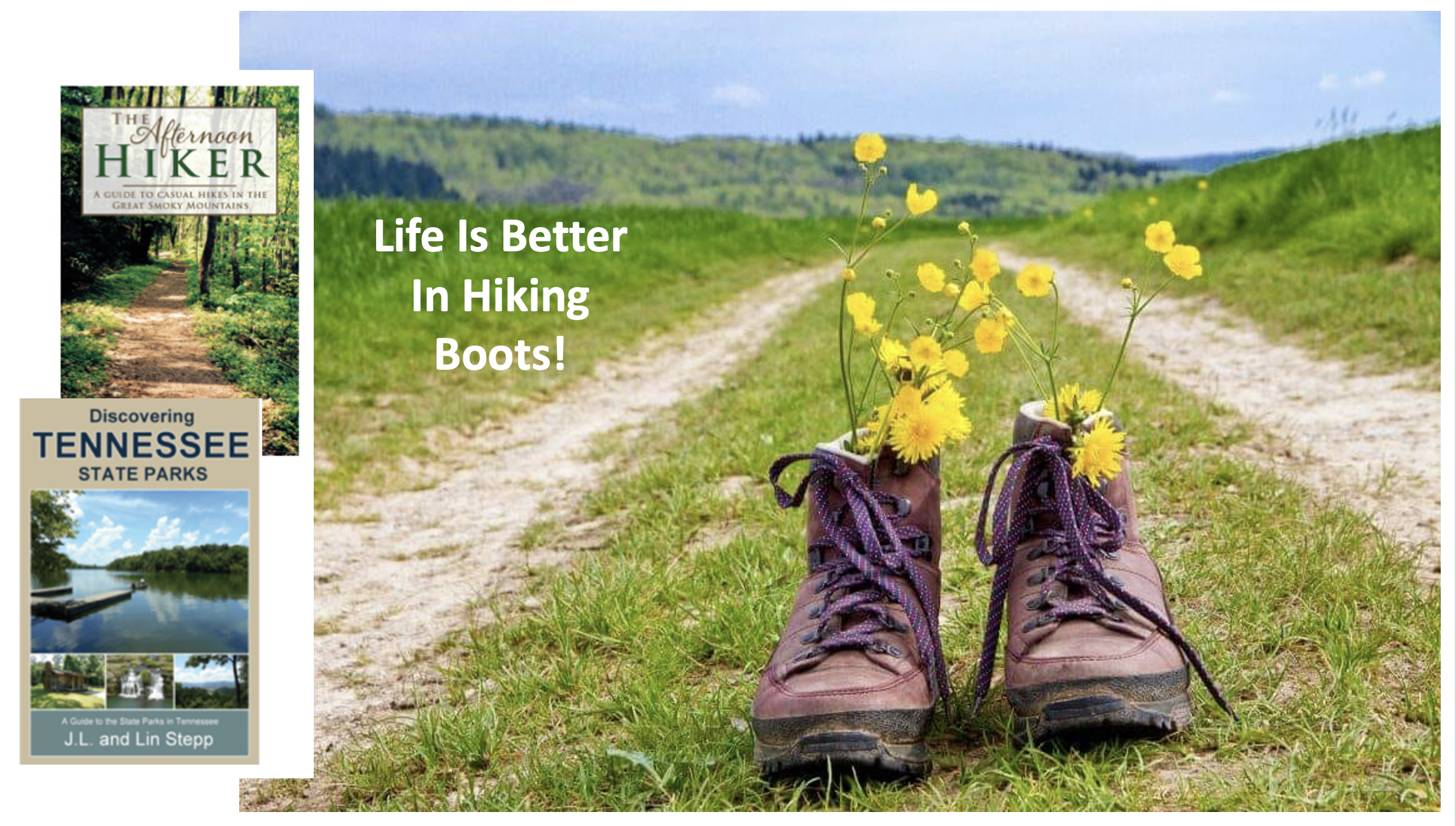
In 2013 in October, as that book was heading to press, the government shut down the national parks for a lengthy season. Fall is one of our favorite times of year to hike and explore out of doors, and we were disappointed we couldn’t head to the mountains to enjoy the trails. My husband J.L. said, “Lin, there are hiking trails in the state parks. Go find us a good state parks guidebook and we’ll go there instead.” I checked the library, bookstores, several online sources, and soon told him, “There isn’t a single guidebook for Tennessee’s state parks. Even the research librarian who helps me locate data and information for my college classes couldn’t locate even one.” We looked at each other then and grinned. “I think that should be our next adventure,” he said. “Let’s visit them all and write another guidebook.”
 We began to research and plan for that new book, around our jobs and my ongoing writing and book tour events for my novels, and in 2015 we finally began our travel trips to the parks. Over the next two years, we visited all 56 of Tennessee’s state parks. In researching and planning for the book, we decided to divide the book into Tennessee’s three natural regions, East, Middle, and West Tennessee. We began our visits at the far Eastern end of Tennessee at Warriors Path State Park, Sycamore Shoals State Historic Park, and David Crockett Birthplace, working our way gradually across the state on weekend travels until we reached Tennessee’s final parks on the Mississippi River like Meeman-Shelby Forrest State Park, Fort Pillow State Park, and Reelfoot Lake State Park, the last park on our journey.
 In writing our new guidebook later, we gave clear directions to each park, a description of all the things to do and see within the park, and we provided over 700 color photos throughout the book in illustration. We hiked multitudes of trails, visited historic sites and museums, explored battlefields and old forts, took historic tours, and learned more than we ever could imagine about the rich history and diversity of our state parks. Often, I wrote and added a “History Note” after a park description to further acquaint readers with aspects of how that park had formed and about its early settlers and historic significance. I often talked about Revolutionary and Civil War battles which had taken place at the parks, the lives of patriots, old homes, churches, and cemeteries within the parks, and about the early work of the Civilian Conservation Corps (CCC) in building many of the roads, trails, and structures in the parks.
 A surprise to us in nearly every park we visited was in learning that the U.S. flag was raised and lowered with honor and respect every day, often at the main visitor center or park office, but sometimes also over a historic fort or museum. We also saw old flags of the past honored in photos on walls of museums, and in historic buildings, with descriptions about their part in pivotal battles or in the lives of patriots. It was a rich lesson in the history of the United States, and of our home state of Tennessee, to visit these parks and to learn more than we expected to about our state and national heritage.
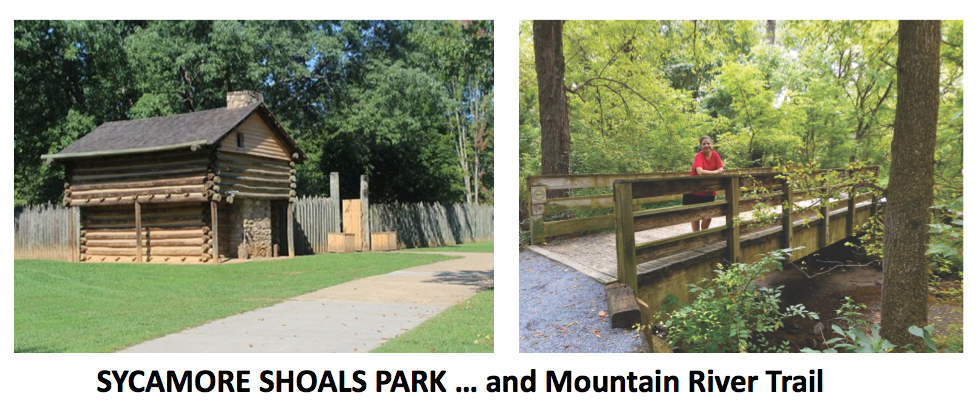 After completing our park visits, the next year was spent getting the book completed for publication, and in the spring of 2018, DISCOVERING TENNESSEE STATE PARKS published. It was, and is, to the best of our knowledge, the only book about Tennessee’s state parks, detailing each in descriptions with photos. The guidebook hit several bestseller lists. It raced into the top 5 in Amazon’s East South Central US Travel Books category. Book Authority ranked it #4 in Best Tennessee Travel Guide Books of All Time, featured also on CNN, Forbes and Inc, and the book became a finalist in the Travel Guides and Essays category in American Book Fest’s 2019 national contest, with over 2000 publisher entries. It was fun seeing our adventures appeal to so many, and knowing we were providing a roadmap for others to learn more about Tennessee’s heritage, beauty, and unique history, in every park they read about.
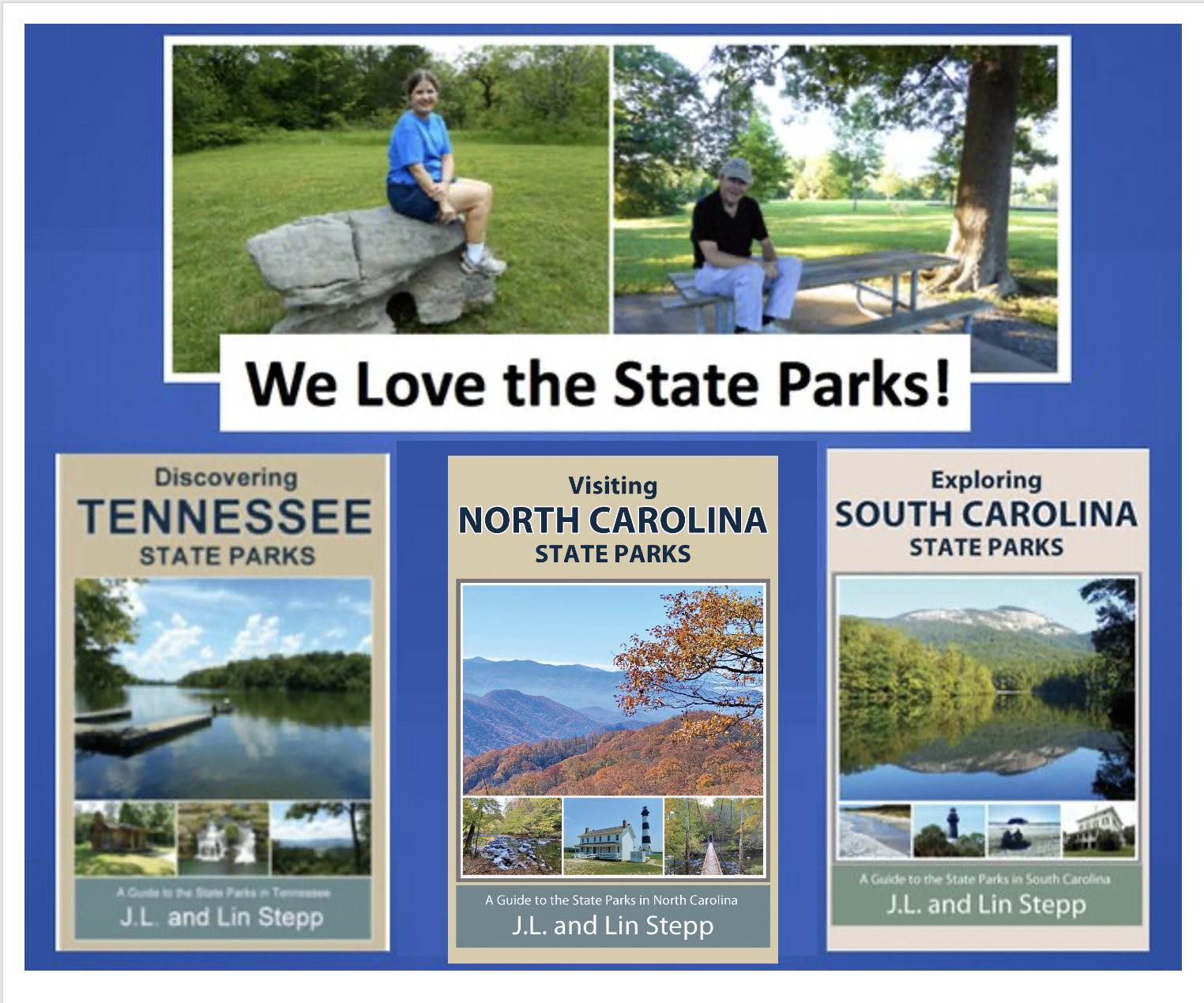
 As mentioned earlier, I also write novels set around the Smoky Mountains of Tennessee and North Carolina, and others set at the South Carolina coast. As of today, I have twenty-three published novels, with two more publishing in March, and six guidebooks jointly written with my husband, and I give many talks at civic groups and organizations, like DAR groups, at libraries, book clubs, women’s conferences, and regional events. I mention this because when J.L. and I were in South Carolina in 2019 at a book signing at Barnes & Noble in Charleston, SC, the year after our Tennessee parks book published, the store’s Community Relations Manager (CRM) came out waving our TN parks guidebook. “We need one of these for South Carolina,” he said. “We got nothing, and people ask for books about our parks all the time. You guys need to write one of these for our state.” With pressure like this continuing, we decided to listen, and over the next two years, around our other ongoing work and events schedule, J.L. and I took week-long visits, when we could, to work on a new South Carolina state parks guidebook.
 South Carolina has less parks than Tennessee, and in South Carolina, many historic sites, military parks, and battlegrounds, which were governed under the state’s jurisdiction in Tennessee, were under the national park’s jurisdiction in South Carolina, so we decided to also include those parks in our guidebook. Many were also close to the state parks, as well, and we knew visitors would want to know about them and probably visit them, too. We ended up including a total of 55 state and national parks in this new guidebook, and we laid it out in format and design similarly to our published Tennessee guidebook.
 Over the next two years we shared many interesting trips exploring and enjoying the lovely parks all over the state of South Carolina. Similar to our previous guidebook, we organized our parks into four geographic regions, the Upstate, Midlands, Pee Dee, and Lowcountry. South Carolina’s history is older than Tennessee’s, so we enjoyed learning even more about earlier times in America through our parks’ visits, especially in visiting many Revolutionary War and Civil War sites. Again, as in Tennessee, we often ran into DAR markers and history notes and the joy of seeing our national flag flown in nearly every park we visited. Several historic sites of particular interest were Ninety-Six National Historic Site, Charles Pinckney National Historic Site, Colonial Dorchester, Rivers Bridge, Andrew Jackson State Park, Kings Mountain, along with coastal Fort Moultrie and Fort Sumter.
 Our new guidebook published in 2021 and it, too, has been a strong bestseller. As far as we know, there is no other current guidebook to all the parks in South Carolina, although, of course, different parks get mentioned or spotlighted in other books. We are so pleased that we have been able to bring our readers “armchair traveling” to the state parks to encourage them to visit them and to let them know more about the interesting places to see in each park. As in our first state parks guidebook, I wrote many “History Notes” after significant parks in South Carolina to teach readers more about the heritage and rich history of the parks.
As readers began to discover our guidebooks for Tennessee and South Carolina, we soon were encouraged to do a guidebook for the state of North Carolina, as well. It takes a lot more time to write a guidebook to a state’s many parks than most people would realize. Unlike many authors who write guidebooks only by researching and reading about them, we visit every park we write about. We research and gather data and information about each park before our visits, often reading extensively about history related to that park. I also study online sites and hiking guides to decide on the best trails to walk or hike while in a park. J.L. and I also study online photos to decide on specific sites we want to be sure to see—and perhaps photograph ourselves. On our park visits, we collect brochures, pick up maps, enjoy park tours, talk to rangers and staff members, and take multitudes of photos.
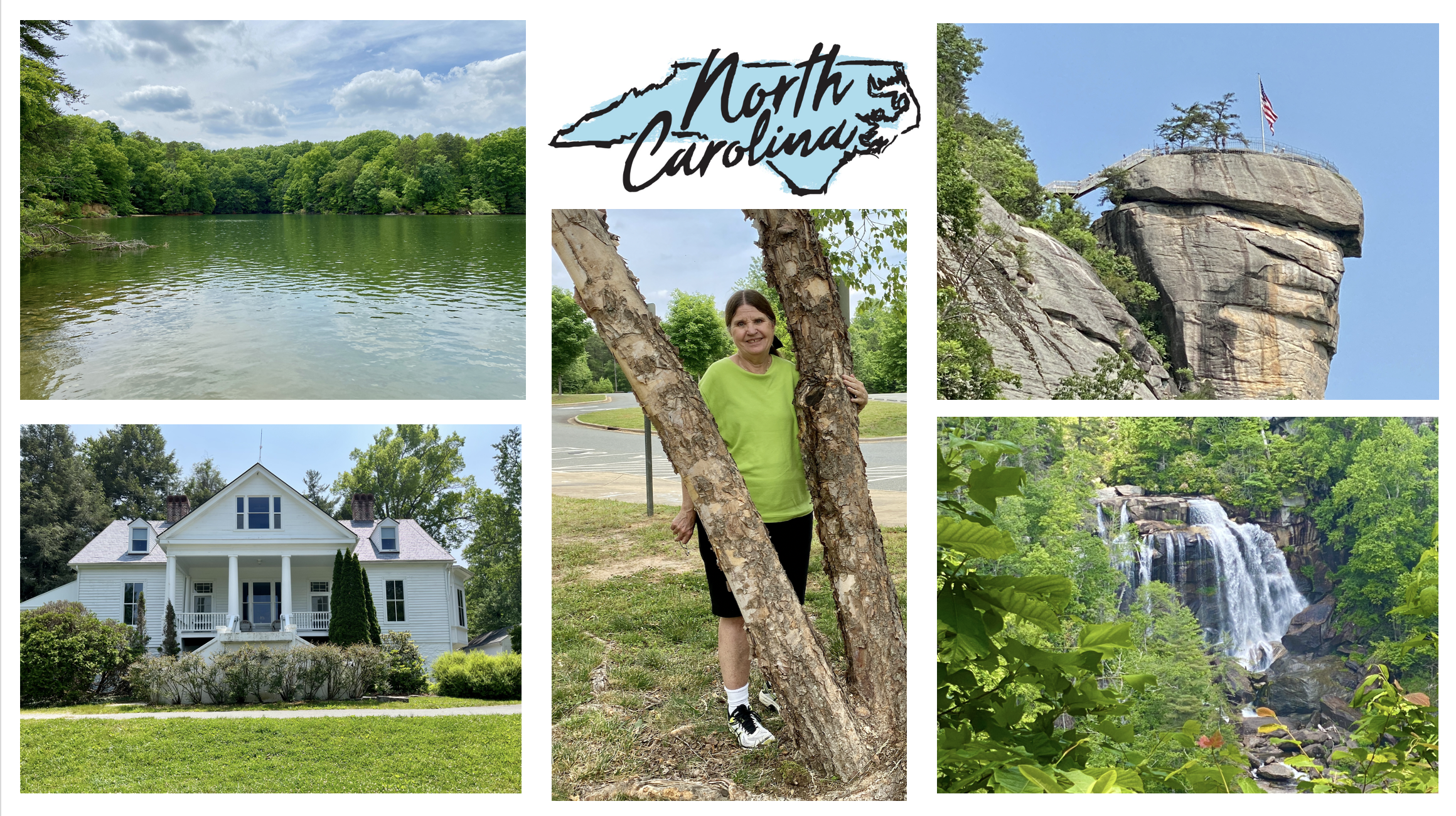 Our travels to visit parks, to bring them to life for our readers, involves a lot of planning and extensive travel. We create a detailed agenda before any week of visits, with our journey mapped out to travel in the most expedient way to the parks we plan to visit in an area. Despite the advent of GPS and other modern technology, J.L. and I always take printouts of park and state maps with us as we travel. Many parks are in remote areas where cellphones and other travel helps don’t work well, and we often find better routes to the parks than the ones recommended. Finding good places to stay in proximity to the parks we plan to visit is yet another challenge.
 On our return home, I write up the descriptions of our park visits for our book and introductory materials, like including a history at the beginning of each book about how the parks in the state developed. J.L. and I select the best photos to include, and then he creates and lays out each park page in InDesign. He also creates regional and alphabetical indexes for each book. Multiple edits follow, done both out of the publishing house and in. Our graphic designer creates the book covers, the state park maps included in each book, and other specialized pieces that make our books unique. It’s a long effort to get a book press ready, even after all the parks visits are completed. Yet, it is very rewarding to pass on the joy and learning—and rich history—of our visits to readers all over the U.S. and abroad.
 This last year, in the summer of 2023, our third book VISITING NORTH CAROLINA STATE PARKS published after yet another two years of park visits. In the same year, two of my novels published, one a novel set in Cherokee, North Carolina, titled VISITING AYITA. Even in my novels I teach history to my readers. In this book I taught about the history of the Eastern Band of the Cherokee, about the town of Cherokee, its people, and heritage today. Others may be “history makers” in person but I love sharing history in books with my fans and readers. Every one of my Smoky Mountain books takes readers visiting to a new place around the mountains and I often get to include wonderful extras about the heritage of an area that I hope my readers will visit, like the rich history found in Dandridge, Tennessee, in EIGHT AT THE LAKE, a closer look at quiet Townsend on the quiet side of the Smokies in DOWN BY THE RIVER, colorful history about Gatlinburg and the Walker Sisters in my book DELIA’S PLACE, and interesting facts about Edisto, Charleston, Beaufort, and Port Royal in my Edisto and Lighthouse Sisters books set on the South Carolina coast.
 Books are the way I go home with people, and as a past professor, books are the way I teach others about the beauty and history of places I love. My books, set in contemporary times, take readers to new places and into the lives of new characters each time, teaching about love, patriotism, good morals, kindness, faith, and more. I cherish Dolly Parton’s words about my books: “Well, I’ve finally come across someone that believes in all the things that I do … love, family, faith, intrigue, mystery, loyalty, romance, and a great love for our beloved Smoky Mountains. Dr. Lin Stepp, I salute you.” I believe, in these times, where we often see morals and patriotism compromised, that we each need to work to remind others of the good in our country, the rich legacy left to us by our ancestors, the beauty in our world, and the way to live in it with caring and kindness in our everyday lives. This is what I strive to teach in my books, in my novels, and in our regional guidebooks.
 I celebrate the Stars and Stripes, the love of country, the beauty around us, the good and the honorable and true, still in our world, with every book I write. So much of what people write today does not encourage the type of strong character, strength of mind and heart, that helped to create our nation and that our forefathers fought and died for. My own relatives trekked down through the wilderness to settle this east Tennessee area. I have a rich legacy of patriots, teachers, preachers, and statesmen in my background. I hope I give them honor in all I do.
It should not be a surprise that we are hoping to start yet another guidebook this coming year, which will be titled TRAVELING GEORGIA STATE PARKS. J.L. and I have already been gathering materials, maps, and books to help with the planning of the many trips we’ll need to make in order to take readers visiting to the 63 state parks in the state of Georgia. I’m sure we’ll see the Stars and Stripes waving in these parks, too, and that we’ll once again enjoy celebrating our country, its history and beauty, through the arts.

Wherever you live … get out this summer and enjoy your beautiful state parks!!
Note: All photos my own, from royalty free sites, or used only as a part of my author repurposed storyboards shown only for educational and illustrative purposes, acc to the Fair Use Copyright law, Section 107 of the Copyright Act.
 Lin Stepp
Lin, This is one of the best monthly newsletters of yours I’ve ever read. I loved it from the first word to the last and every one in between. It was fascinating to read about the steps you and J.L. take to prepare for and visit each state park and then to the process of writing and organizing each book. I was exhausted just reading about it! Thank you so much for all the enjoyment I have gotten from your books…especially the Smoky Mountain and Mountain Home novels. As much as I love and have visited the Smokies, I learned new things about areas I have visited and new areas check out and appreciate. You and J.L. keep researching, investigating, visiting and writing about these treasured areas that so many already know of and love and introduce them to those who don’t. Best wishes in your future adventures. Laurette Hughes
LikeLike
Laurette … Thanks for your kind words. I’m so glad you’re enjoying our guidebooks as well as my Smoky Mountain novels!! I look forward to hopefully seeing you in this next year!
LikeLike