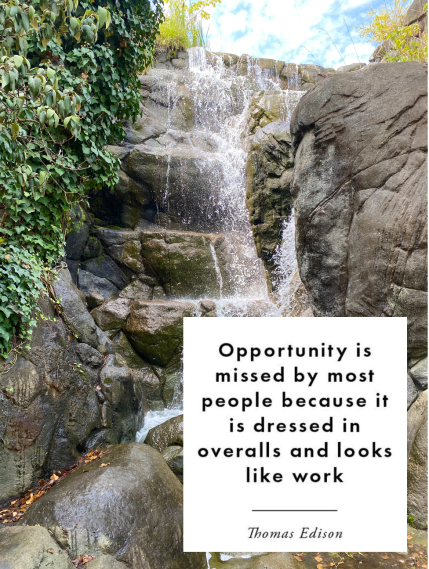
 Life is filled with opportunities. Some come knocking loudly at your door and a few come gently whispering, but generally they come expecting an effort from us that we hadn’t envisioned in our daydreams about success or change. Like the old Thomas Edison quote: “Most people miss opportunity because it is dressed in overalls and looks like work.” Thomas Jefferson might have added to that: “I find the harder I work, the more luck I seem to have.”
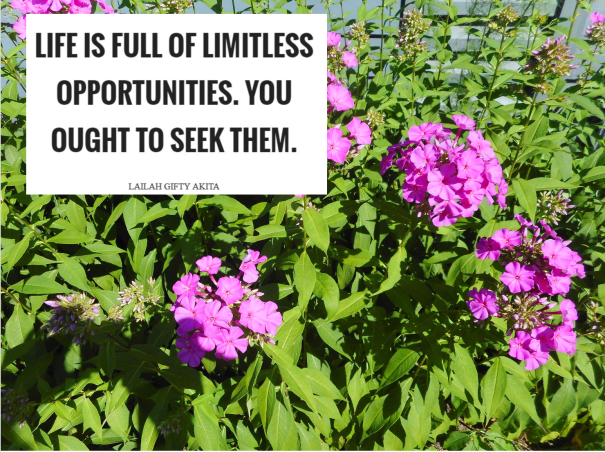
In truth, opportunities are around us all the time, we just have to stay alert for them and go after them when they come our way. A part of the art of seizing life’s opportunities lies in keeping a positive and watchful attitude that opportunities will develop and come versus holding a negative mindset that nothing good will ever come our way, Bad attitudes almost always cause us to miss the good things in life even when they come knocking on our door. I know I missed a lot of opportunities when younger because I didn’t recognize them for what they were, because of my youth, inexperience, and lack of self-confidence, and because of others’ perceptions and beliefs about me. I often listened to unwise and uninformed counsel and put off or missed opportunities I should have followed. I’m sure we have all done that at one time or another. But we should never give up looking for and being open for new opportunities despite our past. As Napoleon Hill said: “Your big opportunity may be right where you are now.” So stay alert and stay expectant.
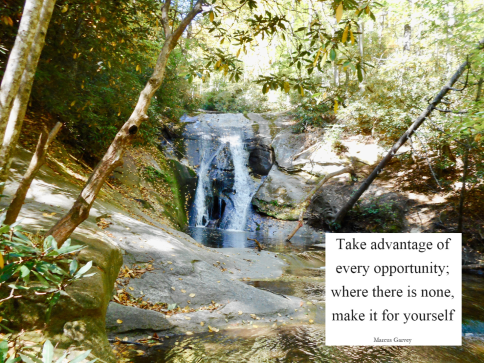
Over my lifetime, I’ve learned to go seeking out opportunities more than waiting for them to drop out of the sky for me. I’ve also leaned to create my own opportunities rather than waiting for them to knock on my door at all. Usually when I simply waited before, nothing arrived at my door. So one of my favorite quotes now is: “If opportunity doesn’t knock, build a door” [Milton Berle]. If you find yourself hungry for more opportunities in your life, eager for more, then begin to work at building little opportunities that will lead to bigger ones. What do you want and yearn for? Read about it. Learn about it. Find ways to wade in and participate in it. Get better at it than you are. Keep improving. And most important, don’t give up. Keep the vision and dream in your heart. Walt Disney said, “All our dreams can come true if we have the courage to pursue them.” No one becomes successful without work and sacrifice. “The only place where success comes before work is in the dictionary” [Vidal Sassoon].
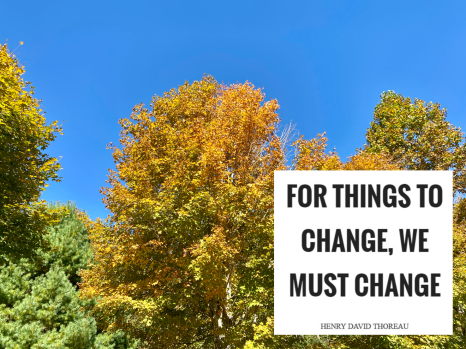
 Life is about growth and change and about continuing to learn and wanting to move forward and climb higher. We are all created for much more excellence than we pursue. Too often we set our goals too low. We settle where we are. We get caught in the web of our daily habits and like a spider on a spider web, we stay right there waiting for good things to fly into our net. Habit is a very strong thing. We get into a life habit, find friends with similar habits, and get locked into thinking that is all life holds for us. So many motivational quotes nail this mindset that often limits us, but as Arthur Ashe wrote: “Start where you are. Use what you have. Do what you can.”
 If you are feeling a little discouraged with your life, always remember that life has its seasons. Often we cannot do and accomplish everything we want to do in exactly the season we hope to. I like Carl Bard’s words: “Though no one can go back and make a brand-new start, anyone can start from now and make a brand new ending.” If the season you’re in doesn’t allow you to pursue fully the direction you most want and dream of, then keep pursuing your higher goals and dreams in as many ways as you can on the sidelines. Don’t decide that if you can’t “have it all” you’ll just feel sorry for yourself and settle for “nothing.”
 When I taught a variety of psychology courses in my professor years, we often looked at different writers and researchers who had studied the stages of life. I always liked Gail Sheehy’s colorful terms like “the tryout twenties,” “turbulent thirties,” “flourishing forties,” “flaming fifties,” “serene sixties,” “sage seventies,” “uninhibited eighties,” “noble nineties,” and “celebratory centurions.” I loved the concepts I taught that in all our life stages and seasons there are new and different possibilities, new opportunities to try on. It is never too late for second chances and new beginnings. As we grow, learn, mature, and change we strengthen in wisdom, talents, skills, areas of expertise, and good common sense. Life doesn’t diminish us; it just widens for us if we will see that. And it is never too late to try on new roles, to find new fulfilling interests and hobbies, to venture into new works, and to do worthwhile things.
 Our goal as we move through life should never be to just retire one day, sit back, and do nothing. This would be a waste of our one beautiful and precious life. As I travel, work, and speak as an author I always encourage a useful, generative life. Our life should continue to be full and alive not stagnant and stale. All research has shown an active, generative life is the best and healthiest lifestyle to follow. We should always strive to live to our fullest ability, to give back to this world in all the ways we can. To live a clean, good life for a clean legacy. How do you want to be remembered? I want to be remembered as one who gave all she had every day of my life … of my gifts, wisdom, talents, and time. I always believe each day I’m accountable for how I use the gifts and hours of every day, of whether I’ve used the talents God has given me wisely and well. Erma Bombeck’s words could be my own mantra: “When I stand before God at the end of my life, I would hope that I would not have a single bit of talent left, and could say, ‘I used everything You gave me.’”
Your motivations may be different than mine, but I want to encourage you to sit down and think about your life, the good you’ve accomplished, but also what else there might be for you to do. Never think of life as finished. Always be eager and open to new life opportunities, for new ways to use your talents and time. Frankly, you also have to decide what you’re willing to give up to create more opportunities for yourself and for more opportunities to come your way. Everyone has the same twenty-four hours in every day. How are you using your time? What can you change about how you use the hours in every day? Sometimes it’s time, as Zig Ziglar used to say, to do “a checkup from the neck up” and maybe an all over physical check, as well. Poor physical shape, excess weight, and a sloppy appearance can often limit your opportunities to make the changes in life you want to, no matter how you pretend they won’t. So can poor time management habits and addictions in your life, which can even include the hours and hours of television or social media you engage in that waste great portions of your life daily and sap your mental and creative energy. Are you willing to put the discipline into your life to change? Some people will and some won’t.
 Opportunity may be knocking on your door right now, but will you answer the door? If you let opportunity in, it will arrive with a huge list of “expectations” for you. It will arrive with a long list of “to dos” that will mean a lot of work and effort, dedication and love, on your part to see the opportunities develop, grow, and come to fullness. Do you feel a little fearful and apprehensive even thinking about it? So does everyone before making life changes, before moving and growing in their lives, before pushing themselves out of their comfort zones and familiar routines to move forward. A Bible scripture says, “Behold I stand at the door and knock: if any man hear my voice, and open the door, I will come in to him” [Rev 3:20]. This passage is talking about an opportunity, a leap of faith that is hard for many to make, too, because it’s a giving over of oneself. I think every life opportunity has a similar moment when it knocks and you decide if you will answer. These can be life-changing moments. So stir up your heart and mind to seek, look for, and welcome new opportunities for change. What are you yearning to do? What is your heart calling you to? “True change begins with the heart and then is nurtured by the mind. You have to yearn for it before you can acquire it.” [Sam Villanueva]
 I believe all people say, if only to themselves, that they yearn for new opportunities in their lives, ways to make a difference, ways to make a mark on the world. We all do, deep within, We were each created with a destiny. Jane Goodall wrote: “You cannot get through a single day without having an impact on the world around you. What you do makes a difference, and you have to decide what kind of difference you want to make.” You may not feel significant or important, but you make a difference every day in your life. And perhaps you could make more difference. Sometimes the reason we make “little difference” is because we don’t make the effort to reach out and accomplish the things we should. Here’s an important thought to tuck in your heart today: Before you were born, God gave you a purpose. Jeremiah 1: 5 says ‘before I formed you in the womb I knew you” and another version adds “I set you apart for a special work and purpose.”
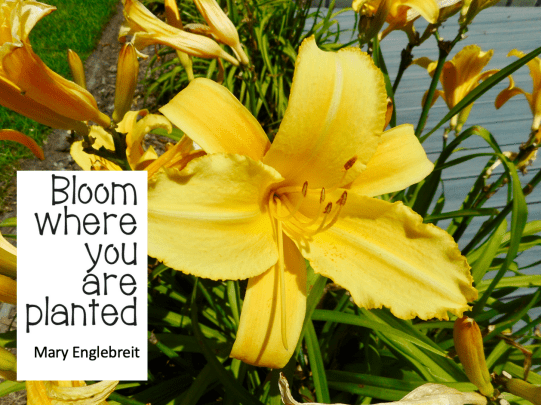 As the trees and flowers awake from their sleep of winter to welcome spring, let’s shake ourselves and wake up, too … to “bloom more where we’re planted” … to find things we can do to make a difference in our world, to live a life doing and accomplishing things of worth and value. Mary Oliver wrote: “Tell me, what is it you plan to do with your one wild and precious life?” I ask you that today, too … as does the Lord. Remember, you can’t get through a single day without having an impact on the world around you.
Today is your opportunity to build the tomorrow you want. So, make your life matter. Seek and create new opportunities for your life. God has designed you for His purposes and there is so much you can do. You are unique and individually made. There is no other like you, and no one can do the things God intends for you to do in exactly the same way that only you can do them. Be encouraged today. As Mr. Rodgers used to sing: “You are a very special person. There is only one like you in the whole world.”
See you next month …
Note: All photos my own, from royalty free sites, or used only as a part of my author repurposed storyboards shown only for educational and illustrative purposes, acc to the Fair Use Copyright law, Section 107 of the Copyright Act
 February is the month of love. It’s a good time for a month of love in February with the chill of winter still present—almost depressing as the cold, damp days, snow and ice drag on and on. Yet February hangs on the cusp of Spring, too, hinting of sweeter days to come. Valentine’s Day comes right in the middle of February. Everywhere in the stores are hearts and flowers, valentines of every imaginable kind, photos of sweet couples that make us smile, heart necklaces and rings, boxes of chocolate and special love gifts to give to those you care about. It’s hard not to get in the mood for love in February, to dream of sweet times with someone you care about, to relive old memories of meeting that special someone in your life—or wishing you would someday. To get roses or flowers in the middle of winter. To share a special evening on a cold night with someone you love.
 February, too—if you’re an author, as I am—is a great month to settle in at the computer to write a new book. And since I write love stories, what month could be more perfect for beginning a new love story? People often ask me: Why do you write romance books? I often want to answer: Why not? The world is so often a painful place, full of sorrows, war, and cruelty. The world desperately needs love and hope and beauty. It needs good clean, decent books, too, about people that could be real in real places they can visit—books that make people feel good. I love a sweet love story, and writing romance is my way of bringing more love and happy endings into the world. I get the same joy and pleasure writing romances as reading them—they give you other lives and a story to get lost in with a happy ending to make you feel good. The world needs books about people who still care about each other, help each other in hard times. They need to read about people in small towns and in larger ones who live clean good lives, people who work hard, contribute to their world. And they need to read about people with a strong, good faith. How can they know that life is good if they never read about it? Paulo Coelho wrote: “Love is just a word until someone comes along and gives it meaning.”
 I, admittedly write what I like to read. I am the only one who can tell my stories—just as you are the only one who can tell yours. My heart and soul pour into every character, every book and story. You learn about me through my books and you can feel my heart. Victor Hugo said: “A writer is a world trapped inside a person.” Through writing, I let those worlds and stories that I love pour out. Although it doesn’t always happen, I think we love the concept that a true love story never ends. Even when we close the pages of a book, in our minds we see the story moving on happily through the years—two hearts finding their happy place beside each other.
 In my new Mountain Home book SEEKING AYITA, I’ll be taking you to visit Cherokee, North Carolina, the home of the Eastern Band of the Cherokee. A lot of work and research went into creating this book. I wanted my book to bring respect to the Cherokee, to tell a story set amid them that would make readers feel like they had visited there. Life, government, and so many aspects of culture are different in Cherokee and the people have their own unique past. My main character Annalise Ayita Silva lives in Hawaii as the book begins. Her Cherokee mother is dying and she begs Annalise to take her ashes back home to her people in Cherokee to be buried. She also presses Annalise to stay for a long visit to learn more about her Cherokee roots and to comfort her grandmother.
 Annalise is reluctant to uproot her life with her small daughter to go, but a vow is a vow. So she and Leila soon travel to Cherokee after her mother’s death, to stay with Annalise’s grandmother, Inola Crowe Youngdeer. Annalise soon meets a colorful mix of new family and friends, including Solomon Wolfe. An odd attraction sets up between the two, despite their reasons to avoid one another. And a host of unexpected events and a few mysteries will keep you entertained as you read this story of how Annalise learns more and more about her Cherokee heritage and past. Along with Annalise, you, too, will learn more about the Cherokee and the beautiful mountain area where the Eastern Cherokee live and work at the base of the Great Smoky Mountains….[To read the back cover synopsis for SEEKING AYITA, go to the home page of my website at:
  My new coastal novel, LIGHTEN MY HEART, is the second in the new Lighthouse Sisters series. The first, LIGHT MY WAY, that you can read, or reread, before the new book comes out, introduces the four sisters who grew up at the Deveaux Inn and Lighthouse on small Watch Island, a part of Edisto Island, South Carolina. The first book was Burke Deveaux’s story. The oldest of the four sisters, Burke had always stayed on the island, helping her parents run the Deveaux Inn and Lighthouse, and her work load had greatly increased with her father’s death. An old friend—and an old secret love—returns to help pick up some of the workload and before the book is over picks up Burke’s heart, as well. In LIGHT THE WAY coincidences and various problems bring all the sisters back together. Lila returns from a religious community after her father dies. Gwen comes home broken-hearted, with three children in tow, because her husband has hurt her heart and betrayed her trust with lies. And Celeste comes back, battered and hurt from her marriage to an abusive husband, who had seemed so charming at the first, even working with her in the entertainment industry.




 Early celebrations of what we now know as Christmas had a mix of spiritual and worldly origins. The word “Christmas” means Christ’s Mass from the term “Christes Maesse” first recorded in 1038. Christmas then, and now ,is primarily about the birth of God’s Son, Jesus, and about how He came to give hope, love, and joy to the world. The exact date of Jesus’ birth isn’t known, but one legend says that since Mary was told she’d have Jesus on March 25th (the Annunciation), that the date came from nine months after that date, December 25th. Other cultures, many pagan ones, also had festivals during this Winter Solstice period and the Jewish people celebrated Hanukkah in this season, too. With so many holidays in the same time period, many ways of celebrating the Christmas season merged together over time and now the holiday holds many mixed traditions and meanings.
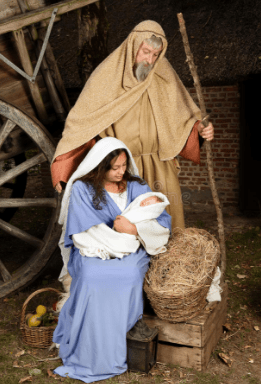 LIVE NATIVITY SCENES – In 1223 St. Francis of Assisi created the first live nativity scene to bring Jesus’ birth scene to life. He got permission from the Pope to set up a manger scene. Today live nativities are set up in churches and communities during the holidays. Often the nativity is re-enacted with costumed figures, live animals, music, and a narration of the Bible story,
 SANTA CLAUS – The story of Santa begins with St Nicholas, a Christian bishop, in the fourth century in Asia Minor. Many miracles and kindnesses were attributed to him. St. Nicholas sacrificially gave money and gifts to the poor. Legend tells that to save three sisters from being sold into prostitution, because they had no marriage dowries, Nicholas threw gold coins into the open window of their home in the night. This act of generosity, embellished over time in the telling, led to children hanging up stockings by the fireplace in hopes of receiving gifts from St. Nick. Early Santas, based on bishops like St.Nicholas, wore long robes of red or white.
 CHRISTMAS STOCKINGS – Christmas stockings are linked back to the St. Nicholas story. The first stockings hung by the chimney or on a bedpost belonged to the children but over time Christmas stockings became much more elaborate and the gifts tucked into them more luxurious than simply an orange, a few nuts, and a peppermint stick. In America, Clement Clark Moore’s poem “A Visit from St. Nicholas,” and the lines about Santa filling the children’s stockings and then rising up the chimney popularized the hanging of stockings all the more. That poem also solidified Santa’s image as a jolly man in a red suit, flying through the air on a sleigh. Artist Thomas Nest furthered these images in the U.S. with his cheerful paintings of Santa and Mrs. Claus on Cocas-Cola ads.
 CHRISTMAS WREATHS – A German Lutheran pastor gets the credit for the Christmas wreaths we hang on our doors. Europeans had long been decorating with evergreens, but Joahann Wicern created a circular-shaped evergreen to represent eternal life. He hung it on the door during Advent with a candle in the wreath to represent Jesus, the light of the world. The idea caught on and many later added more advent candles to their holiday wreaths, with the idea soon spreading to other countries. Each part of the wreath holds a Christian symbolism, but many simply hang up wreaths for decoration. Holiday wreaths can be hung on doors, placed on tables, or worn on the head like a crown.
 CHRISTMAS CARDS – Christmas cards began with the same purpose they have today—as a way to stay in touch with friends and family. Back in 1843, as the holidays began, Sir Henry Cole in England wanted to send holiday greetings to friends but wanted to avoid writing individual notes and letters. So he had a thousand illustrated cards made, and then sent them out. His idea caught on and was quickly replicated by others. New advances in printing soon made the production of Christmas cards even easier. By the 1850s Christmas cards were in full swing in England and they became popular in the U.S. in the late 1800s – early 1900s when mailing became less expensive and when offset printing made cards much easier to produce.
 MISTLETOE – The kissing tradition of mistletoe originated from an old Norse legend. When a Norse god’s son was killed by a spear of mistletoe, his mother decreed the plant would never be used again as a weapon and would become instead a symbol of love. She also vowed to bestow a kiss on anyone who walked underneath it, so naturally people would stand under the mistletoe to try to get a kiss – just as they do today. The writings of Charles Dickens in Victorian England brought the practice into even more popularity, making the mistletoe a widely used holiday decoration.
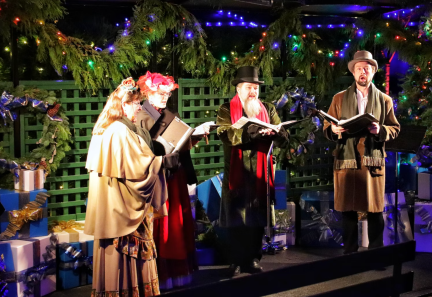 CHRISTMAS CAROLS – Music and song have always played a part in any celebration, and the first Christmas carols are said to be the angels’ songs at Jesus birth. The earliest carols after this were hymns, with spiritual messages, like “Silent Night,” “God Rest Ye Merry Gentlemen,” and “Hark the Herald Angels Sing.” These were later followed by more secular, fun-loving holiday songs and carols like “Jingle Bells,” “Deck the Hall,” and “Here Comes Santa Claus.” Some carols, like the “12 Days of Christmas” have hidden meanings. One theory says this carol was used in a time when Christians were punished for worshiping openly and that each gift on the list symbolized a different aspect of the Christian faith … like the “4 Calling birds” representing the four gospels and the “10 Lords a Leaping” the Ten Commandments.
 HOLIDAY MOVIES – Plays in the theatre were the first dramas enacted for the Christmas holiday season – nativity plays and spiritual performances, dramas, and song and dance productions. The first Christmas movie, a short English film, aired in 1898 called Santa Claus. The earliest Scrooge movie followed in 1901 and then others like The Bells of St Mary’s, Miracle on 34th Street, and It’s a Wonderful Life. Movies full of song and dance soon became popular, as well, like Holiday Inn, Christmas in Connecticut, and White Christmas. Movies in color and the invention of television brought even more Christmas movies our way. Each year new favorites emerge—How The Grinch Stole Christmas, The Santa Clause, Home Alone, Elf, A Charlie Brown Christmas, Scrooged, The Polar Express, and many more. The best holiday movies make your heart grow sweeter at a giving time of year and linger in your memory for the rest of the year.
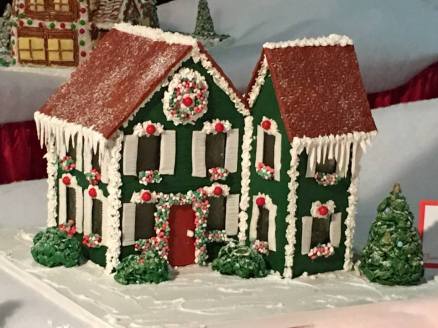 CHRISTMAS SWEETS – No holiday season would be complete without special sweets and desserts and many have been long associated with Christmas, like the Fruitcake. This traditional cake dates back to ancient Rome, continuing into Europe, Many of our other traditional favorites came from the British, too, like Egggnog, a hot drink of milk, eggs, nutmeg and cinnamon. It evolved in England as “posset,” a drink for the wealthy but gradually became a tradition for all in the 1700s. Gingerbread Men came from England, also, and were introduced by Queen Elizabeth I. She used a mold to shape the gingerbread men which were then decorated. Soon elaborate gingerbread houses followed, like many we see today.
 CANDY CANES – Sweet candy canes date back to 1670 Germany. An old legend says the choir masters at one of the German cathedrals handed out white sugar sticks, bent into the shapes of shepherds’ crooks, to keep his young singers quiet during the Living Creche ceremony. By the 1700s, pulled sugars and candy canes were all the rage in Europe. They made their way to America in the mid 1800s when a German immigrant decorated a Christmas tree with paper ornaments and homemade candy canes. When mass production took off in the 20th century, so did the production of candy canes—now the No. 1 selling non-chocolate candy sold in December.
 TREE ORNAMENTS – Christmas trees, since their earliest times, were decorated with lights and ornaments, usually candles, plus a few homemade ornaments, a string of cranberries or popcorn, and some sweets. Over time, ornaments became more lavish for those who could afford them. The first glass Christmas ornaments were created in the late 1500s in a German glassworks factory. The ornate glass ornaments came in the shapes of globes, animals, angels, birds, and acorns, often with special meanings. Popularity and demand for the ornaments grew over time, until other countries began to create their own tree ornaments. Eventually many types of ornaments became fashionable, made of glass, wood, plastic, and other materials. Now the making of Christmas ornaments, blown glass balls, collectibles of all kinds, strings of lights and beads, tinsel, angels and elaborate tree toppers is a huge international business.
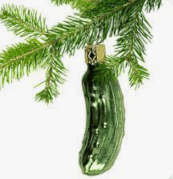 THE CHRISTMAS PICKLE – Many humorous ornaments have also been created to hang on the Christmas tree as well as lovely collectibles. One I enjoyed reading about was the Christmas Pickle Ornament, a green, usually glass, ornament shaped like a pickle. According to the story, in the 1800s when a Woolworth’s retailer received a shipment of these pickle ornaments from Europe, he decided he needed a sales pitch to market and get rid of the odd ornaments. So he came up with a story idea that the “pickle” ornament should be added to the tree on Christmas eve night and that the first child, or adult if there were no children, to spot it on Christmas morning got to open the first present. The idea took off and the Pickle Ornament is still a loved tradition in many homes.
 ELF ON THE SHELF – Every year new ideas begin, weaving their way into becoming beloved holiday traditions. The Elf on the Shelf is one of those. Carol Aebersold used to entertain her twin daughters growing up with a story she’d made up of an elf hiding in the house, watching daily and then heading back to the North Pole at night to report to Santa about whether the girls were being “naughty” or “nice.” Carol’s daughters, when grown, encouraged her to write their tradition into a book for others to enjoy. She did, with their help, but after countless publisher rejections, Carol and her daughters decided to self-publish 5000 boxed sets of the book with an elf doll tucked into each. They traveled, marketing the books out of their car, and the elf on the shelf idea soon took off. Now Carol and her girls have a multi-million-dollar business, with more than one elf book released and with their story having been made into a a favorite Christmas season movie.
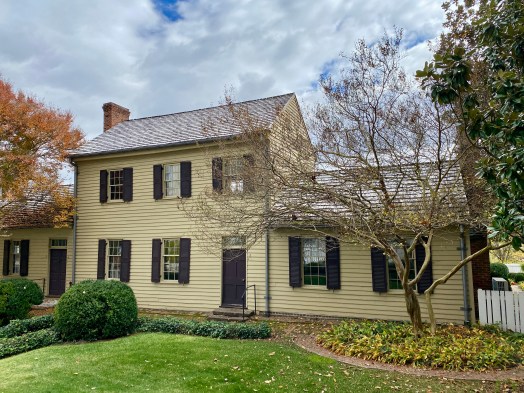 Each state and every city in the U.S. has its own distinct history. Tennessee, and my hometown of Knoxville, is no exception, and J.L. and I have been reading lately about Knoxville’s early history. This last week we visited Blount Mansion, the home of U.S. Constitution signer William Blount, appointed by George Washington as the first governor for the Southwest Territory. The home, beautifully maintained, is now a National Historic Landmark. Blount Mansion is also Knoxville’s only National Historic Landmark and the city’s oldest operating museum.
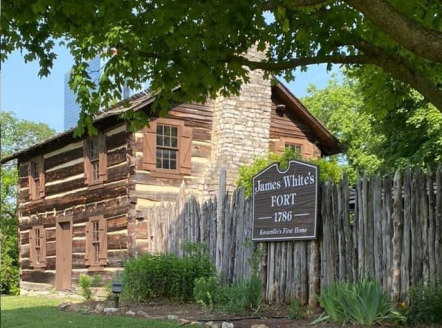 Backing up a little bit to earlier history, first settlers came exploring into what is now East Tennessee in the 1500s and 1600s. Then in the 1700s, English and French settlers began to venture into the area to settle. Following treaties with the Cherokee, more settlers soon followed. The founder of Knoxville, James White (1747-1821) – a relative of mine through the Whites in my family line – came to the Knoxville area in the 1780s. Service in the Revolutionary War earned him a land grant of one-thousand acres along the Tennessee River in what is now downtown Knoxville. White built his home, a two-story log cabin, high on the hill above the Tennessee River on what is now Hill Avenue. He later added other structures around the original house and then enclosed all with a fort or stockade fence in 1786. The James White Fort became a central point for travelers and traders. In 1790 the fort was chosen as the capital of the Southwest Territory, which existed from 1790-1796.
 Several candidates were suggested for governor of the new Southwest Territory, but President George Washington chose William Blount, a NC Constitutional Convention delegate and past NC state legislator, who had earlier promoted the settlement of the area. Blount was sworn in at Mount Vernon in 1790. William Blount chose James White’s fort as the capital of the new territory and in 1791 White’s son-in-law Charles McClung created a plat of lots for the new city, which they named Knoxville after William Blount’s superior in the war department, General Henry Knox. James White sold the land and donated the lots for the permanent city of Knoxville. He also donated land for the First Presbyterian Church and cemetery and for Blount College, which later became the University of Tennessee. Also In 1791, the Treaty of Holston was negotiated with the Cherokee, encouraging further settlement of the new territory and capital. Supreme power of the territory rested with the governor, William Blount—a vast responsibility.
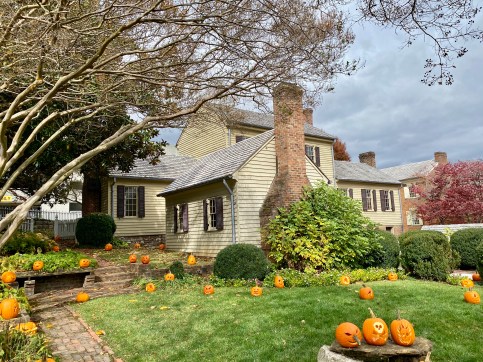 William Blount and his wife, Mary Grainger “Molsey” Blount, were both aristocracy in North Carolina, born of prominent families. The couple had nine children. Mary wasn’t impressed with the idea of moving to a log cabin in a primitive territory and insisted her husband build her a proper house if she moved to follow him to the new Southwest Territory. William heeded her desires and built her Blount Mansion, a fine two-storied home with beautiful glass windows. The Cherokee in the area had never seen windows like these and called the home the ‘house of many eyes.’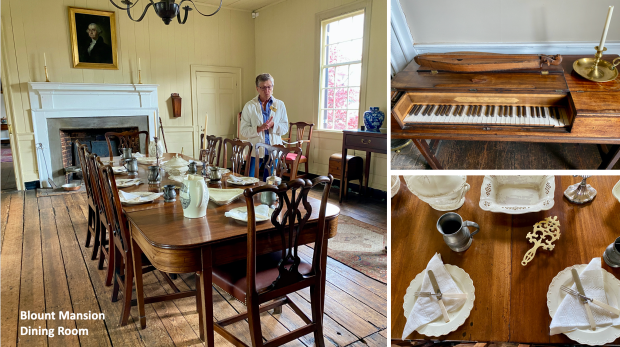
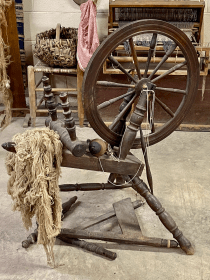
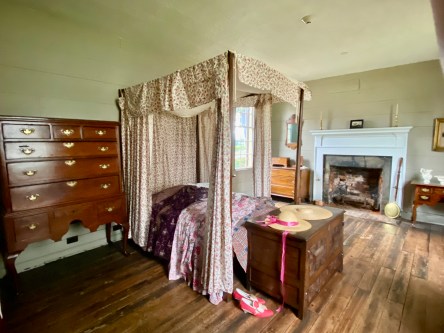 On our tour of Blount Mansion, we were led through all the downstairs rooms of the main house. William and Mary Blount’s bedroom had a lovely draped bed which looked so small and narrow compared to our beds today. Our guide Patsy explained how servants tightened the ropes of the bed every day – which is where the words “sleep tight” came from. And because the mattress was stuffed with straw, that often needed to be refreshed, the term “don’t let the bed bugs bite” originated – not always in humor! A spinner’s weasel in the home that hanks of yard could be wound on would “pop” when full, giving us the term “pop goes the weasel.”
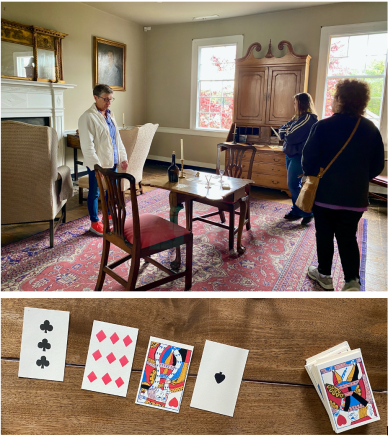 J.L. was fascinated, too, with a deck of cards on the table with the suits shown, that we know, but with no numbers as we are used to. I read later that numbers weren’t added to cards until the early 1900s. The home was filled with items, like these, that all held a story of past times. We were surprised to see how many clever tools and gadgets were created, even in that time, for snuffing out candles, lighting a cigar, tightening a woman’s stays, or helping with a shave.
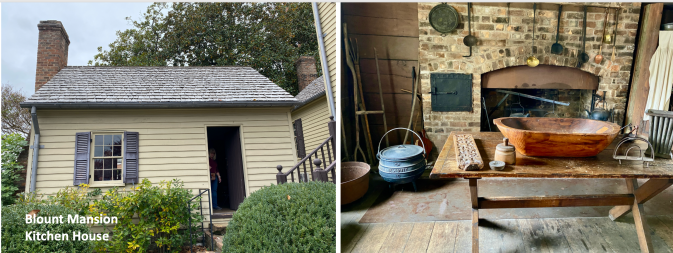 I’m sure William and Mary’s slaves didn’t have an easy life taking care of all the meals, laundry, cleaning, and care with so few conveniences as we know today. Yet in the kitchen, as in other rooms of the house, were many clever gadgets and tools to help get the work jobs done more efficiently. All of these like candle molds, roasters for meat, elaborate cookie molds, and a clever gadget for toasting bread were fun to learn about.
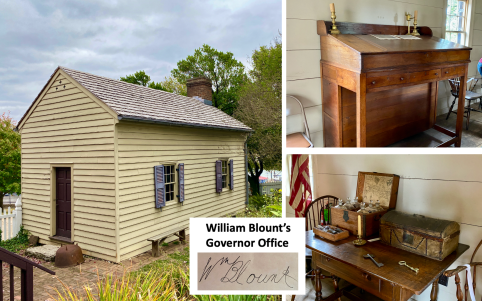 J.L. and I really enjoyed our tour of this beautiful old home and so enjoyed learning about its history. As well as serving as a home, Blount Mansion was an office and headquarters for the Southwest Territory. A building outside was William Blount’s office with chairs, desks, an early American flag, decanters for liquor, old quill pens, ink pots, spectacles, and framed documents of importance on the wall. There is a big copy of the Constitution in Blount’s office … and you can look and find his, and others, signatures there. The desk in the photo was especially significant as this is the desk where the papers were signed to later create the state of Tennessee which became the nation’s sixteenth state on June 1st, 1796.
 Over time, as often happens with historic homes, the Blount Mansion became neglected and in the 1920s was scheduled to be leveled and demolished for a parking lot. Mary Boyce Temple (1856-1929) was responsible for saving the structure. Mary, a prominent woman in Knoxville, was also the founder and regent of the Bonny Kate Chapter of the Daughters of the American Revolution at that time. She helped launch the preservation movement to save Blount Mansion and raised $35,000 to purchase the home in 1925 and save it from destruction. The women of Knoxville have had a lot to do with preserving and keeping Blount Mansion for all to enjoy and most of the volunteers who give tours of the historic home are women.
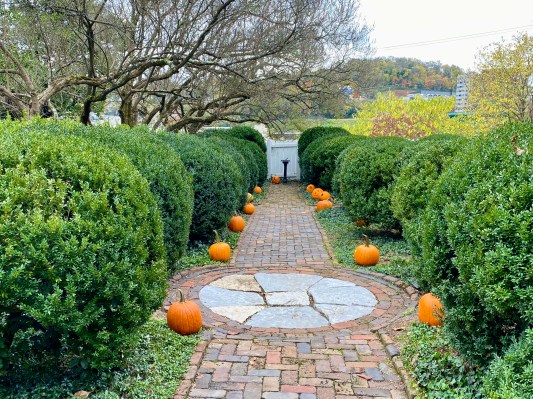 In 1934, the Knoxville Garden Club worked to develop a garden at Blount Mansion. The Garden Club engaged Alden Hopkins, Williamsburg’s garden landscaper and later William Pitkin, an early landscape artist, tp create the plans for the garden and to finish the work of the gardens to be like Blount Mansion’s gardens would have been in the 1700s-1800s. The Knoxville Garden Club has continued to care for the gardens at Blount Mansion ever since, for over ninety years, and Blount Mansion’s gardens are a little green oasis in Knoxville’s downtown. Weddings and special events are often held here and the Knoxville Garden Club also does educational programs here.
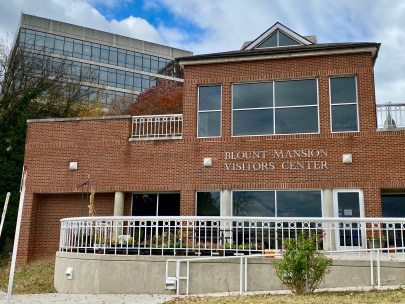 In 1957, the city purchased and saved the 1818 Craighead Jackson House, that sits adjacent to Blount Mansion on Hill Avenue, renovated it and opened it as the new visitor center and event arena for Blount Mansion. This is the first stop for visitors who come to see this historic site. There is a fee to tour the historic home, its out buildings and gardens, and the tour begins at the Visitor Center, starting with a film and look around a small historic room. Then the tour guide leads everyone from the visitor center to the front of the home, saying goodbye to them at the end of the tour at the back gate of the house.
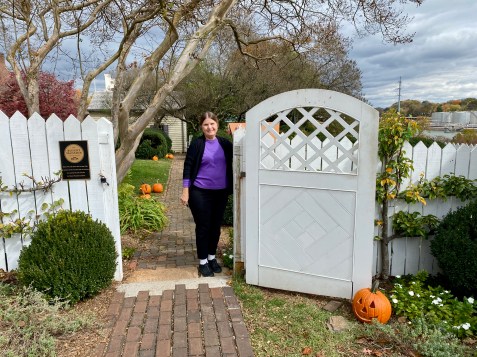 If you live in or near the Knoxville area and are interested in its history, I would encourage you to visit Blount Mansion—and perhaps the James White Fort, also on Hill Avenue just down the street. Both are interesting …J.L. and I have visited and toured both and learned a lot about our city in its early days and its leaders. The address for Blount Mansion is 2oo West Hill Avenue in downtown Knoxville and you will find information about the home’s hours, tour times, fees, and directions at the Blount Mansion website at:
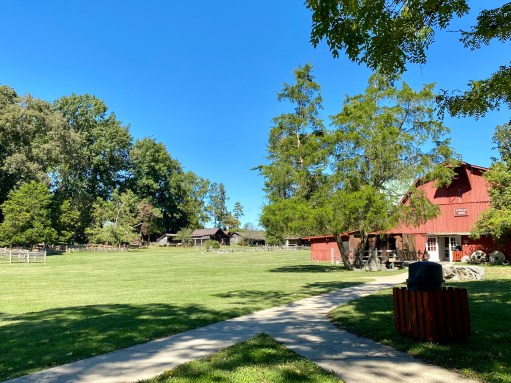
 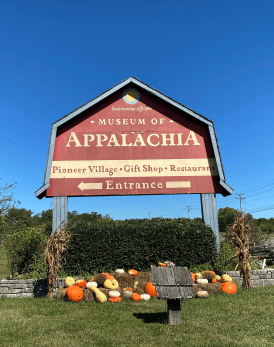 The Appalachian Museum in Clinton, Tennessee, about 16-20 miles north of Knoxville, is not just a single museum building but a 65-acre historic property containing an authentic Appalachian village, display buildings, a museum, and farm grounds. The wonderful collection of early 1900s Appalachian artifacts and pioneer buildings were collected by John Rice Irwin over much of his lifetime. We’ve always admired the legacy John created to let people walk through and enjoy a historic mountain village and farm and to come for events throughout the year to see how life was lived in earlier days.
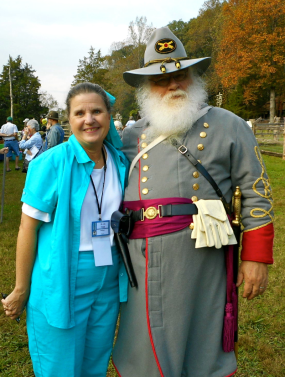 I met the founder of the Appalachian Museum, John Rice Irwin, many years ago when bringing our young children to the annual school days at the Museum’s Tennessee Fall Homecoming event. Later J.L. and I attended the Homecoming as regional authors—sitting under the big outdoor tent with author friends like Sam Venable and Bill Landry. We always enjoyed the old-time demonstrations, Bluegrass music, and mountain crafters. We also loved the costumed historic characters at the event—like General Robert E. Lee in the photo. Many of these wonderful traditions continue in the Museum’s Fall Heritage Days.
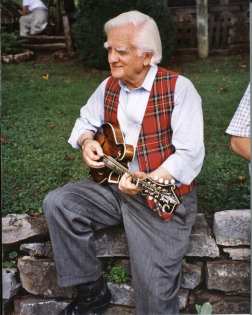 John Rice Irwin (1930-2022) was a historian, storyteller, musician, and educator, as well as the founder of the Appalachian Museum, He lived his early life on a farm taken by TVA to build Norris Dam, then near Oak Ridge until the government also took that land in the Manhattan Project, and finally, for most of his life, on the family farm in Norris. From an early age John held an interest in old things and old ways. His grandfather told him stories of past times and suggested he should collect and ‘keep the old-timey things that belonged to our people and start a museum someday.’
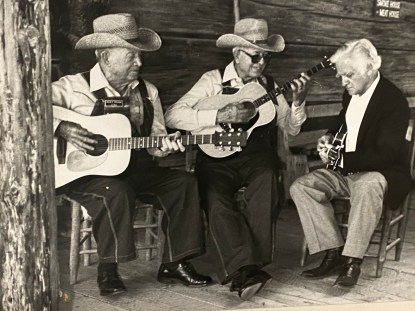 After high school and time in the Army, John went to Lincoln Memorial University on the GI bill and later to the University of Tennessee for his masters. At LMU, he met and later married Elizabeth McDaniel, and they had two daughters, Karen and Elaine. John taught public school and college for a time before becoming the youngest superintendent of schools in Anderson County, a position he held for thirty-eight years. In his free time John remembered the words of his grandfather and began traveling the backroads of Southern Appalachia collecting “old-timey things” and the stories about them. In the early 1960s John bought his first historic cabin, the General Bunch House, and placed it on his farm property. Soon he was adding more structures, cabins, and barns and more and more artifacts.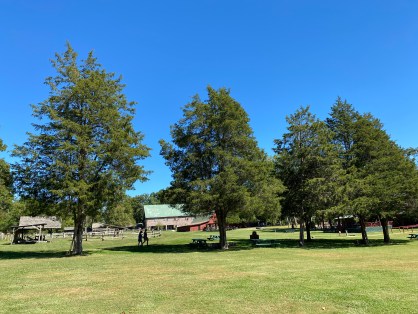
 John Rich Irwin operated the Museum himself until 2003 when it became a 501 (c) 3 nonprofit organization and later a Smithsonian Affiliate. Besides amassing the collections of the Museum, John lectured and shared about historic subjects, wrote books on Appalachian history, and was the recipient of many prestigious awards. John, who passed away in January 2022 at 91, dedicated his life to preserving the rich heritage of Southern Appalachia’s people, and now his daughter Elaine Irwin Meyer and her husband Will Meyer, along with their family, continue to carry on his legacy. John called it ‘only natural that he should want to preserve the history and background he knew’ …’believing it important to safeguard the memorabilia of the people who represented a passing culture.’ So often we don’t realize how following a dream, with hard work and effort, can leave a legacy.

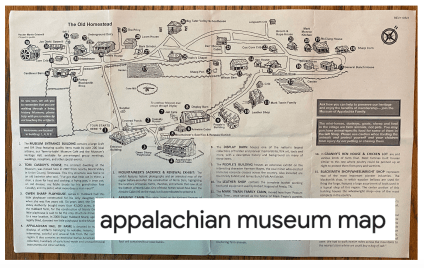 A visit to the Museum starts at the red Entrance Building, where you’ll also find the gift shop and café. Pick up a tour map here, which will give you a guide to all the numbered buildings and places you will see on your walk around the Museum’s grounds.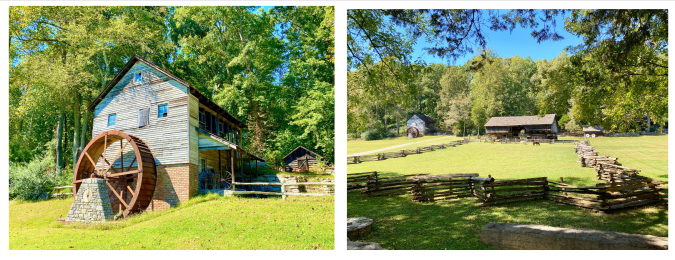
 Ponies were in the field at the barn, who trotted over to the fence to greet us, hoping we might be carrying an apple in our pockets.
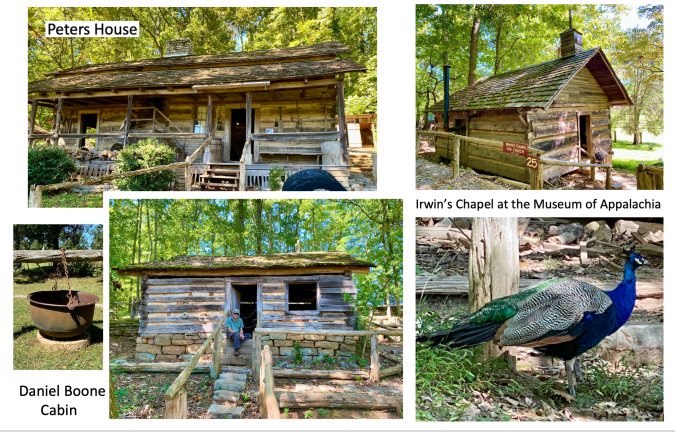 Beyond the barn, we wandered along the main path past the Smokehouse to the pretty Peters House. Nathaniel Peters lived here in 1840 and later his daughter raised nine children in this house, reminding us that big families often lived in small homes in early pioneer times. Walking past the garden led used us to the Irwin’s Chapel, where we’ve heard many old-time Shape Note Singers at events in the past. At this visit, it was the Museum’s peacocks who were having “church” wandering in and out of the chapel—a sight we laughed over. Not far from the chapel sits the small one-room schoolhouse, furnished as in the past when children learned and studied there together.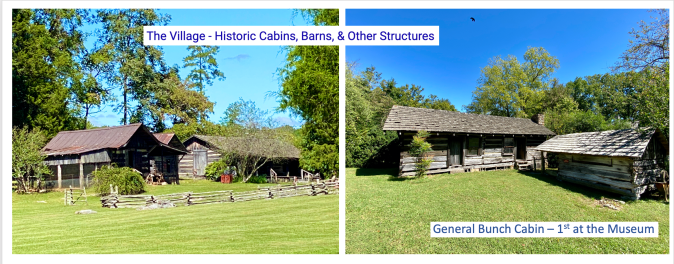
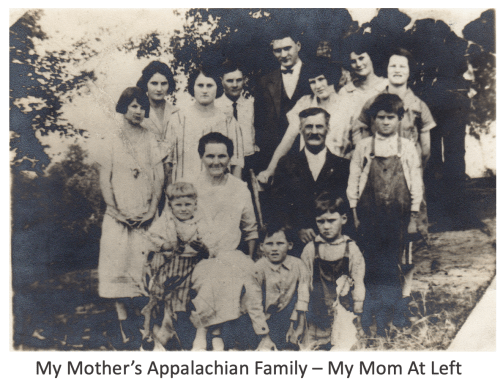 It’s hard to grasp sometimes how much times have changed since the early 1900s. My mother, born in 1913, told me stories about her young years in a large family of twelve when there were no phones, few to no cars, no central heat or air, limited electricity if any, and when families grew most all of their food and made their own clothes and household needs.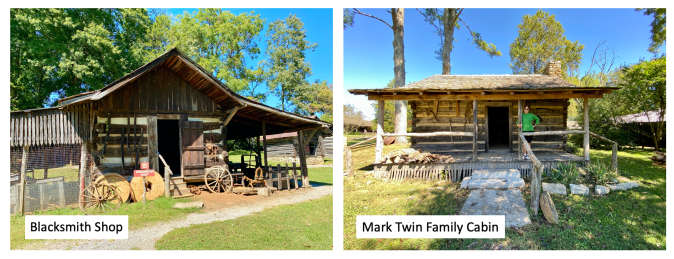
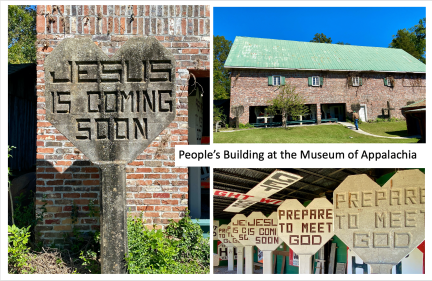 We next stopped to look in the door of the Leather Shop and then headed to the big People’s Barn to look at all the exhibits. In the front of the barn and inside are many of Harrison Mayes 2000 concrete crosses he erected all across the country and abroad on his travels. He was a coal-miner whose heart was simply to spread the gospel and he never asked for contributions when he traveled. His signs are reported to be in 46 states and 45 foreign countries. His jacket covered with crosses hangs in the exhibit barn with his photo and information about his life.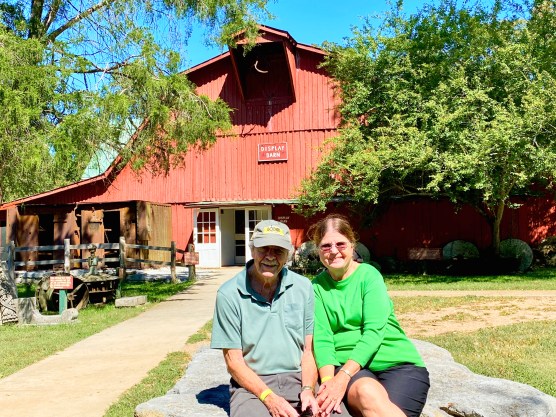
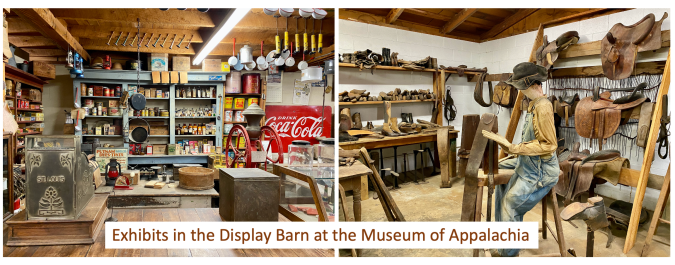 More interesting buildings followed—like old jail cells, the historic Arnwine cabin on the National Register, Cassidy’s tiny bachelor house – far different from the “Tiny Houses” being built around the U.S. today. We also enjoyed a small exhibit building commemorating the homes, churches, and farms covered by the floodwaters form the buildings of Norris Dam, plus a little playhouse saved from those waters that sits by the big Appalachian Hall of Fame.
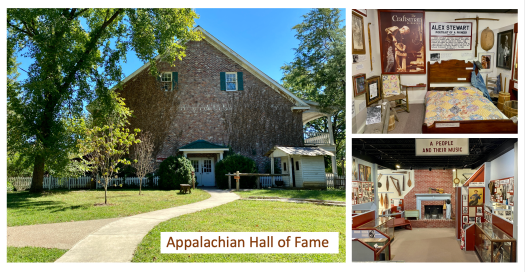 When John Rice Irwin won a MacArthur Foundation fellowship in 1989, he used the money to build the Hall of Fame. This big two-storied museum building houses a wealth of exhibits commemorating men and women of Appalachia—politicians, crafters, singers and musicians, early doctors, dentists, midwives and more –plus displays filled with artifacts in tribute to their lives and interesting commentaries telling about them.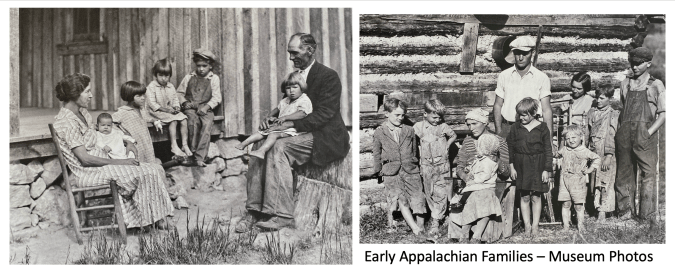
 To get to the Museum, take Exit 122 off Interstate-75 near Clinton and travel east on Andersonville Highway for one mile until you see the museum sign and entrance on the left.
 Lin Stepp