 “The Mother’s heart is the child’s schoolroom.” – Henry Ward Beecher
All of us had a mother and, hopefully we were raised by a loving, blessed mother we remember with joy… or perhaps by a grandmother, aunt, or loving female mentor who showed us “mother love.” It’s unlikely any of us had a perfect mother, despite the romantic sonnets of bards and poets of the past, but most of us can look back and see the strengths and virtues of our mothers and realize the valuable principles, morals, and wisdom our mothers taught to us. If we look back and see some of their mistakes, we can learn from those, too, and not repeat them in our own lives. I think all mothers deserve a hand for simply taking on the job of motherhood at all. It is one of the hardest, most thankless jobs in the universe. Even in our world today, when most mothers also work outside the home and fathers share more of the child-rearing and home responsibilities, mothers still carry the bulk of the responsibility of childcare, including shopping, meal preparation, housekeeping, and shuffling children to all their outside activities.
 As kittens, geese, or other animals learn and imprint from their mothers, we learn from the mothers who raise us. Our mothers, whether they realize it or not, are our teachers. They model the way we should live and think. They teach us what is important not only by their words but by their example. For most of us, our mother’s voice, words of love, encouragement, caution, and concerns, are ever in the background of our minds. A mother’s teaching, especially if it is good, strong, and true, can have a powerful impact on a life. George Washington said, “All I am I owe my mother. I attribute all my successes in life to the moral, intelligent and physical education I received from her.” Others have also written beautiful words about their mothers. John Wesley said: “My mother was the source from which I derived the guiding principles of life.” I doubt either of their mothers, caught up in the busyness of their days, the demands of childrearing and life, realized they were making such an impact on their sons, but the inescapable fact is: Mothers teach us and they make a difference in our lives.
 As little children we lean to and look up to our mothers, loving to hold our mother’s hand and to listen to her read to us, bringing her little bouquets of flowers from the yard, writing her love-notes, and sharing with her all the thoughts and happenings of our day. As we grow older and more independent, we naturally pull away, establishing our own identity, detaching, and seeing with time our mothers in a less idealistic way. Oddly, as we age, and I think especially after we lose our mothers, we look back and see them more idealistically again, realizing all they gave to us, all they gave up to raise us, all the good and worthwhile teachings they planted into our lives and nurtured. We acknowledge even more then how they shaped us, in part, to be what we are today. We are more ready to sing their praises and give them honor for it.
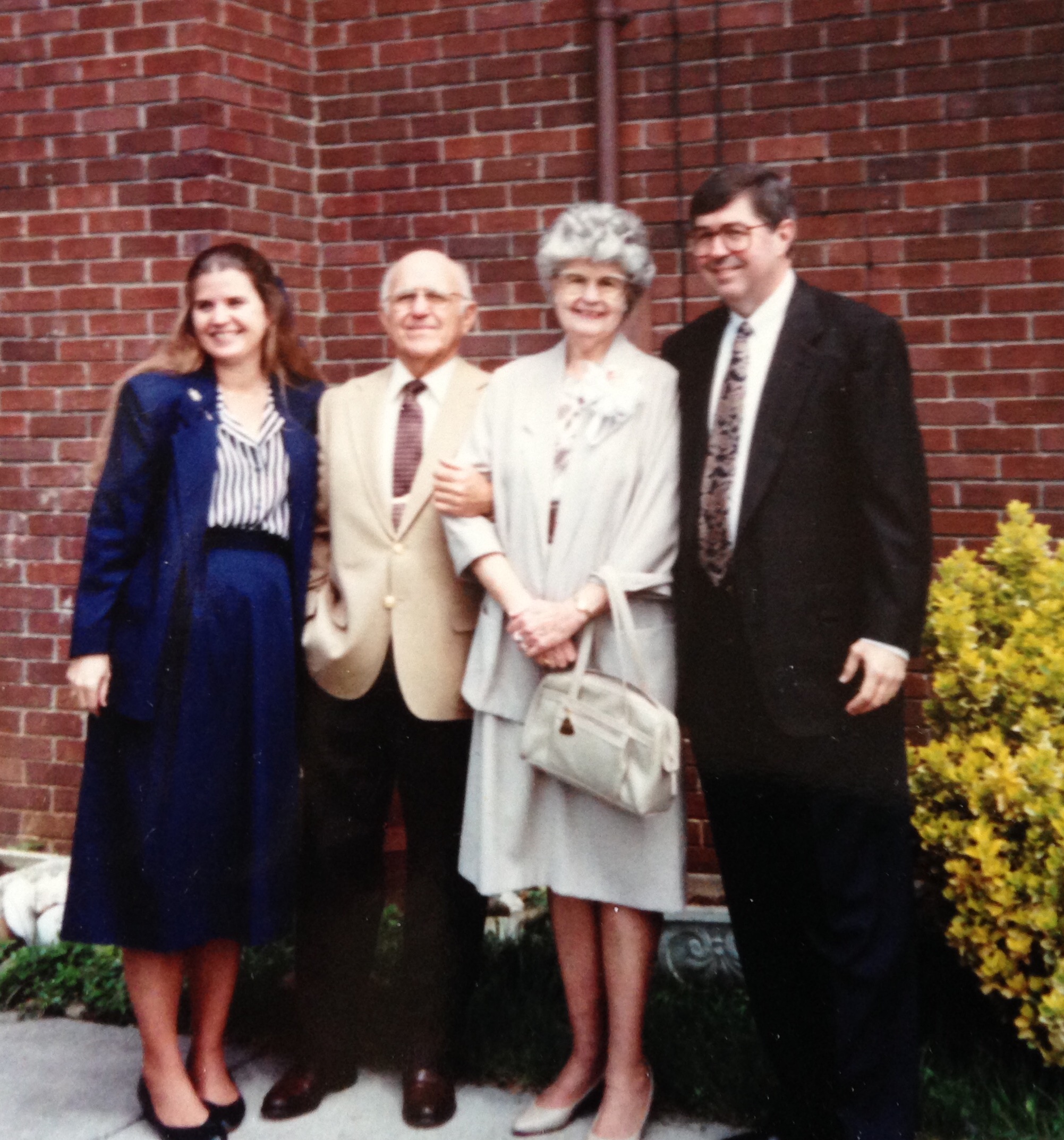 As I grew older, I thanked my mother on many occasions for the lessons she taught me, the love she gave freely, and for the good, virtuous, loving example of her life she ever modeled before me. It was often my mother who was there, standing beside me in the darkest times. Washington Irving wrote: “A mother is the truest friend we have, when trials heavy and sudden fall upon us; when adversity takes the place of prosperity.” I’m blessed to look back and remember my mother was always there for me in good times and bad, and was also my friend.
What did your mother teach you? Have you ever thought about it seriously beyond admonitions like “Don’t put your elbows on the table,” “Remember to wipe your feet,” and “Don’t forget to say please and thank you.” I decided to see if I could think of things my mama taught me, and here is my list of ten things I am especially grateful for.
- THE LOVE OF FAMILY
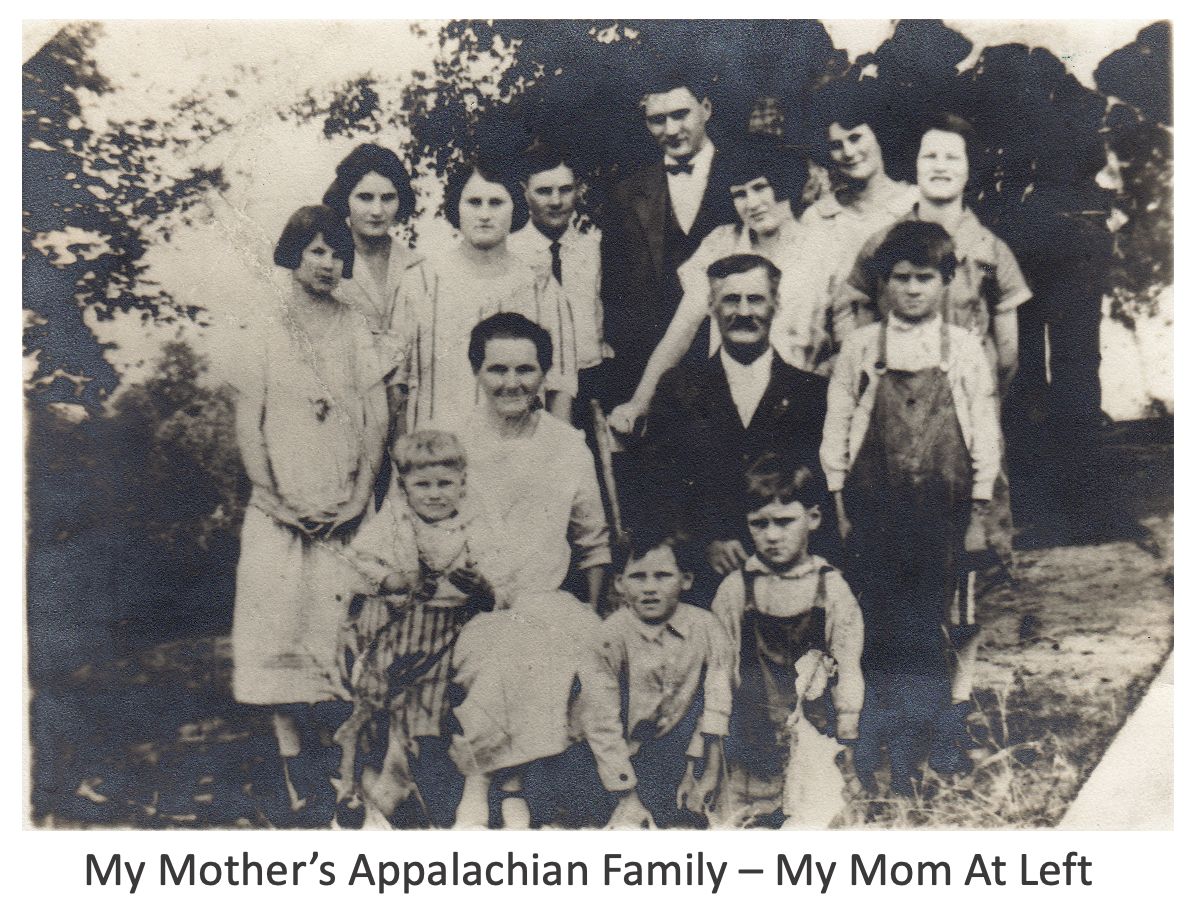
From the first my mother modeled and taught the importance of the love of family. Respect, love, and thoughtfulness was expected in our home and the concept of “honor your father and mother” was well taught. Both my parents had been raised in large, loving families and I saw the love of family ever modeled, too, in visits to the homes of grandparents, aunts and uncles.
- A LOVE AND APPRECIATION OF NATURE
Mother and dad both had a love for nature and the outdoors. They loved their yard and garden, and mother, especially, loved flowers. Her knowledge, and her awareness of appreciation for the natural world around her was often voiced. From my earliest years, she took me around the yard and garden teaching me about God’s beautiful creation, making me feel linked to the earth.
- A LOVE FOR NEIGHBORS AND FRIENDS
Most people who knew my mother remark about her hospitality, friendliness, caring, and her willingness to open her home, cook and share a meal, take gifts of food, flowers, or plants to others. She modeled the joy of sharing, opening her life and heart to others, ready to listen, and always ready to help. She loved people and cared for them with a genuine warmth and love.
- A LOVE FOR WORDS AND EDUCATION
Mother appreciated the beauty of written words, the privilege of education and learning of all kinds. She loved poetry and could quote many long poems, passages of literature, and she sang the words to songs and hymns freely, teaching them to my brother and me, too. It was always expected in our home that we would value growing in knowledge and give our best in school.
- A STRONG FAITH TO GUIDE YOUR LIFE
How blessed I was from the first to always be aware of God the Father, Son, and Holy Spirit through the life of my mother and father. Both strong Christians, the concept of God’s love and that He wanted to guide and lead us every day was always instilled in me. I saw it in mother’s life, and dad’s, the basis for their actions, decisions, how they patterned their days.
- HOW TO LOVE OTHERS
I always saw a selflessness in my mother’s life, my dad’s too, both ever ready to share with others, to give to and help others. People talking about loving others is not as powerful as the example shown of truly loving others in action. At home, at church, in our neighborhood, at my school, mother was always there giving of her talents, time, and caring, a powerful teaching.
- A GOOD WORK ETHIC TO LIVE BY
My mother often quoted the old proverb: “Idle hands are the devil’s workshop” and she modeled a life of busy hands and work. After I was born, my mother, a former home economics teacher, stayed at home, but she worked at home diligently. She seldom had idle hands and chided me, too, if I did. She sewed, cooked, gardened, and gave time to church and civic efforts.
- HOW TO VALUE CREATIVE WORKS
Many of mother’s work efforts were creative ones. She wrote letters, created lessons and teachings for church and Bible school, put up vegetables, excelled in the garden and the Garden Club she belonged to. She made many of my clothes, was a gifted seamstress and craftswoman. She modeled the Oslo quote: “To be creative means to be in love with life.”
- THE IMPORTANCE OF A DISCIPLINED LIFE
My mother and my father lived a disciplined daily life. Time was not a commodity to be wasted and life and talents too precious not to be used. Frivolous, time-wasting activities were frowned upon as life was short and much good to be accomplished. Mother believed in a disciplined life of healthy eating, physical activity, reading, study, and time out-of-doors to be blessed by nature.
- TO REACH FOR YOUR. BEST
The stories Mother told and read to me, and her example, were filled with the concept of always doing your best in life, of using your talents wisely and well, of being a good, moral person, working to make the world a better place, caring for others, trusting God, following Him and trying in all things to strive for excellence, and never settling for less than one’s best.
These nuggets of wisdom I know I learned at home. Later, I think I tried to shrug off a lot of them, but then as I came to know the Lord personally and began to grow more in my faith, I found these same bits of wisdom ingrained in all the Biblical teachings I gained. I realized then how many of the things Mama taught me were a reflection of the wisdom of God her own mother, my grandmother, had taught to her. What a lovely legacy can be passed down.
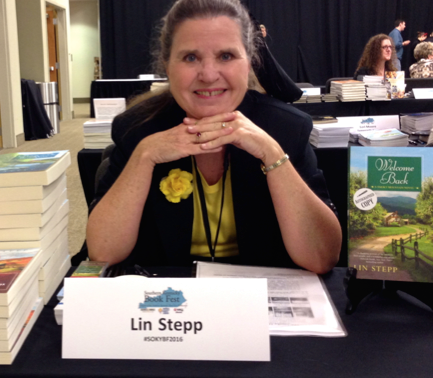
My ongoing teacher now is the Lord, continuing to grow and refine me and to bring me to more good, true, and righteous knowledge to help me live the best life I can. So thanks to Mom for all she taught me, and to my dad, and all the good and righteous teachers along my way through life, to loving friends, and to all who have loved me and encouraged me to live a good and useful life.
“Just as the twig is bent, the tree’s inclined.” – Alexander Pope
Note: All photos my own, from royalty free sites, or used only as a part of my author repurposed storyboards shown only for educational and illustrative purposes, acc to the Fair Use Copyright law, Section 107 of the Copyright Act.
 Title: CELEBRATING THE STARS AND STRIPES IN BOOKS – by Dr. Lin Stepp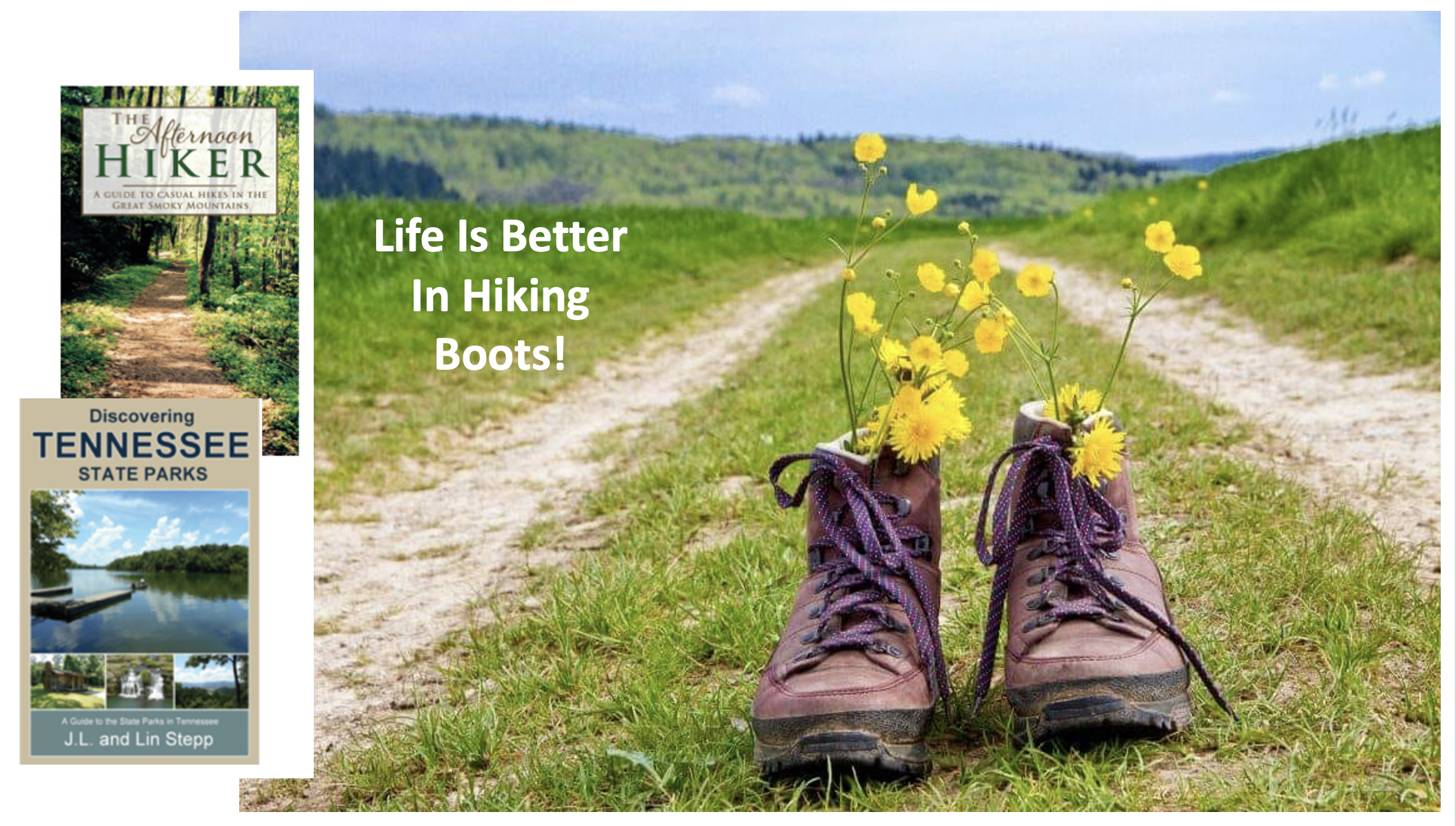
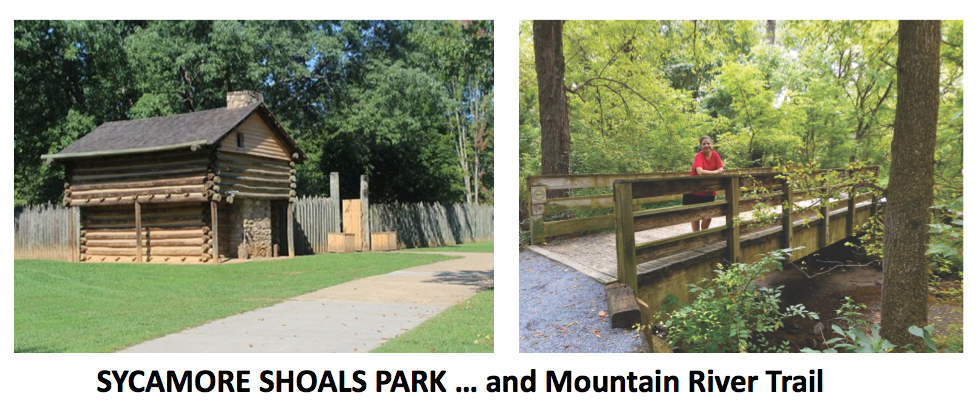
 We began to research and plan for that new book, around our jobs and my ongoing writing and book tour events for my novels, and in 2015 we finally began our travel trips to the parks. Over the next two years, we visited all 56 of Tennessee’s state parks. In researching and planning for the book, we decided to divide the book into Tennessee’s three natural regions, East, Middle, and West Tennessee. We began our visits at the far Eastern end of Tennessee at Warriors Path State Park, Sycamore Shoals State Historic Park, and David Crockett Birthplace, working our way gradually across the state on weekend travels until we reached Tennessee’s final parks on the Mississippi River like Meeman-Shelby Forrest State Park, Fort Pillow State Park, and Reelfoot Lake State Park, the last park on our journey.
 In writing our new guidebook later, we gave clear directions to each park, a description of all the things to do and see within the park, and we provided over 700 color photos throughout the book in illustration. We hiked multitudes of trails, visited historic sites and museums, explored battlefields and old forts, took historic tours, and learned more than we ever could imagine about the rich history and diversity of our state parks. Often, I wrote and added a “History Note” after a park description to further acquaint readers with aspects of how that park had formed and about its early settlers and historic significance. I often talked about Revolutionary and Civil War battles which had taken place at the parks, the lives of patriots, old homes, churches, and cemeteries within the parks, and about the early work of the Civilian Conservation Corps (CCC) in building many of the roads, trails, and structures in the parks.
 A surprise to us in nearly every park we visited was in learning that the U.S. flag was raised and lowered with honor and respect every day, often at the main visitor center or park office, but sometimes also over a historic fort or museum. We also saw old flags of the past honored in photos on walls of museums, and in historic buildings, with descriptions about their part in pivotal battles or in the lives of patriots. It was a rich lesson in the history of the United States, and of our home state of Tennessee, to visit these parks and to learn more than we expected to about our state and national heritage.
 After completing our park visits, the next year was spent getting the book completed for publication, and in the spring of 2018, DISCOVERING TENNESSEE STATE PARKS published. It was, and is, to the best of our knowledge, the only book about Tennessee’s state parks, detailing each in descriptions with photos. The guidebook hit several bestseller lists. It raced into the top 5 in Amazon’s East South Central US Travel Books category. Book Authority ranked it #4 in Best Tennessee Travel Guide Books of All Time, featured also on CNN, Forbes and Inc, and the book became a finalist in the Travel Guides and Essays category in American Book Fest’s 2019 national contest, with over 2000 publisher entries. It was fun seeing our adventures appeal to so many, and knowing we were providing a roadmap for others to learn more about Tennessee’s heritage, beauty, and unique history, in every park they read about.
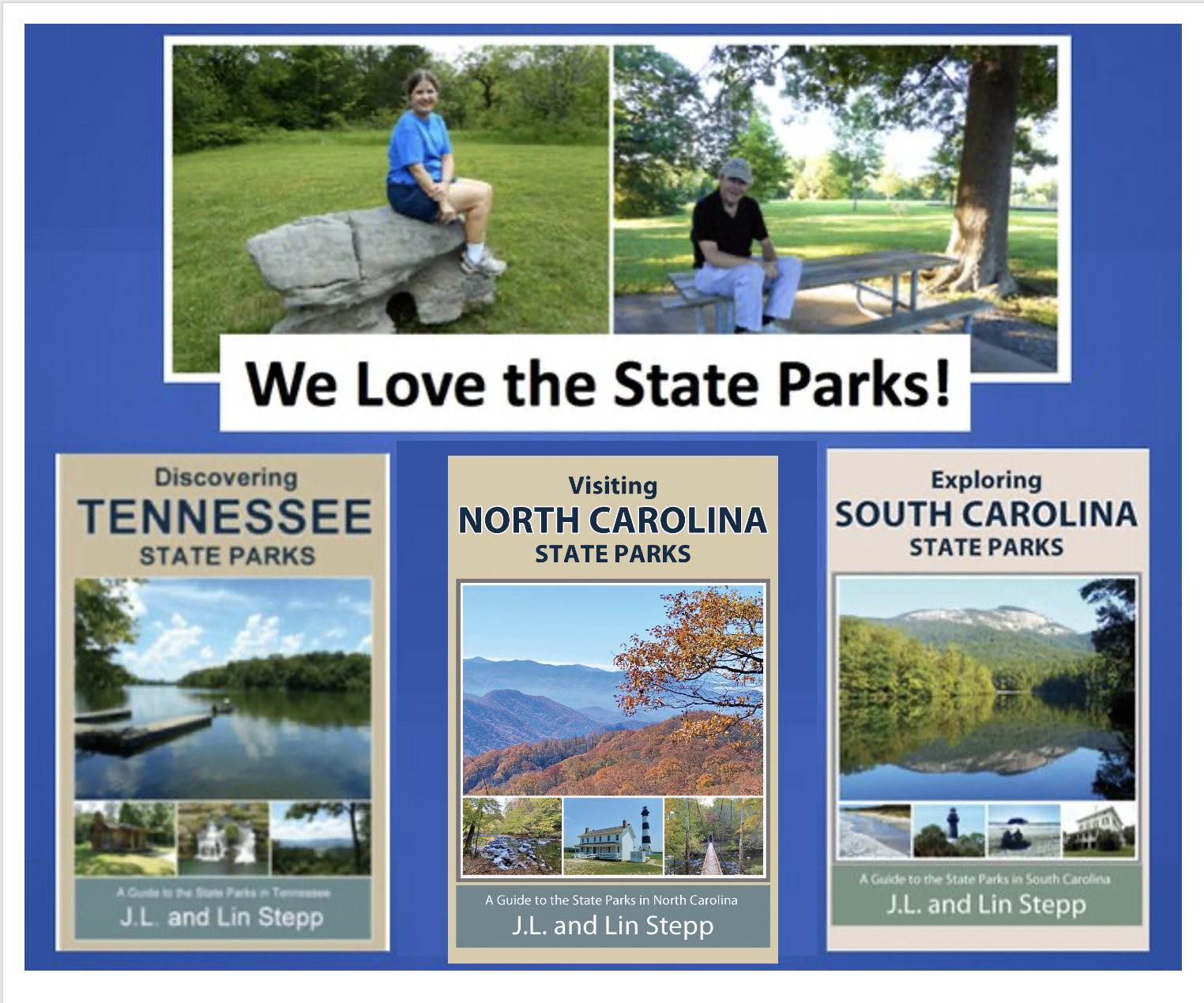
 As mentioned earlier, I also write novels set around the Smoky Mountains of Tennessee and North Carolina, and others set at the South Carolina coast. As of today, I have twenty-three published novels, with two more publishing in March, and six guidebooks jointly written with my husband, and I give many talks at civic groups and organizations, like DAR groups, at libraries, book clubs, women’s conferences, and regional events. I mention this because when J.L. and I were in South Carolina in 2019 at a book signing at Barnes & Noble in Charleston, SC, the year after our Tennessee parks book published, the store’s Community Relations Manager (CRM) came out waving our TN parks guidebook. “We need one of these for South Carolina,” he said. “We got nothing, and people ask for books about our parks all the time. You guys need to write one of these for our state.” With pressure like this continuing, we decided to listen, and over the next two years, around our other ongoing work and events schedule, J.L. and I took week-long visits, when we could, to work on a new South Carolina state parks guidebook.
 South Carolina has less parks than Tennessee, and in South Carolina, many historic sites, military parks, and battlegrounds, which were governed under the state’s jurisdiction in Tennessee, were under the national park’s jurisdiction in South Carolina, so we decided to also include those parks in our guidebook. Many were also close to the state parks, as well, and we knew visitors would want to know about them and probably visit them, too. We ended up including a total of 55 state and national parks in this new guidebook, and we laid it out in format and design similarly to our published Tennessee guidebook.
 Over the next two years we shared many interesting trips exploring and enjoying the lovely parks all over the state of South Carolina. Similar to our previous guidebook, we organized our parks into four geographic regions, the Upstate, Midlands, Pee Dee, and Lowcountry. South Carolina’s history is older than Tennessee’s, so we enjoyed learning even more about earlier times in America through our parks’ visits, especially in visiting many Revolutionary War and Civil War sites. Again, as in Tennessee, we often ran into DAR markers and history notes and the joy of seeing our national flag flown in nearly every park we visited. Several historic sites of particular interest were Ninety-Six National Historic Site, Charles Pinckney National Historic Site, Colonial Dorchester, Rivers Bridge, Andrew Jackson State Park, Kings Mountain, along with coastal Fort Moultrie and Fort Sumter.
 Our new guidebook published in 2021 and it, too, has been a strong bestseller. As far as we know, there is no other current guidebook to all the parks in South Carolina, although, of course, different parks get mentioned or spotlighted in other books. We are so pleased that we have been able to bring our readers “armchair traveling” to the state parks to encourage them to visit them and to let them know more about the interesting places to see in each park. As in our first state parks guidebook, I wrote many “History Notes” after significant parks in South Carolina to teach readers more about the heritage and rich history of the parks.
 Our travels to visit parks, to bring them to life for our readers, involves a lot of planning and extensive travel. We create a detailed agenda before any week of visits, with our journey mapped out to travel in the most expedient way to the parks we plan to visit in an area. Despite the advent of GPS and other modern technology, J.L. and I always take printouts of park and state maps with us as we travel. Many parks are in remote areas where cellphones and other travel helps don’t work well, and we often find better routes to the parks than the ones recommended. Finding good places to stay in proximity to the parks we plan to visit is yet another challenge.
 On our return home, I write up the descriptions of our park visits for our book and introductory materials, like including a history at the beginning of each book about how the parks in the state developed. J.L. and I select the best photos to include, and then he creates and lays out each park page in InDesign. He also creates regional and alphabetical indexes for each book. Multiple edits follow, done both out of the publishing house and in. Our graphic designer creates the book covers, the state park maps included in each book, and other specialized pieces that make our books unique. It’s a long effort to get a book press ready, even after all the parks visits are completed. Yet, it is very rewarding to pass on the joy and learning—and rich history—of our visits to readers all over the U.S. and abroad.
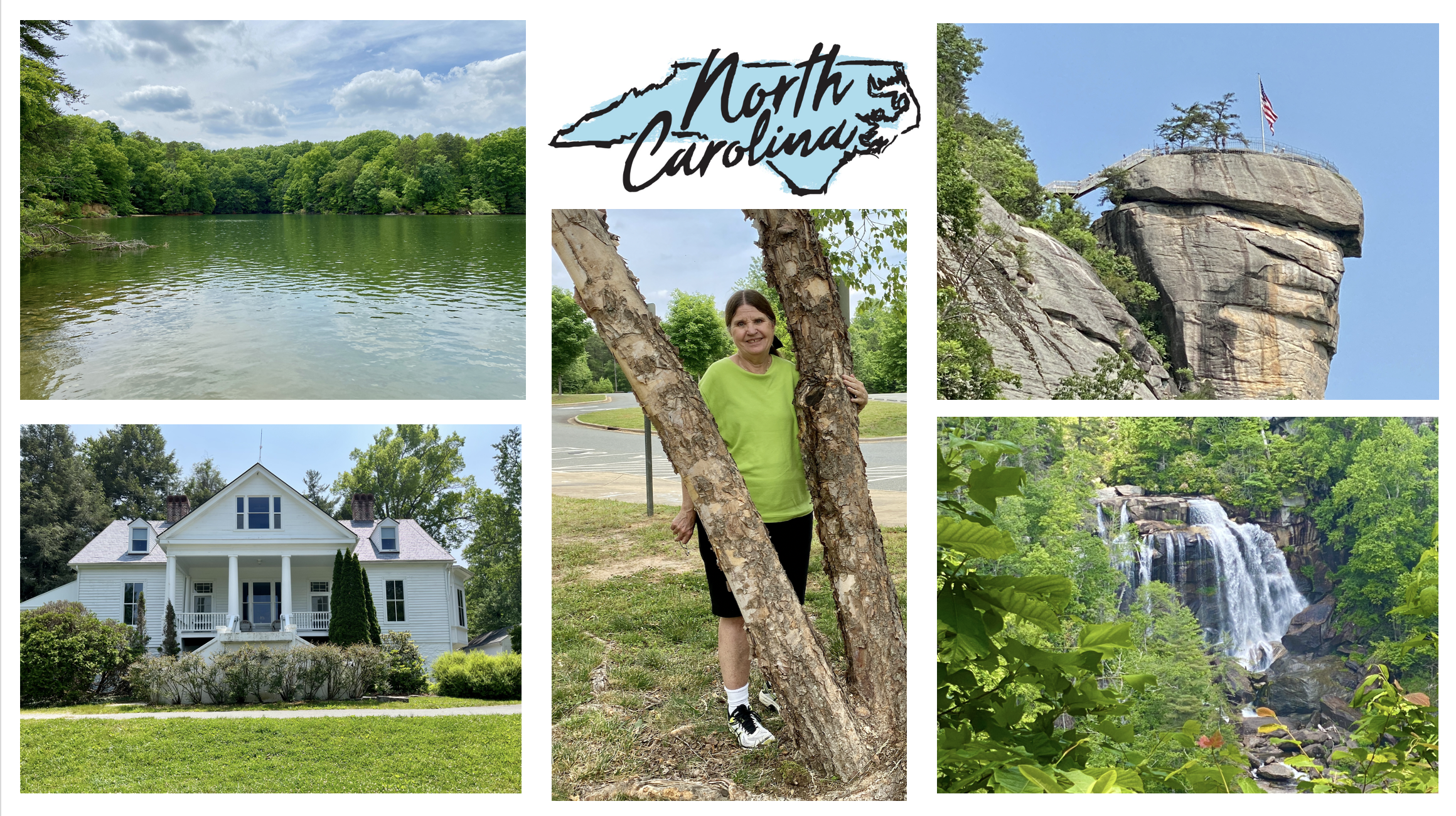
 This last year, in the summer of 2023, our third book VISITING NORTH CAROLINA STATE PARKS published after yet another two years of park visits. In the same year, two of my novels published, one a novel set in Cherokee, North Carolina, titled VISITING AYITA. Even in my novels I teach history to my readers. In this book I taught about the history of the Eastern Band of the Cherokee, about the town of Cherokee, its people, and heritage today. Others may be “history makers” in person but I love sharing history in books with my fans and readers. Every one of my Smoky Mountain books takes readers visiting to a new place around the mountains and I often get to include wonderful extras about the heritage of an area that I hope my readers will visit, like the rich history found in Dandridge, Tennessee, in EIGHT AT THE LAKE, a closer look at quiet Townsend on the quiet side of the Smokies in DOWN BY THE RIVER, colorful history about Gatlinburg and the Walker Sisters in my book DELIA’S PLACE, and interesting facts about Edisto, Charleston, Beaufort, and Port Royal in my Edisto and Lighthouse Sisters books set on the South Carolina coast.
 Books are the way I go home with people, and as a past professor, books are the way I teach others about the beauty and history of places I love. My books, set in contemporary times, take readers to new places and into the lives of new characters each time, teaching about love, patriotism, good morals, kindness, faith, and more. I cherish Dolly Parton’s words about my books: “Well, I’ve finally come across someone that believes in all the things that I do … love, family, faith, intrigue, mystery, loyalty, romance, and a great love for our beloved Smoky Mountains. Dr. Lin Stepp, I salute you.” I believe, in these times, where we often see morals and patriotism compromised, that we each need to work to remind others of the good in our country, the rich legacy left to us by our ancestors, the beauty in our world, and the way to live in it with caring and kindness in our everyday lives. This is what I strive to teach in my books, in my novels, and in our regional guidebooks.
 I celebrate the Stars and Stripes, the love of country, the beauty around us, the good and the honorable and true, still in our world, with every book I write. So much of what people write today does not encourage the type of strong character, strength of mind and heart, that helped to create our nation and that our forefathers fought and died for. My own relatives trekked down through the wilderness to settle this east Tennessee area. I have a rich legacy of patriots, teachers, preachers, and statesmen in my background. I hope I give them honor in all I do.
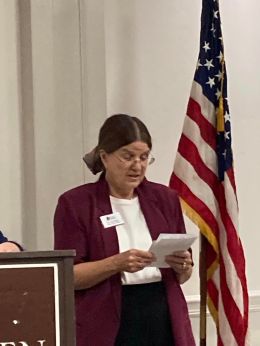 This month for my May Blog, I wanted to share the essay I submitted this winter for the National Society Daughters of the American Revolution annual DAR Women’s Issues contest. We were to write our essay in one of four categories: Career, Family, Mental Health, or Physical Health. I submitted my essay in the Careers category and I recently learned that my entry won 1st Place in Tennessee and 3rd Place in the Southeastern Divisional level. This lovely certificate, below, was given to our chapter regent this month at the State Conference in Nashville. I was unable to attend, since I was traveling in South Carolina on Book Tour, but I am pleased for the first place award for our chapter and for the third place recognition at the divisional level for the Tennessee State Society as well.
 I give the main credit for this nice honor to our Chapter Regent Brenda Wyatt who kept pushing me to take time to enter. I started to write the words “badgered me to enter” in humor. I was so busy with work at that time, in edits for one book and working on writing another, that it seemed hard to imagine I could find the time for anything else. But I stopped to plan and write the essay, with Brenda’s urging, on a careers subject dear to me – that it is never too late to follow the dreams in your heart. I titled it: “BE ALL YOU CAN BE, NO MATTER YOUR AGE.”
 I belong to a Knoxville, TN, Chapter called Andrew Bogle DAR and I have been in the DAR since college years before marriage. I have carried a lot of offices and roles over the years with DAR and I am currently our chapter’s Chaplain. Ours is a large, friendly, active group, and If you are interested in DAR and would like to learn more about joining our Andrew Bogle Chapter, please feel free to contact our Chapter Regent, Brenda Wyatt, at her email at:
  As an additional treat this month, I also received a Recognition Certificate of Award for “FIFTY YEARS OF SERVICE TO DAR.” Below is the brief DAR essay that I hope you will enjoy reading … and I also hope, like the title, that it will encourage you to be all you can be and to follow your dreams, no matter your age!
 Despite all the progress women have gained, in attaining equal rights to reach for higher achievement at any age, women are still marginalized and limited in reaching for their dreams by many factors—the culture, the expectations of others, gender and ageism stereotypes, and a deep, innate desire to please others that often holds women back from boldly pursuing their goals. Women, in particular, seem to want someone to give them permission to step out courageously to strive for new goals, and yet it is rare that the encouragement they yearn for will come.
 I speak for many groups and organizations, and I have encouraged the women and men in them, and the many college students I have taught as a professor, that it is never too late for them to pursue the dreams of their heart, no matter their age, the environment they grew up in, or if anyone is encouraging them or cheering them on. Ultimately, the courage to pursue any dream must come from within, and particularly in middle and older age, each of us will either step forward into growth every day or step back into safety and the comfortable, familiar habits and life patterns we are used to.
 Additionally, taking any debt to attend school, with my own children’s college years not far ahead, wasn’t an option, so I picked up a second job to pay for my college expenses. On a somewhat humorous note, the doctoral program I was entering, in Educational Leadership at the University of Tennessee (UT), would have been an impossibility for me at all as a young girl. Women were not allowed to even apply for that doctorate program then. When I started my studies, those old stigmas still circled among faculty in the college. One of the best encouragements I received in those years came from an unexpected source, from a UPS delivery man who said wisely: “Give it all you’ve got. It can never hurt to better yourself.”
 After graduation, I began teaching college courses at Tusculum College where I continued working and teaching for twenty years. I taught a wide variety of Psychology and Research courses in the college’s Adult Studies program, where I worked with young and older adults, most returning to school to get their education while working and raising families. It was a joy to learn, along with my students, and to encourage them in their lives as individuals. I still keep up with many of my old students and those years were filled with rich meaning.
 I was teaching then and also working part-time as the Educational Coordinator for Huntington Learning Center, traveling to visit schools in four counties. Many of our friends, of similar ages, were retiring, but we were moving into new ventures. In truth, most people didn’t have any confidence that we could write a book or ever get it published. Their comments were polite and somewhat condescending. Frankly, it was the type of encouragement I was used to, and I had learned well from experience in past, as C. S. Lewis wrote, that: “You are never too old to set a new goal or dream a new dream.”
 I suppose that seeded the idea, and one day driving back from speaking at a school in Vonore, Tennessee, the idea for a series of novels—just like I wanted to read—rolled into my thoughts. Long years ago, as a young girl, my dream had been to write books, so I thought: “Why not now?” I went home and began plotting out a series of novels I called The Smoky Mountain series, contemporary romances, with a dash of suspense, and a touch of inspiration, each one set in a new location around the Smoky Mountains.
 I faced a new learning curve in figuring out how to seek publication for a book. However, in 2008 I signed contract with a big regional publisher in Winston-Salem, North Carolina, to publish my books. To say that everyone who knew me was stunned would be an understatement. Next, I faced the huge, daunting new task of marketing and traveling to sign and speak about my books, while continuing to write more books and also work. After the publication of five novels and our hiking guide, I had to pursue a new publisher, as well, due to changes with my current one. I was blessed to sign with Kensington Publishing for my next titles, one of New York’s huge, national publishers. My books had been selling well before, but now I began to experience the blessings of hitting the New York Times, USA Today, Publishers Weekly, and Amazon Bestseller lists, and my titles began to publish internationally as well as in the United States.
 I thank God every day for enabling me to have enjoyed a whole new career in my middle years. It truly is never too late to be what you might have been in this life, if you will believe in yourself and your dreams and work hard to see them come to pass. One of my greatest joys now is in encouraging other men and women to pursue their dreams, and to overcome all the roadblocks and challenges along the way, to see their dreams become a reality, too.
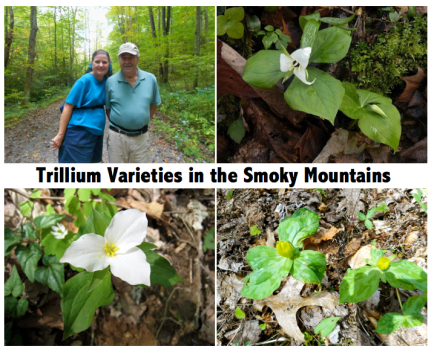 Living near the Great Smoky Mountains, I look forward to the wildflowers blooming every year. When J.L. and I were working on our hiking guidebook, we were on the trails often through all seasons, always seeing new flowers along the way. But April was always the prettiest month of the year for enjoying the wildflowers. It’s also in April when the wildflower pilgrimages and wildflower walks around the mountain areas are held. There are more than 1,500 kinds of flowering plants in the Smokies, more than in any other national park, so there are always many varieties and types of wildflowers to discover.
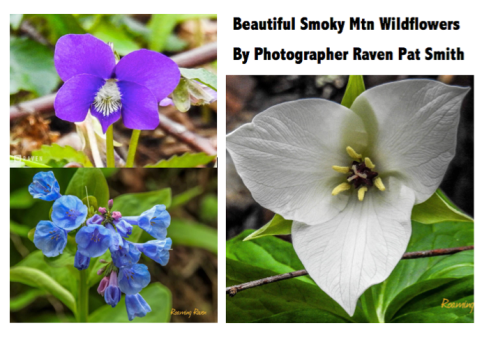 On our hikes and walks in the mountains, we have taken many photos of wildflowers, like the photo of us at the beginning of this post with several varieties of trillium, an early Smokies wildflower. However photographer fans and friends of ours, that we’ve met on the “writer’s road,” take far more spectacular and beautiful photos than we do, so I’ve spotlighted some of their work in this blog post. Raven Pat Smith’s photos above show a glorious white trillium, an early purple violet and wild bluebells.
 We often discover daffodils, flowering shrubs, and non-native plants around the crumbling walls, foundations, and chimneys of old homesteads—the flowers living on long after the people and farms are gone. Marie Burchett Merritt’s photos on the right show dogwoods in bloom, yellow trillium, and wild dwarf iris—that I always love spotting on the trail.

 Vibrant pink Catawba rhododendron, like in Kristina Plaas’s photo, grow in the higher elevations like on Andrews Bald or near the Chimney Tops Trailhead. Many wildflowers we simply run into along a trail … stopping to delight in our “finds.” Special wildflowers, always a treat to discover, are white dutchman’s britches, yellow lady’s slippers, and red Indian paintbrush, also in Kristina Plaas’s photo above.
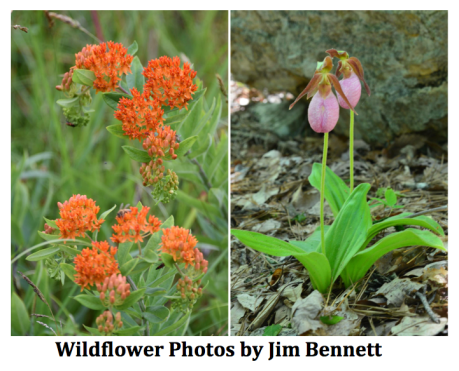 We tried to mention in our hiking guide The Afternoon Hiker trails especially known for wildflowers but flowers in the mountains often show up in unexpected places, and there are flowers of different types to see from early spring into the late fall. But April is still the best time to see the most wildflower varieties in the mountains. If you ever come to the Smokies in April the show of wildflowers will delight you and give you lovely memories to carry home. But remember that anytime you explore the woods, parks, and fields near your own hometown in the warmer seasons that you will find wildflowers, too. This month, I hope you will head outdoors—and get out of your car and walk up a trail—to enjoy the beauty you will find at every turn.
 I have a new Mountain Home Book coming out March 16th titled SHOP ON THE CORNER. I enjoy writing all my books, set around the mountains and at the coast … but this book was especially fun for me to write. I got really attached to all the characters in the story and had so much fun creating their adventures. I also loved revisiting, on several trips, the Waynesville, North Carolina, area to work on this book, walking the downtown streets, stopping in all the charming stores, eating in the cute local restaurants. Each visit reminded me again how much I like this picturesque and engaging North Carolina town.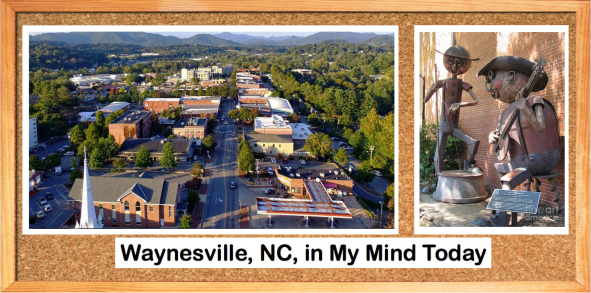
 As you may guess, that change takes her to Waynesville, North Carolina, to an empty shop for sale right on a corner near Waynesville’s main street. It’s a big move for Laura, who has never been to Waynesville before, but she soon finds the change to be a good one. This is due in part to meeting Mitchell Quinlan who owns Quinlan Staffing Services across the street from Laura’s shop. There is definitely a little sizzle of attraction when they first meet. However, both have a host of life problems and responsibilities going on … and they soon get drawn into other problems and issues around the town of Waynesville … as you will, too!
 A special pleasure in working on this book was creating two very unique businesses, Laura’s upholstery shop and Mitchell’s family staffing business. I did a lot of research for both businesses to make them as accurate as possible. Years ago, I actually did a short-term temp job in a staffing services office here in Knoxville, TN, and in a past sales job, I often visited with a favorite sales client, Bob Cable, at his upholstery store, Ledford’s Upholstery, in downtown Elizabethton, TN. I so enjoy creating businesses like these. One of the pleasures of being an author to me is “trying” out a host of occupations and careers through my book characters!
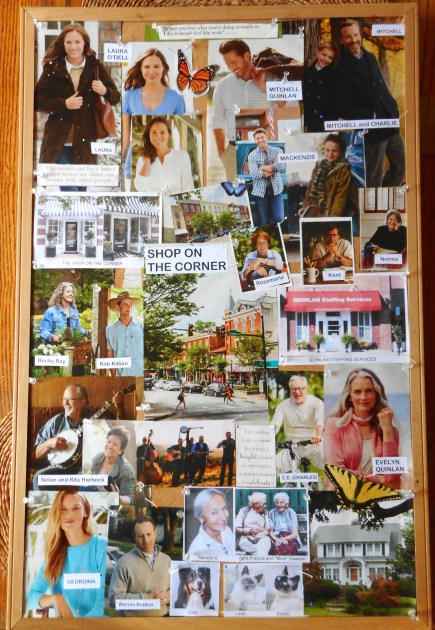
 You’ll see the pictures here of how I imagined that my four main story characters might look…. Laura O’Dell and her sister Georgina, Mitchell Quinlan and his mother Evelyn, an area artist and art instructor. Each of these individuals had distinct personalities and you’ll come to know each well in the book, along with a wide host of enjoyable side characters I truly loved spending time with in my mind. These include friends and work associates, Mitchell’s niece and nephew, Mackenzie and Charlie, and Mitchell’s other relatives—especially his grandmothers, Nannie V and Mimi—and all the wonderful Barlow family. You’re in for a treat with this rich southern story, along with the extra addition of a running local mystery to follow.
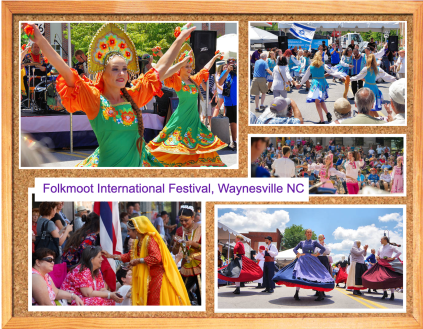 Those of you who read my books know that I set all my stories in “real” places and try to use as many real streets, shops, restaurants, and tourist sites around the area as I can so readers will feel like they have actually visited in the settings of my books. Besides getting to know Waynesville … you’ll also enjoy sitting on Main Street with my main characters to watch the annual Folkmoot International Festival Parade wind its colorful way down the street. I’ve been in Waynesville to enjoy this parade in July … and it is stunning to see.
 A short distance from Waynesville, too, is the beautiful Lake Junaluska Conference and Retreat Center, a lovely place set around a picturesque lake with a walking trail all around it. You’ll get to take a nice walk on that trail with Mitchell, Laura, the kids, and the family dog Zoey at one point. I’ve stayed at Junaluska in past and also signed books at the retreat center’s bookstore. Junaluska is especially beautiful when the 200 roses bloom on the lakeside Rose Walk.
 Waynesville is also near many well-known tourist attractions. One is the Biltmore House, Gardens, and Estate. Biltmore is the historic home and property built by George Vanderbilt, still owned by his descendants and covering over 8,000 acres. It is a major tourist attraction and draws over a million visitors a year to tour the historic home and the beautifully landscaped grounds and gardens. At one point in the book, you’ll get to visit Biltmore with Mitchell and Laura … and learn more about it.
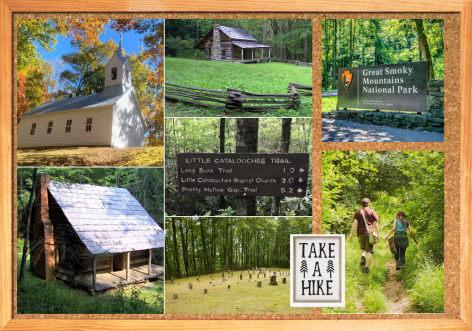 Additionally, you’ll get to take a hike in the Cataloochee area of the Smoky Mountains with Mitchell and Laura. … A fan once told me that one of her favorite things about my books was that I always put a hike in every book. I went back to check and it’s basically true. I like to show readers what a pleasure a “walk” or hike in the mountains can be. In this book you’ll get to hike and learn more about the Little Cataloochee Trail and the Cataloochee Valley, once the home of many settlers. Cataloochee is as beautiful as Cades Cove—but less crowded.
 Through books, readers get the joy of living many lives and visiting a multitude of new places. I hope you’ll enjoy meeting the rich array of characters I’ve created for SHOP ON THE CORNER and that you’ll love visiting this colorful small town. As the back of the book reads: “Sometimes life’s unexpected hardships force you to consider drastic changes you’d never have dreamed of but lead in time to some sweet and unexpected joys.”
 On March 16th I have a new book coming out in the Lighthouse Sisters series. This third title in the series is called LIGHT IN THE DARK. It follows Celeste’s story, who grew up at her family’s inn by the Deveaux Lighthouse on the South Carolina coast. As the back of the book reads in brief: “In this third novel in the beloved Lighthouse Sisters series, Celeste Deveaux struggles to find her way back to joy, love, and meaning after a painful relationship almost shatters her life.” I hope you’ll enjoy Celeste’s journey in this new novel with a little romance, a touch of suspense, and rich scenes on the coast at Edisto and in downtown Charleston.
 For me, most all of my book story ideas come from thoughts or mental pictures that slip into my mind while visiting the places I write about. My home and heart live here in the mountains of Tennessee, but our favorite vacation spot is Edisto Beach, that we first visited when our children were small in the 1980s. Edisto is a quieter and less commercially developed place than busier beaches like Myrtle Beach or Hilton Head nearby. We loved this aspect of the island, enjoying the easy beach access, the peace and calm of this laid-back coastal community.
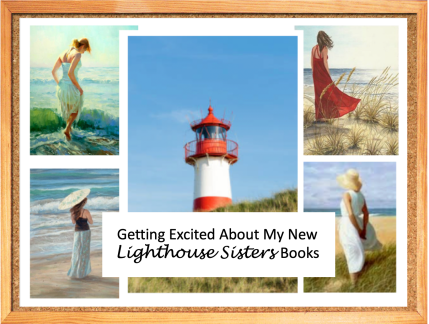 One summer at the end of the 1990s, when J.L. and I were vacationing at Edisto, we visited Hunting Island State Park and the big lighthouse there. The idea began to play around in my mind, wondering what it might have been like for four sisters to grow up on a windswept island beside a lighthouse. I soon began to envision these sisters, each different and distinct, raised in the family’s big bed-and-breakfast for tourists that had once been the lighthouse keeper’s home. Ideas began to drift in more and more and I was soon excited about this new book idea.
 Once I get an overall concept and loose plan for a book, I begin to visualize the main characters for the books. For this four-book series, each book focuses on one of the four sisters. The first book LIGHT THE WAY introduced fictitious Watch Island on Edisto’s north end, plus the Deveaux Inn, Lighthouse, and the Deveaux family. The head of the family, Lloyd Deveaux has died unexpectedly, bringing sorrow and more work load to his wife Etta and to her daughter Burke. The oldest sister, Burke, has always loved the life at the island and never left as her sisters have. LIGHT THE WAY Is Burke’s story … and it becomes Waylon Jenkins’ story, too, when he retires from the Navy to come back to his family home on Edisto. Waylon and Burke grew up together, and it is sweet how they reconnect in this story. Lila, the youngest sister, has recently returned home, too, and before the book ends, the other two sisters also return, each running from personal problems. Gwen returns home with her three children, hurt over a betrayal with her husband. Not long after that, Burke and Gwen go to Nashville to bring home Celeste, and it is Celeste’s story you will read in LIGHT IN THE DARK.
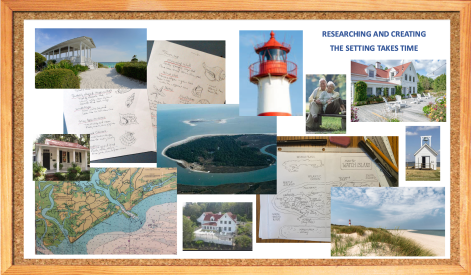 Even though I have always visited the places where I set my books, I return to those settings again to explore as I begin to work on a new book set there. I pick up brochures, take photos, talk to people, learn historic facts, and gather story ideas. As I am researching and creating the settings for a book, I also develop and flesh out all the secondary and side characters. The sisters’ parents, Lloyd and Etta Deveaux, had to come to life, as did a diversity of neighbors and friends. Additionally, I spent months developing the Deveaux Inn, lighthouse, gift shop, and the entire 500-acre lighthouse station. I had to find out how a lighthouse works and to design the interior and operations of the inn and lighthouse. I also spent time learning about and creating the cottages, outbuildings, harbors, marina, and creeks around the island, and developing the employees who would help the Deveaux family run the inn. I studied extensively, too, to gain more knowledge about the South Carolina coast, the tides, ocean, climate, about the island, the lighthouse’s history, Edisto’s marshes, creeks, birds and animals, seashells, and a million other small things that might play into the stories.
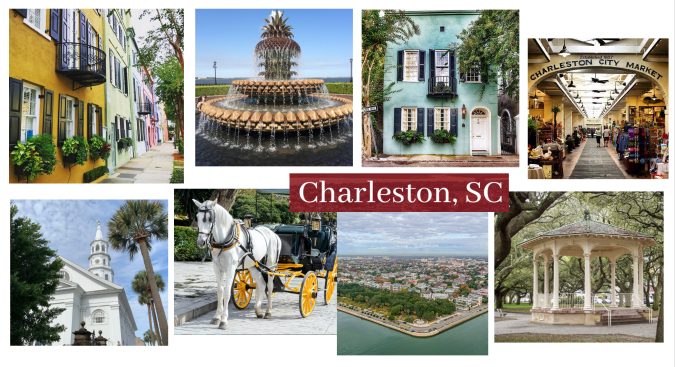 To make each story more unique, I varied the setting focus of each book. LIGHT THE WAY focuses its story and setting on the lighthouse island at Edisto. LIGHTEN MY HEART branches out to take readers to scenes around Beaufort and Port Royal. This third book, LIGHT IN THE DARK, centers much of its story in downtown Charleston. I researched and learned about the city’s history, studied maps and articles, and my husband J.L. and I explored all over the downtown streets where scenes in the book would take place. We discovered so many spots we’d never visited before on these explorations, finding quiet gardens tucked away between gracious historic buildings, sleepy cemeteries, little museums, and cute restaurants and shops. I spent extensive time around King Street where many scenes in my story take place, bringing me wonderful ideas to help enrich Celeste’s story.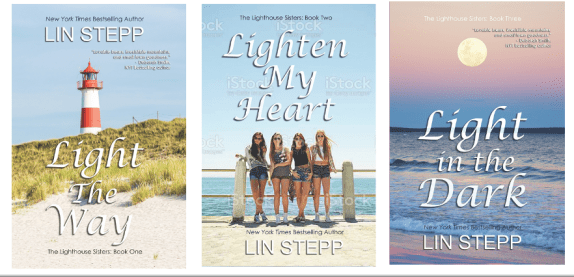
 As an author, I always create an “Inspiration Collage Board” for my books … and here you can see my board for the Lighthouse Sisters books. The four books have a rich array of characters you will meet along the way. All their lives have problems and challenges… and they often little mysteries to unravel. In LIGHT THE WAY, a series of murders are going on around the coastal area that Burke and Waylon get swept into. In LIGHTEN MY HEART Alex’s family’s restaurant gets troubled, as do other Beaufort businesses, by a counterfeiter. And in LIGHT THE WAY, Celeste and Reid work their way through their own set of problems you will soon read about and get caught up in.
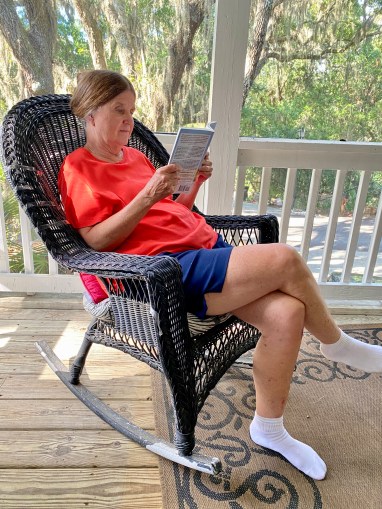 I hope you’ll curl up in a comfy chair in your house, or out on the porch in a favorite rocker, and settle in to enjoy this new Lighthouse Sisters book.
 Lin Stepp