Before I wrote my fourth Smoky Mountain novel, DELIA’S PLACE, I had recently attended a number of elaborate weddings. I began to wonder after these events had passed, what it would be like to be a young girl, engaged to be married, with all those extravagant plans laid out, and then to have something go wrong at the last minute.
Enter the main character of my story Delia Eleanor Walker, Washington D.C. socialite—just finishing college, engaged to a young doctor and preparing to head to the family’s NC beach home for a sweep of celebratory engagement parties. At the sound of the doorbell, Delia heads to the front door expecting yet another gift in the mail, only to receive a FedEx from her fiancé saying he’s married someone else the night before in Las Vegas. … What?… How can this be happening? … Can you imagine Delia’s shock?
 After wailing and snailing, Delia realizes she’ll have to face all those guests at the beach house—plus her extended family—and she really freaks contemplating that thought. Knowing her family as she does, she’s sure they’ll blame her for everything. Slumped on a chair inside the door, Delia glances down at the handful of mail still in her hand, from when she’d walked to the mailbox before the FedEx delivery arrived. Her focus is drawn to the sweet invitation to visit her Aunt Dee’s old cottage behind Gatlinburg, Tennessee, near the Smoky Mountains. Spotting the invitation again seems like a sign, and Delia jumps on the opportunity. Instead of heading, as expected, to the beach for the family celebrations, Delia takes off to Gatlinburg instead. Basically, she runs. Haven’t we all wanted to run away from our problems at some time in life?
 However, you can never really run away from life … And in Gatlinburg, Delia runs into a whole new sweep of unexpected problems—a cousin she didn’t know she had, with worse problems than her own, a childhood sweetheart she’d made a fool of herself over as a girl, continuing issues with her family, not easily resolved, and later a criminal on the loose. Plus, Delia can’t escape the need to deal with decisions about her own life and future either.
 Although many books and movies tend to depict confident, self-directed and self-assured young women and men, many in these early years of life have not arrived at that point yet. Most in the high school and college years are still trying to resolve issues of self-identity as well as issues of self-intimacy. They are struggling to determine who they are, what course in life they should follow, and whether they want to link their lives with another—and who that should be. Still dependent on their families, most are heavily influenced by their family’s views, hopes, and desires for them, even if they claim they are not.
Delia Walker, as the youngest child in her family—and a late child to her parents—has been more than a little sheltered and carries other personal insecurities that are explored and uncovered throughout the story. When Delia’s engagement is broken, one of her first panicked thoughts is how to face her family with this news… leading her to flee versus facing her difficulties head on. …  On the evening she arrives in Gatlinburg, Delia meets Hallie Walker, a younger cousin she’d never met before, also on the run and hiding out at Aunt Dee’s house. Hallie is, in many ways, the opposite of Delia—confident and mature for her age, saucy and independent, and much more self-directed. Yet, both young women have strengths and weaknesses, and I loved showing how their friendship grows and develops over the course of the story.
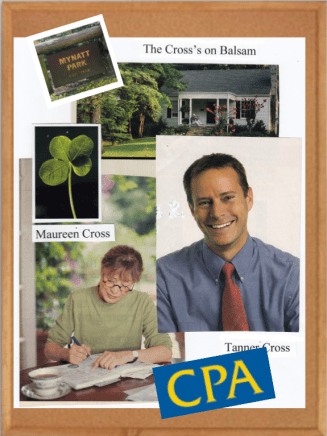 Tanner Cross, the other character in DELIA’S PLACE, lives on the property next door to his mother’s place on Balsam Lane, directly across the street from Delia’s Aunt Dee’s home. Because Delia so often spent summer weeks at her Aunt Dee’s, she and Tanner played together as children. Delia had a girlish crush on Tanner then… and as the story begins, he is pleasantly surprised to see what an attractive young woman Delia has become. When old friends meet, it is always fun to “remember when,” and I had fun developing Delia and Tanner’s relationship through old memories and new ones. Readers loved Tanner’s long-time friends, the Jack Gang, and they also liked Tanner’s mother, Maureen Cross, a wise help to Delia and Hallie in the story.
In writing DELIA’S PLACE I ramped up the suspense more than in past books. Hallie’s fears of the step-father she’s hiding out from are well-founded, and readers said they experienced some nail-biting moments of anxiety and worry before all the problems with Jonas Cole are resolved…. Also woven into the story are several other little misadventures and mysteries that gradually unfold, like Hallie’s relationship with John Dale and Delia’s family’s problems with her Aunt Dee.
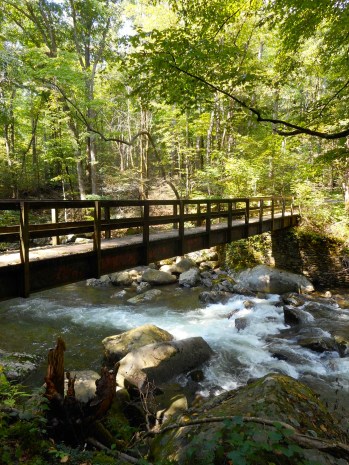
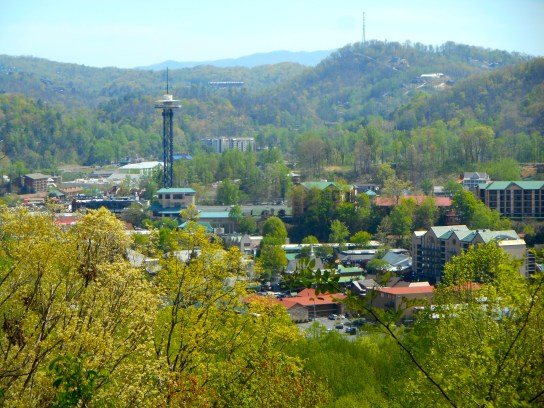 My setting for this book was downtown Gatlinburg, a beautiful tourist town at the base of the Great Smoky Mountains. Delia’s Aunt Dee’s charming little house behind Gatlinburg, lies on a fictitious street in Mynatt Park, a small neighborhood situated along LeConte Creek adjacent to the park boundary. I walked the streets of this quaint neighborhood many times, researched its past history and fell in love with the cute scenic homes tucked along Mynatt Park’s quiet mountain streets. The descriptions of Mynatt Park, its gazebo on the creek, and the nearby hiking trails are all real—and there for you to enjoy when you visit this area.
 In downtown Gatlinburg, for legal reasons I needed to create a fictitious mall for my story businesses, which I called the Laurel Mountain Village Mall. It is much like the other real colorful mountain malls visitors can find on the Gatlinburg Parkway, filled with craft stores, a candy shop, little art galleries and more. I actually removed a small mountain at the west end of Gatlinburg to create a site for Laurel Mountain Village Mall and for the Garden Café and Highland Church on Natty Road behind it. However, most of the rest of the downtown Gatlinburg places, restaurants, tourist attractions, plus the old Walker Sisters cabin in the book are real.
 Through all this book story’s twists and turns, Delia comes into her own, gradually growing in character and resolve, gaining new understandings about herself, and seeing more clearly her own right life directions. …Possibly one of my favorite parts of writing DELIA’S PLACE was in pairing the two opposite cousins—the spunky, red-haired Hallie Walker, raised in the rural mountains of Tennessee, and her older, more proper and demure dark-haired cousin Delia Walker, raised in the Washington DC suburbs. I loved showing how both characters each find their own ways eventually out of the difficult situations they face – as the book begins – to later happier times. And I enjoyed showing how their journey, growing their faith together, also helped each find their way more clearly. …
A review by best-selling author Lynne Hinton offers good words to close: “DELIA’S PLACE, fourth in the Smoky Mountain series written by Lin Stepp, is a lovely story of romance that reminds us broken hearts can be healed. A charming tale of friendship and love.”
[Note: All photos my own, from royalty free sites, or used only as a part of my author repurposed storyboards shown only for educational and illustrative purposes, acc to the Fair Use Copyright law, Section 107 of the Copyright Act.]
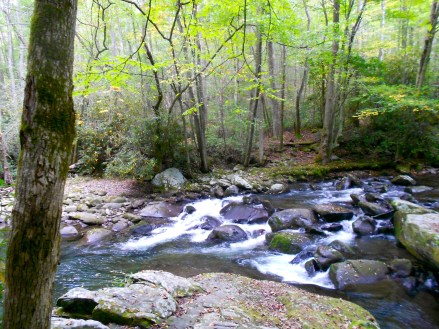
 I always look back on FOR SIX GOOD REASONS as one of the most “fun” books I’ve written. It’s the third book in the Smoky Mountain series and set in the Greenbrier area of the Smoky Mountains, not far above Gatlinburg heading toward Cosby off Highway 321. The main setting for the book lies in a lovely, green rolling valley with the Smoky Mountains rising in the background—sort of like the photo below.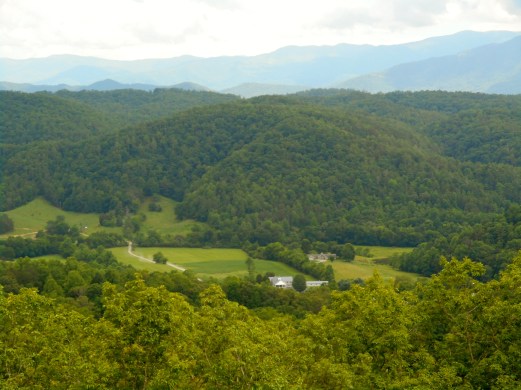
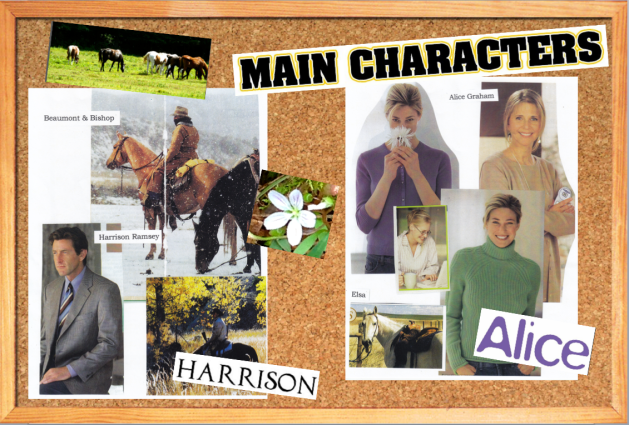
 Harrison Ramsey owns the Ramsey Stables and family farm, next door to Alice’s new home, and he also owns a small country market, rental cabins, and an orchard across the highway. A bachelor with two very bad experiences with women in the past, plus a difficult mother and three older sisters who never made his early life easy, Harrison is determined to avoid women at all costs. A woman with six children that soon end up hanging out at his stables and causing problems is tops on his list of women to avoid. He could stay away more easily from Alice, of course, except for that odd drawing attraction he’d felt toward her from the first, that dang drawing with no sensible explanation.
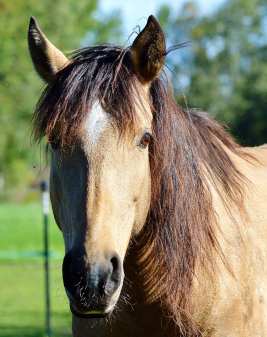
 One of my favorite things about writing this story was creating the Ramsey Stable. Growing up I was always a little horse-crazy as a young girl and I hung out at a walking horse stable near my home. My childhood friend and I, both horse lovers, read about horses all the time, played “pretend” horse games, went horseback riding whenever possible, collected horse statues, watched every horse movie that came out, and even sat writing out lists of “horse names” we loved. So I got to return to my “horse-loving” roots inventing a stable, weaving riding trails for it into the mountains, finding pictures for all the horses in the stable, and naming them.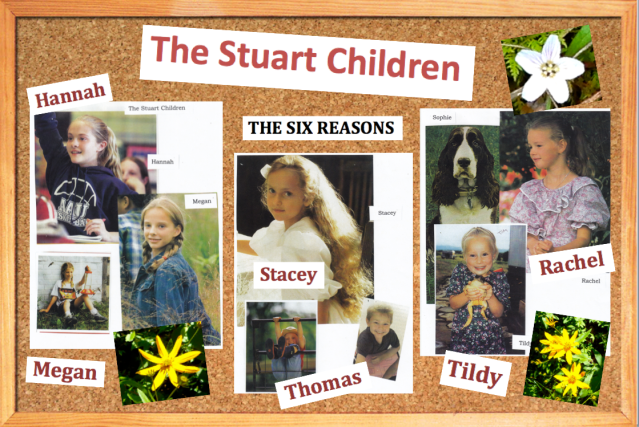
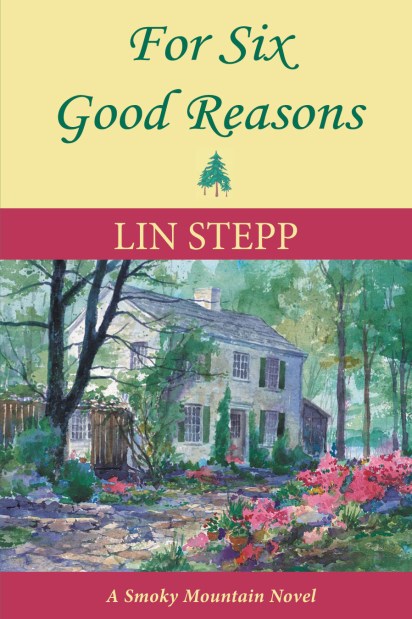
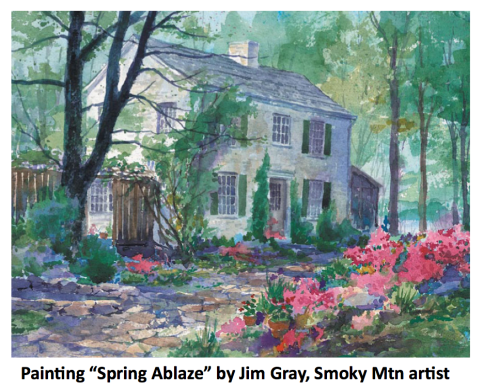 The “inspiration house” for the country home Alice buys for herself and the children was inspired by Jim Gray’s painting “Spring Ablaze,” which was used as the cover for the book. This house was actually Jim and Fran Gray’s home before they moved from Tennessee. I expanded the idea of Alice’s new home, called “Meadowbrook” in the story, to accommodate a large family … but the home idea is similar in feel and style.
 “A young woman with six foster children under twelve, hopes for patience, peace, and a bigger house—but love? Not hardly. However sometimes fate deals an unexpected hand. . . . . . . When Alice Graham came back to look at the sale property at the base of the Smoky Mountains in Greenbrier, it was absolutely not because of that recurring dream of the cowboy. She’d seen him high on the ridge-top in the winter and felt a peculiar drawing and attraction flash between them—but she certainly never expected to see him again. When she did, a month after buying the rural property, that odd attraction still sizzled in the air.”
 My second novel TELL ME ABOUT ORCHARD HOLLOW came out a year after my first in the spring of 2010. An interesting fact few people know is that this was actually the first Smoky Mountain novel I wrote, even through THE FOSTER GIRLS was the first book published. When I began querying agents and later publishers, I read most expected to see the hero and heroine meet in a compelling, memorable way in the first chapter or two of a book. Since this was definitely not the case with Orchard, I submitted Foster instead.
 Having never traveled to New York City, I had to read extensively and look at a number of YouTubes to begin my story there. … I wanted to contrast city life with country life. I wanted to show the differences between people from both places and also the similarities. Since the earliest of times, people who live in the hustle and bustle of the city have retreated to quiet country places for vacation, for refreshment, for peace, and even for an escape in a time of hurt or sorrow. Jenna, having heard so many rich stories from her neighbor Sam Oliver about his mountain cabin, decided his place in quiet Townsend the perfect spot to run to when her life fell apart.
 An overly sheltered girl, Jenna had found it hard to develop confidence or respect for herself and her abilities. As the story unfolds, the reader sees that Jenna’s husband Elliott and her parents encourage little independence, control Jenna’s life more than is healthy and limit her growth. Suppressed people often don’t see they are suppressed, and a part of this book’s story is about Jenna emerging into her own person. Around an entirely new set of good and wholesome people in Townsend, Jenna begins to change and bloom. I loved painting the picture of her growth and creating all the little scenes in which Jenna begins to “find herself.” Aristotle said “Knowing yourself is the beginning of all wisdom” and there is much truth in those words. Socrates also said ‘when you find yourself, you can think for yourself.’ Throughout the book Jenna comes to know herself more and more and to think for herself with more confidence.
 In a lovely parallel, Jenna’s new friend in rural Townsend, Charlotte Bratcher, has experienced few of the privileges of education and wealth Jenna has known, yet the love and acceptance she’s had throughout her life from family and friends has built in her a strong sense of self and an easy comfortable wisdom. Charlotte proves a kind help to Jenna at a hard time in her life, and in many instances throughout the book Charlotte offers Jenna needed practical advice to live by. “My Granny Oliver says there is no shame in making mistakes in this life. It’s just a natural thing,” Charlotte tells Jenna in one scene. “But it’s what we do after we make them that’s really important.”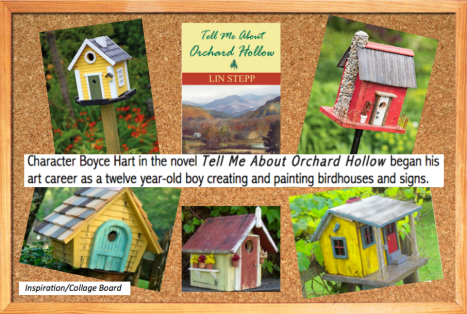
 As I researched and plotted this book, I made many trips to Townsend, on the quiet side of the Smoky Mountains. I revisited favorite places, little shops and stores, and drove down quiet back roads to find the perfect spot for “fictitious” Orchard Hollow Road where Sam Oliver’s cabin and Boyce’s home both lay. I searched through Townsend, too, for just the right place for the complex of businesses that held the Hart Gallery, the Apple Barn, and the Lemon Tree. The map here is an early one I hand-drew when working on my story, and a later similar black-and-white one was created to put in the front of the actual book.
 Boyce also takes Jenna into the beauty of the outdoors for inspiration—and just for fun. He takes her hiking to see and sketch pictures of wildflowers. He points out beauty to her all around. Jenna also begins to see it more for herself. With the book set in the spring, I enjoyed letting Boyce and Jenna hike the Porter’s Creek Trail in Greenbrier, one of our favorite spring trails, to find flowers and to later hike in Cades Cove to the John Oliver cabin.
  Jenna also hikes up the Chestnut Top Trail outside of Townsend, another beautiful spot for wildflowers in the springtime.
 He encouraged my parents to send me to an art college to major in illustration and told me a job would be waiting for me at American Greetings when I graduated. He gave my father his card but my parents did not take the visit seriously, nor did they keep the card. Even when I won scholarships to several art colleges with illustration majors, my parents wouldn’t let me accept them. So I understood many of Jenna’s art frustrations.
 (5) Another of nationally acclaimed artist Jim Gray’s beautiful paintings “Mountain Memories” was chosen for the cover of Orchard and I modeled my little Townsend art Gallery in part after Jim’s lovely gallery in Gatlinburg:
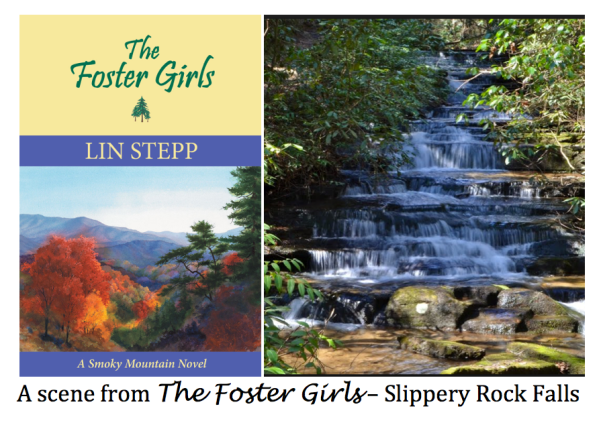
 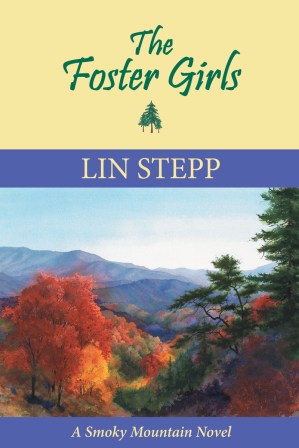 THE FOSTER GIRLS was my first book published in the Smoky Mountain series. In 2008, I signed the book contract, with excitement, for it to become a reality. In April of 2009, THE FOSTER GIRLS published with Parkway Publishing, then an imprint of John F. Blair Publishing. John Blair was a wonderful, reputable old publishing company in Winston-Salem, North Carolina, headed by CEO Carolyn Sakowski, with distribution all around the United States. It was a happy moment to see my first novel in print. All authors hold a special love for their first book published and I am no exception.
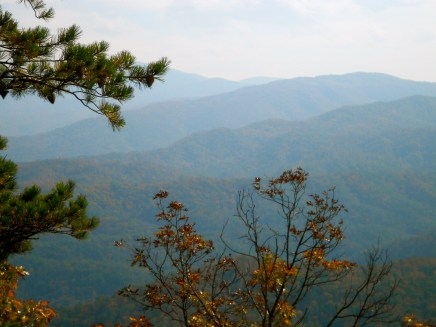 Those words lingered in my thoughts afterward, and one day the idea for THE FOSTER GIRLS, along with several other titles, simply floated into my mind. I was working near the Smokies in Vonore, Tennessee, calling on schools as Huntington Learning Center’s Educational Coordinator—one of my part-time jobs then around my college teaching for Tusculum. After finishing work that day, I raced home and scribbled down my thoughts, already loving the idea of a series of novels with each new story set in a new and different place around the mountains.
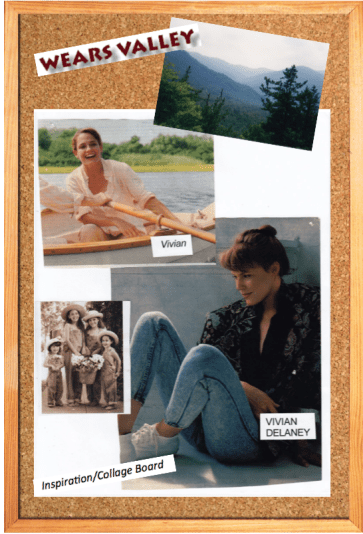 And from the beginning I decided to let Vivian’s reasons at first be a mystery. Why had Vivian Delaney come all the way from California to the Smoky Mountains? Why did she tell her employer early in the book ‘Keep me hidden …’ Hidden from what? For what reasons? Throughout the book I enjoyed letting the reader in on the answers bit by bit as the story progressed. Vivian is a complex character whose background and secrets heavily impact her actions, feelings, and beliefs.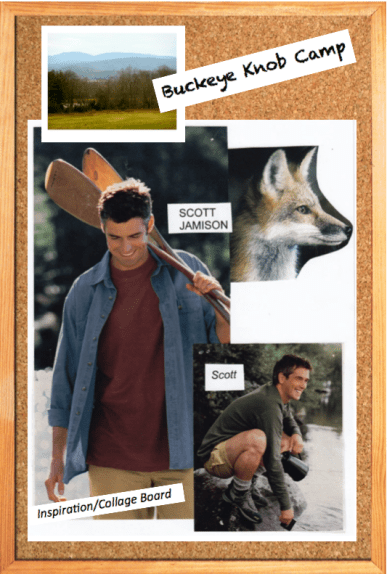
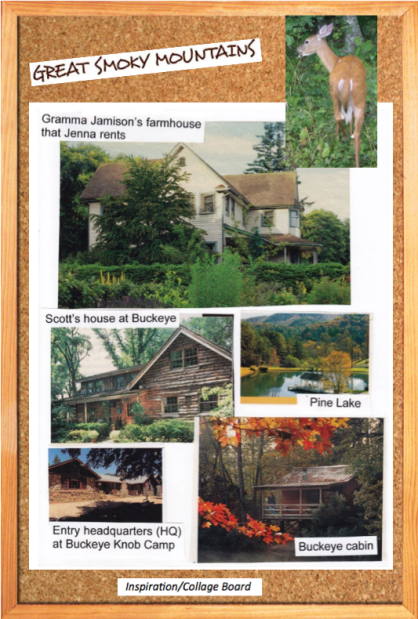
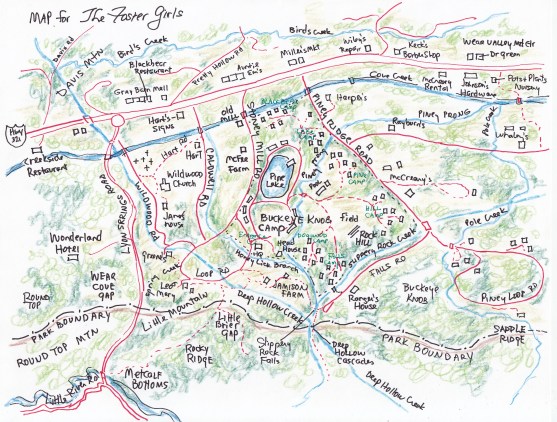
 The more the characters and setting came to life as I planned THE FOSTER GIRLS, the more the ideas for the conflicts and problems in the story began to emerge. These came to me like “light bulbs” popping on sometimes, often unexpectedly while I worked on developing plot and storyline. It’s a fun process. … And eventually I began to lay all these ideas into a structured story outline to follow as I write. For me, a good outline is like a map. It reminds where I’m going, things I want the reader to see, learn, and experience along the journey, right up to the end. Like any good story, I layer in ups and downs, unexpected events and conflicts, little mysteries to unravel, warm moments and memorable scenes, along with a lot of twists and turns to keep the reader involved.
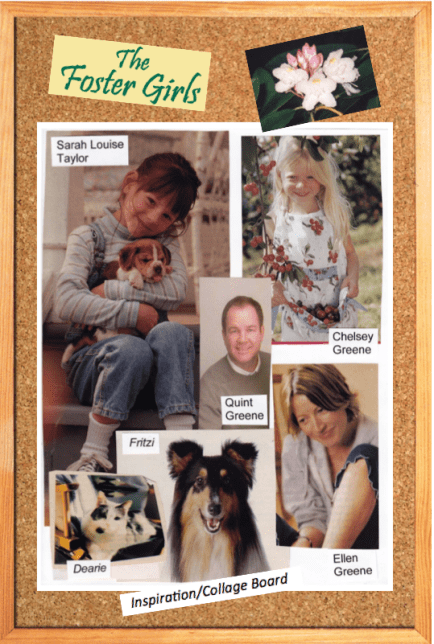 Sarah turned out to be a delightful and important character in the book. She soon worked her way into Vivian’s heart and life—and hopefully into the readers’ hearts, too. She certainly worked her way into my heart. The bond between Vivian and Sarah becomes a major part of the story … And that growing bond ties into a deep conflict between Vivian and Scott before the book ends.
 From my earliest memories, I can vividly recall my mother sitting and writing Christmas letters and notes to tuck into the cards she sent to friends and family every year. She spent days picking out exactly the right card for each one on her list and penning each one a sweet personalized note. In her latter years, when writing so many personal letters by hand became hard, I typed up mother’s Christmas letter and duplicated it for her to put into her cards. But, still, she often added personal messages to each card anyway. Christmas, to my mother, was the time to make personal contact with all those she loved.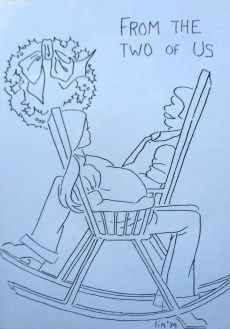
 I drew the happy sleigh on the right many years later—when our family had expanded to four. It shows J.L., Max, Kate, and myself tucked into the seats of the sleigh. Inside this card was a poem I wrote starting with these lines: “Dashing through the year … Where did the months all go? It seems like yesterday, I wrote to you before!” I guess that was my creative writing streak surfacing even then!!…ha,ha.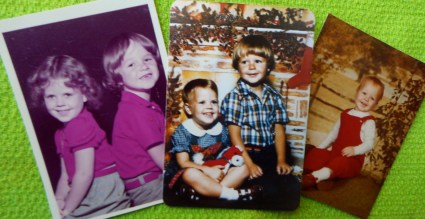
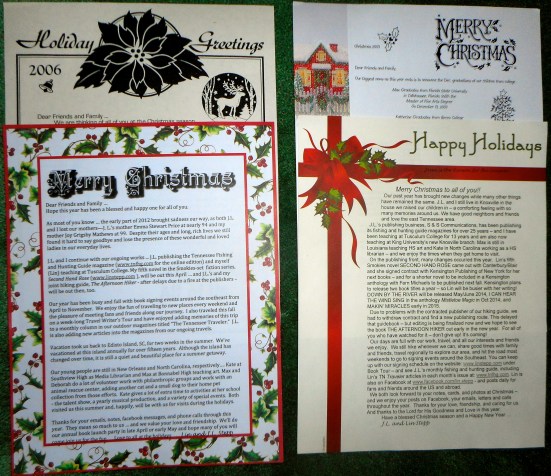
 Christmas letters had become a tradition by then, and loved holiday traditions are hard to leave behind. Becoming more “computer savvy” in those years, I began to create photos cards for the holidays. I tucked these into every Christmas card or sometimes sent them instead of a Christmas card.
 ” Hello December, the last month of the year, …May you all savor holidays full of good cheer! … Hang up your wreaths, decorate your trees,… Address Christmas cards and send one to me!… Wrap up your presents, offer them with love, …And remember all season the Gift from Above.
 Embroidery is the art of decorating fabric with yarn or thread. It’s an old craft dating back to the Third Century BC and examples of embroidery work have been found in practically every culture and social class around the world. In times past, skills in embroidery, sewing, and quilting were more prized—and needed for practical reasons—but at regional arts and crafts fairs, like the one we attended this weekend, you can still see clever and artistic embroidery and needlework displayed.
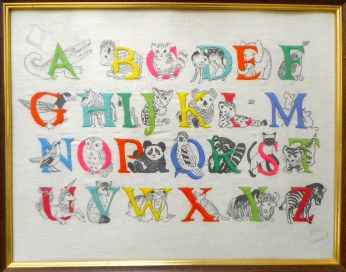 My mother sewed, as did both my grandmothers who also made beautiful quilts, but none of my close family did what my grandmother termed “fancy work.” I can’t remember that anyone taught me to embroider although I learned to do so. I do recall, however, that when mother made her many trips to the fabric store for patterns, thread, and fabrics, I always headed to the sewing crafts section. I loved to study the framed embroidery examples of cross-stitch, crewel, and needlework on the walls. At some point I came home with my first simple cross-stitch kits to try out.
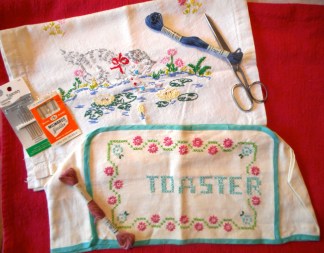 Later, I checked out books about the craft in my local library to learn more about embroidery techniques. Most of the items I made in those early years were given away as gifts, but a few years back—while cleaning out my mother’s sewing after she passed away—I found two samples of my childhood work Mother had saved, a toaster cover and a table runner. I laughed to find them. I doubt anyone would be caught dead with items like these in their homes today, but I couldn’t resist tucking them away in a drawer to keep, just as my mother did.
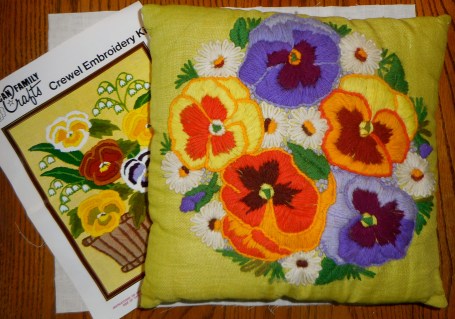 When I married, craft items for the home were much more popular than today. I returned to embroidery then, along with learning other craft skills of the time like tole painting, to make decorative items for my home and to give for gifts. Homemade gift items were lovingly appreciated at that time, cherished and used, and I gave away many embroidered and handcrafted items and framed paintings for holidays.
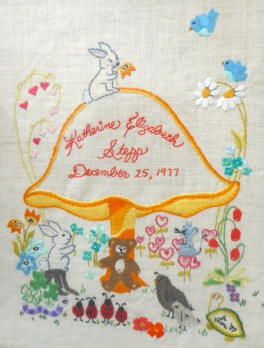 Before both my children were born, in addition to making crib blankets, baby pillows, toys, and some clothes, I stitched an embroidered sampler for each child’s room—one for Max of the ABC’s and one for Kate with her name on it. I’ve kept these for sentimental reasons like I’ve kept the children’s early drawings in their baby books.
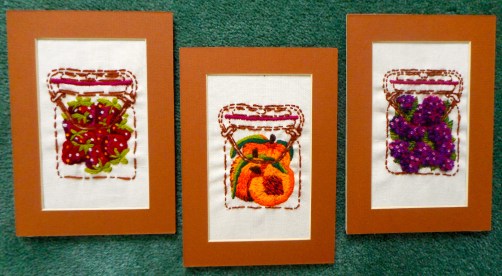
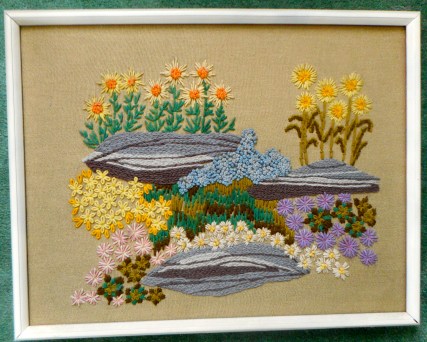 Looking through my old embroidery basket, while working on this blog, I found several items partially begun and unfinished, plus a set of cute kitchen items I worked in crewel, with a lot of French knots, that I always meant to frame. Also in the old basket were colorful embroidery floss and crewel yarn, my old embroidery hoop, linen fabrics, patterns, and a kit for a crewel pillow covered in pretty wildflowers I bought but never began.
 I rarely have time to embroider anymore. Now my artistry skills and creativity go into writing and creating books. But I still admire the skill because I know how much time, talent, and patience it takes. I stood watching a quilter add lavish, detailed embroidery work to a lovely crazy quilt this weekend at the Mountain Makins’ Festival in Morristown, Tennessee. The old itch to pick up a needle resurfaced as I watched. I doubt, however, you’ll see me posting new embroidery pieces on my blog or Facebook pages any time soon … but my guess is you will soon encounter a new book character, skillful with a needle, who adds intricate embroidery work to her crazy quilts and crafts. Perhaps she’ll also make some colorful stitched home items like my old kitchen pieces to sell at arts and crafts festivals near her home.