Wildflowers, uncultivated, grow freely in fields, forests, and meadows without human intervention. The origins of many wildflowers are unknown and they appear to be native plants, varieties differing by regional area. Today many wildflowers can also be intentionally seeded or planted but others still grow wild, spreading and reproducing, and delighting us with their beauty.
Living near the Great Smoky Mountains, I look forward to the wildflowers blooming every year. When J.L. and I were working on our hiking guidebook, we were on the trails often through all seasons, always seeing new flowers along the way. But April was always the prettiest month of the year for enjoying the wildflowers. It’s also in April when the wildflower pilgrimages and wildflower walks around the mountain areas are held. There are more than 1,500 kinds of flowering plants in the Smokies, more than in any other national park, so there are always many varieties and types of wildflowers to discover.
On our hikes and walks in the mountains, we have taken many photos of wildflowers, like the photo of us at the beginning of this post with several varieties of trillium, an early Smokies wildflower. However photographer fans and friends of ours, that we’ve met on the “writer’s road,” take far more spectacular and beautiful photos than we do, so I’ve spotlighted some of their work in this blog post. Raven Pat Smith’s photos above show a glorious white trillium, an early purple violet and wild bluebells. 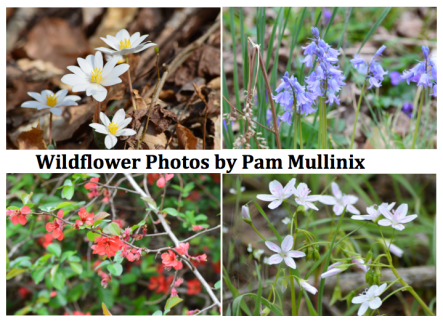 Other early wildflowers in the mountains include white rue anemone, bloodroot, and pink spring beauty as in Pam Mullinix’s photos. Pam’s other shots are of flowering quince and dwarf blue larkspur.
Daffodils, brought to the Smoky Mountains by the settlers, are common in early spring, especially in areas like Cades Cove where many settlers once lived. Dogwood trees were also planted by early settlers and later spread, as did other non-native flowering trees and shrubs. We often discover daffodils, flowering shrubs, and non-native plants around the crumbling walls, foundations, and chimneys of old homesteads—the flowers living on long after the people and farms are gone.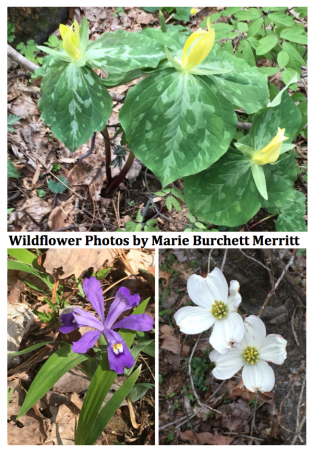 Marie Burchett Merritt’s photos on the right show dogwoods in bloom, yellow trillium, and wild dwarf iris—that I always love spotting on the trail.
J.L. and I have many favorite “Wildflower Trails” we love to return to every April, knowing we will find a wide variety of wildflowers there. One of these is the Chestnut Top Trail near the Townsend Wye where forty species of wildflowers can be found on the first mile alone.
Another trail we love is the Porters Creek Trail in the Greenbrier area where we have seen trillium, blue and yellow violets, and trout lily like in Jim Bennett’s photo. Along the roadsides  and in other park areas you will find purple ironweed and orange butterfly weed, also in Jim’s photos, which the bees and butterflies love. We were delighted to spot our first pink ladies slippers on a quiet side pathway off the Porters Creek Trail, too.
  Another treat in the spring further up the Porters Creek are the white fringed phacelia which spread across the ground like a delightful carpet along both sides of the trailside.
After you explore the mountains trails for many years, you learn where certain flowers can be found most readily … like flame azalea in late April and May on Gregory Bald, mountain laurel on the Smokemont Loop and Chestnut Top Trail in early summer, and later rosebay rhododendron on the Alum Cave and Finley Cane trails. Vibrant pink Catawba rhododendron, like in Kristina Plaas’s photo, grow in the higher elevations like on Andrews Bald or near the Chimney Tops Trailhead. Many wildflowers we simply run into along a trail … stopping to delight in our “finds.” Special wildflowers, always a treat to discover, are white dutchman’s britches, yellow lady’s slippers, and red Indian paintbrush, also in Kristina Plaas’s photo below.
We tried to mention in our hiking guide The Afternoon Hiker trails especially known for wildflowers but flowers in the mountains often show up in unexpected places, and there are flowers of different types to see from early spring into the late fall. But April is still the best time to see the most wildflower varieties in the mountains. If you ever come to the Smokies in April the show of wildflowers will delight you and give you lovely memories to carry home.  But remember that anytime you explore the woods, parks, and fields near your own hometown in the warmer seasons that you will find wildflowers, too. This month, I hope you will head outdoors—and get out of your car and walk up a trail—to enjoy the beauty you will find at every turn.
“Springtime is the land awakening.” [L. Grizzard]…“For, lo, the winter is past, …the flowers appear on the earth.” [Song of Solomon 2:11, KJV]… and “Spring invites us into a fairy land of imagination where flowers bloom with joy, butterflies fly with song, and love dances with love.” [D. Mridha] … Happy Spring and Happy April.
 My new novel LOST INHERITANCE publishes on April 3rd. This is my eleventh novel set around the Smoky Mountains. The short publisher description on the back of the book says: “Set amid the charm of downtown Gatlinburg in the Smoky Mountains, Lin Stepp’s LOST INHERITANCE explores how shattering loss can lead to happiness and gain.” … A fitting description. Main character Emily Lamont learns, as the story begins, that an improperly executed will has cut her out of inheriting the prestigious gallery in downtown Philadelphia where she works. Stunned and with few other options, Emily retreats to a small mountain gallery in Gatlinburg she did inherit—a smaller life by far than she is used to. She hopes for happiness and a new beginning but soon bangs heads with Cooper Garrison, who feels bitter his mother didn’t inherit the gallery instead of her. And so begins this story of two young people life has dealt losses and disappointments to more than once. I hope you will enjoy their story and visiting in the Gatlinburg area of the Smokies.
 I was unaware a will could be overturned on a technicality and remember Jayne’s own disappointment over an inheritance that an aunt and uncle meant to leave her being disbursed to others. I dedicated this book to Jayne, who died a few years ago, much too young. Pictured with Santa in this photo, Jayne—always ready with a good story—will be forever loved and remembered with fondness by her many friends.
 Cooper’s dog Brinkley is a warm-hearted, lovable golden retriever, used to rambles in the outdoors around the mountains. Mercedes was inspired by my fan Lisa Keever’s big gray poodle Sadie Belle and Brinkley by Kensington CEO Steven Zacharius’ golden retriever by the same name. I featured a gallery cat in this book, too, named Sugar Lips, who welcomes guests to the Creekside Gallery on the River Road.
  Sugar Lips belongs to my fan Charlene Povia. Sugar Lips is hardly the head of the welcoming committee when Mercedes arrives at the gallery but they grow used to each other as the book progresses. As Emily explores a neighborhood near the gallery and her apartment, she meets Sara and her little white bichon freise Buster.
  The girls become friends and often walk their dogs together. Buster was inspired by neighbors Ken and Sandra Owens’ two white bishons, Ginger and Tucker. Special thanks to Lisa Keever, Steven Zacharius, Charlene Povia, and Whitney Owen for providing photos of their pets for this blog post.
 We enjoyed looking at the miniature dollhouses, dolls, and furnishings for sale and we sometimes got to watch the owner working on a new house. The shop is empty now but I drove there today to take this photo. It’s still such a cute place, reminding me of good memories—just as Emily is reminded of sweet memories when she sees it again, too.
 The story’s other main character, Cooper Garrison, builds log homes and loves the outdoors. He soon takes Emily on hikes around the mountains … and he and Emily often walk their dogs on the nearby Gatlinburg Trail. This is one of the few trails in the Smokies that allows dogs on the trail. It is popular with locals and visitors for that reason and because the trail winds along the creekside and past remnants of old houses, chimneys, and other relics of the settlers who once lived there.
  The Gatlinburg Trail is an easy trail for any to enjoy while visiting the area, as is the Old Sugarlands Trail nearby, that Cooper and Emily explore in the story another day. Both these trails are ones we have hiked often, so our memories of good times there were fun to create for my scenes in LOST INHERITANCE.
 In April, J.L. and I have another wonderful guidebook coming out—DISCOVERING TENNESSEE STATE PARKS. Over the last two years, we visited all fifty-six state parks and had a fabulous time exploring the beauty and diversity of each. Similar to the format of our previous Smoky Mountains hiking guidebook, we give directions to each park and then a description of interesting things to do and see. Throughout the book are hundreds of color photos to show you sights and delights you can see when you visit.
 It’s only 30-35 minutes north of Knoxville, very accessible from I-75, and a beautiful park to introduce our fans and friends to the fun we had in our explorations. The launch will be held in what used to be the old Snack Bar (Shelter/Pavillion #4) on a grassy hill just above the main parking lot. It’s a large building with two open sides, lovely views, a rustic fireplace, picnic tables, its own restrooms, and even handicapped accessible parking. Naturally, we’re believing for a gorgeous sunny spring day, but even it sprinkles, we’re well under cover.
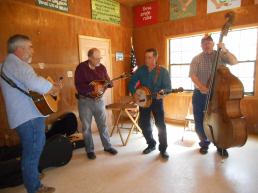 coming to entertain during our launch. The well-known group performs at many festivals and events around the area, and we are so glad they can come to be with us. If you have a couple of lawn chairs—bring those, too, as we have limited seating, and you may want to sit around for a while to enjoy the music and fellowship.
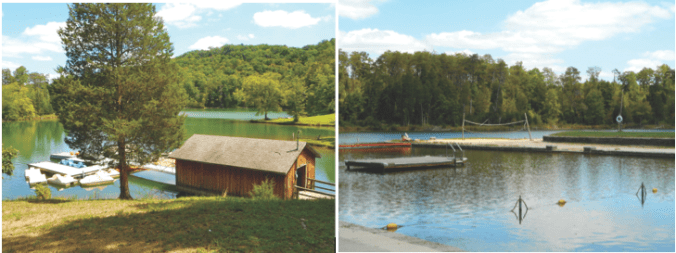 for me was getting to ride horses around the trails and across the dam or staying overnight in one of the park’s rustic cabins.
 I also hold happy memories of watching the older teenagers dance in the old snack bar (where our launch will be) to songs on the jukebox and later of dancing there myself. On the hill above the snack bar, mother’s extended family often gathered for family reunions—and with mother one of twelve children, we always had a crowd.
 landscape will be lush and green with the beginning of Spring and you’ll find wildflowers scattered all around the park. An interesting place you should visit is the old Norton Gristmill, built in 1825, on a finger of the lake. Down the road from the mill you’ll find a group camp to explore and the beginning of a scenic trail along the lakeside, The Lake Trail, one of our favorites in the park.


 No author works in exactly the same way and the creative process varies greatly according to the individuality of the author and the book type or genre. But this is the process I use in working with each of my novels.
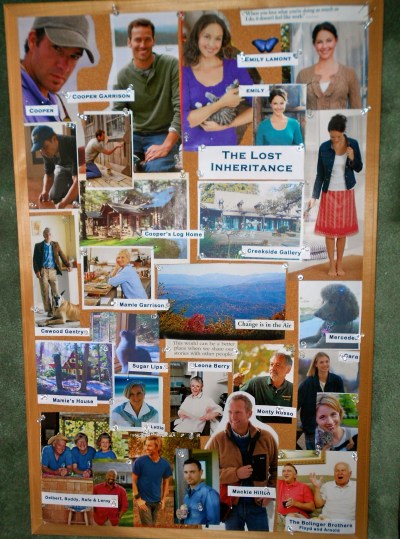
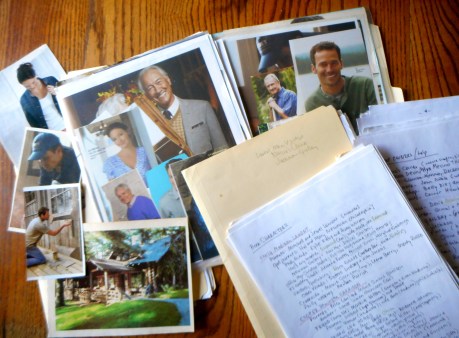 For every book, I develop all my book characters to such depth that I know them like a best friend or close family member. I get into their skin, learn their past hurts and conflicts, how they’ve grown and still need to grow. I “see” my characters in my mind as I think about, plan, and name them. As a highly visual author, I flip through magazines or internet sites to find pictures that look like how I envision each of my characters. These pictures help me solidify and flesh out the characters in my books and bring them to life. Before starting a new book, I choose a selection of pictures and create an inspirational bulletin board to prop near my desktop computer.
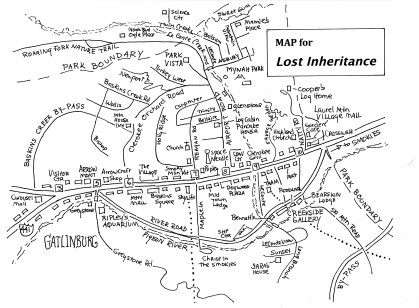
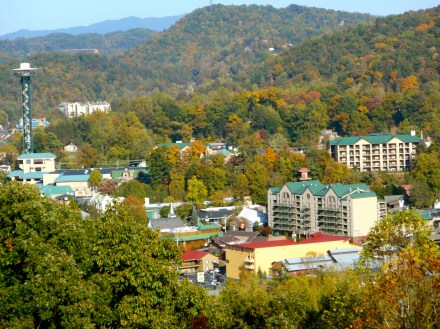 STEP 3 – SETTING: Often I flip back and forth between creating characters and developing setting. I research my settings extensively, studying maps and reading up on area history. I usually collect more information than I can ever use … but it is there and at hand if I need it while writing. My Smoky Mountain novels are all set in different places around the Smokies not far from my home, so I visit each area and “map out” where my book will be set. While there, I rough out my setting maps … plotting actual place names, stores, tourist attractions, and other highlights I might include within my story. Later I draw detailed maps of my story areas, including the black-and-white drawing always used by my publisher in the front of each book.
  The setting in a book is a constant backdrop for the story … and weaving in just the right amount of descriptive content around the ongoing action makes a book come alive for the readers.
 As I move along with the book, I follow my outline and let the story flow and develop as I write. Sometimes the planned pattern I laid out ahead of time follows true; other times there are detours and turns. Generally, as I write, I become a part of the story, the characters, the settings, and the ongoing conflicts. Some days I find writing is simply work while other days I get lost in the writing in a joyous way, termed “flow,” and lose all track of time. These are the best of moments. The most important thing to remember in the writing stage is to keep writing and to keep the story moving.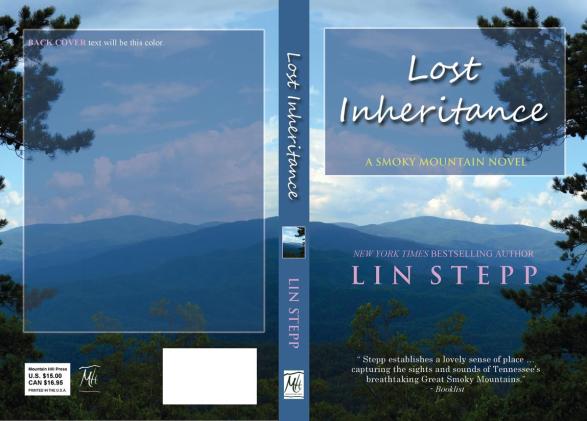
 Beyond the Christmas Story and the true meaning of Christmas—my greatest pleasure in the holidays has always been the Christmas tree. Naturally the gifts from Santa on Christmas morning were exciting as a child … but everything revolved around the tree.
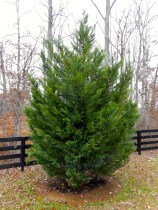 Most all of our early ornaments are gone now, but I still have one or two that survived the years that I treasure like a Santa in his sleigh and a small gingerbread man.

 The children made lots of ornaments, too, most of paper or craft materials that didn’t last the years, except for a few hardy ones, including one the kids called “pipe cleaner man.” Often neighbors and friends gave us handmade ornaments we still have and love, also. Two special ones I cherish have my children Matt and Kate’s names on them.

 Every few years I add a few special ornaments to our collection, like a group of glittery purple sequined balls, recently, and a set of shiny redbirds with feather tails.
 Mary and Joseph among the animals in the stable with the bright star overhead, Jesus born in the manger, the shepherds coming from the fields in awe and wonder, and the wise men traveling from far away to bring their gifts to Jesus. Our Christmas tree also represents the love of our family and the many memories of our past Christmases together. A wise quote says: “The beauty of Christmas lies not just in the date but in the feeling it gives.” [anonymous]
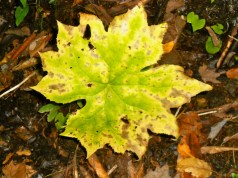 We are blessed in Tennessee to enjoy four distinct seasons, each with its own beauty and character. In fall, it’s a joy to crunch leaves underfoot and look up into the canopy of trees dressed in their autumn colors of russet red, vibrant orange, and rich gold. In winter, the beauty of the bare trunks can be seen and with the leaves gone, vistas out over the mountains are more visible. As spring begins, lovely fresh yellow-green leaves pop out and flowers begin to appear in the neighborhoods and dot the
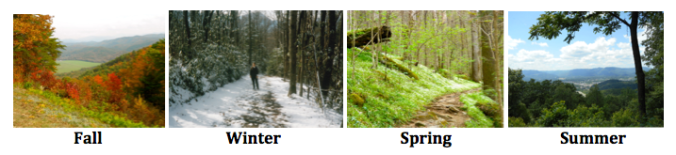 mountain trail-sides. By summer, the neighborhood yards are verdant green, the forests and mountains a rich, lush wonderland of greens, too, with mountain laurel in early summer and later rhododendron, flame azalea, fire pinks and black-eyed Susans.
 It was the time for new clothes, shoes, crayons, notebooks, and school supplies—and shortly after, I looked forward to the annual Tennessee Valley Fair at Chilhowee Park in Knoxville. Before the development of theme parks and entertainment venues like we know today, the Fair was an exciting event, anticipated with eagerness for the colorful rides, carnival atmosphere, shows, cotton candy, corn dogs, and agricultural buildings. J.L. and I still enjoy going to the fair and this photo was taken in one of the agricultural barns filled with prize-seeking chickens, sheep, goats, cows, rabbits and other farm animals.
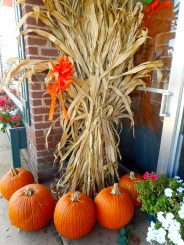 hay bales. As regional authors, J.L. and I travel to many festivals around the Smoky Mountains and Appalachian area.
 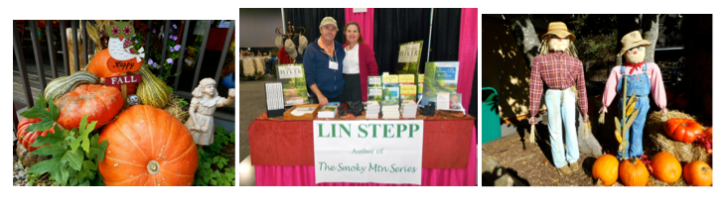 These fun-filled events—like the annual Townsend Festival, Mountaineer Festival in GA, Appalachian Museum Homecoming, and the Mountain Makins Festival, to name only a few—are full of bluegrass music, clogging, storytelling, local artisans and crafters, and fabulous food vendors. The colorful sights and sounds at every turn are always entertaining and reflective of the region, too—its history, culture, and people.
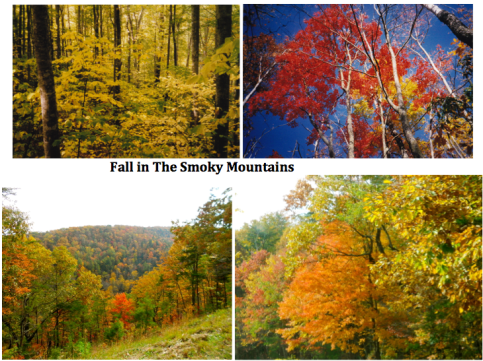 days will trigger nature’s big show of color—usually in late October or early November. East Tennessee and the Smoky Mountains show off then with a gorgeous color display, as if nature is offering a final burst of beauty and a last hurrah before the start of winter’s bleaker season.
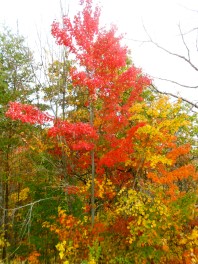 hike. You see the color all around you, feel the nip in the air, hear the trees rustling in the breeze, the birds twittering, watch the squirrels rushing to gather nuts for winter. You can kick up leaves underfoot as you walk or watch them swirl over cascades in the creek like colorful boats racing downstream. Overhead, you see the rich display of reds, oranges, golds, and yellows with color and beauty all around you. Seeing nature at its finest demands getting up close and personal with it, and that’s where my richest memories of fall have been made. So open your senses—and take a little time before the season passes—to make some autumn memories for yourself.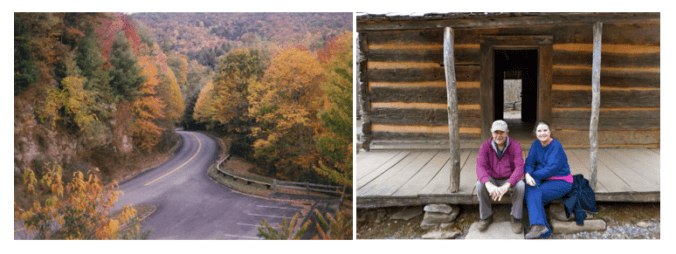
 Lin Stepp