 On September 15th our new guidebook, TRAVELING GEORGIA PARKS, publishes. This is our fifth travel guide, including our Smokies hiking guide and it is our fourth state parks guidebook. Our first, DISCOVERING TENNESSEE STATE PARKS, started our journey of visiting state parks. We learned with that book there was no book about all of Tennessee’s parks written by someone who had visited them, only fill-in journal books or books highlighting a few parks with other content. So, we set out to visit in person every park in Tennessee so we could tell readers about all the fun things to do and see in each park in the state and we included photos from every visit, putting over 700 color photos in our book, too. The book was so successful that we began to get requests to create guidebooks for other states. This resulted in lots of lovely travels around the southeast visiting parks to create EXPLORING SOUTH CAROLINA STATE PARKS and VISITING NORTH CAROLINA STATE PARKS, and then last summer between May and the end of September we traveled all over Georgia to 66 state parks and historic sites for our new Georgia parks’ guidebook.
Tennessee’s state divisions, east, middle, and west Tennessee, were clearly defined, but in Georgia we found a variety of different ways the state’s sections were classified. We best liked the six regions depicted by Georgia’s Department of Natural Resources which seemed to divide the state more equably into six numbered regions that we named: (1) Coastal; (2) Midlands; (3) Southwest; (4) North Mountains; (5) Piedmont; and (6) Blue Ridge. In this blog post, I want to tell you briefly about each region and show you a few photos from parks we especially enjoyed visiting in each region.  So many of our parks throughout America would not be here at all if it weren’t for the vision and work of President Franklin D. Roosevelt for establishing them, and we had a little chance to thank him for that when we visited the F.D. Roosevelt and Warms Springs parks near his Georgia home and found his lifelike statue at Dowdell Knob.
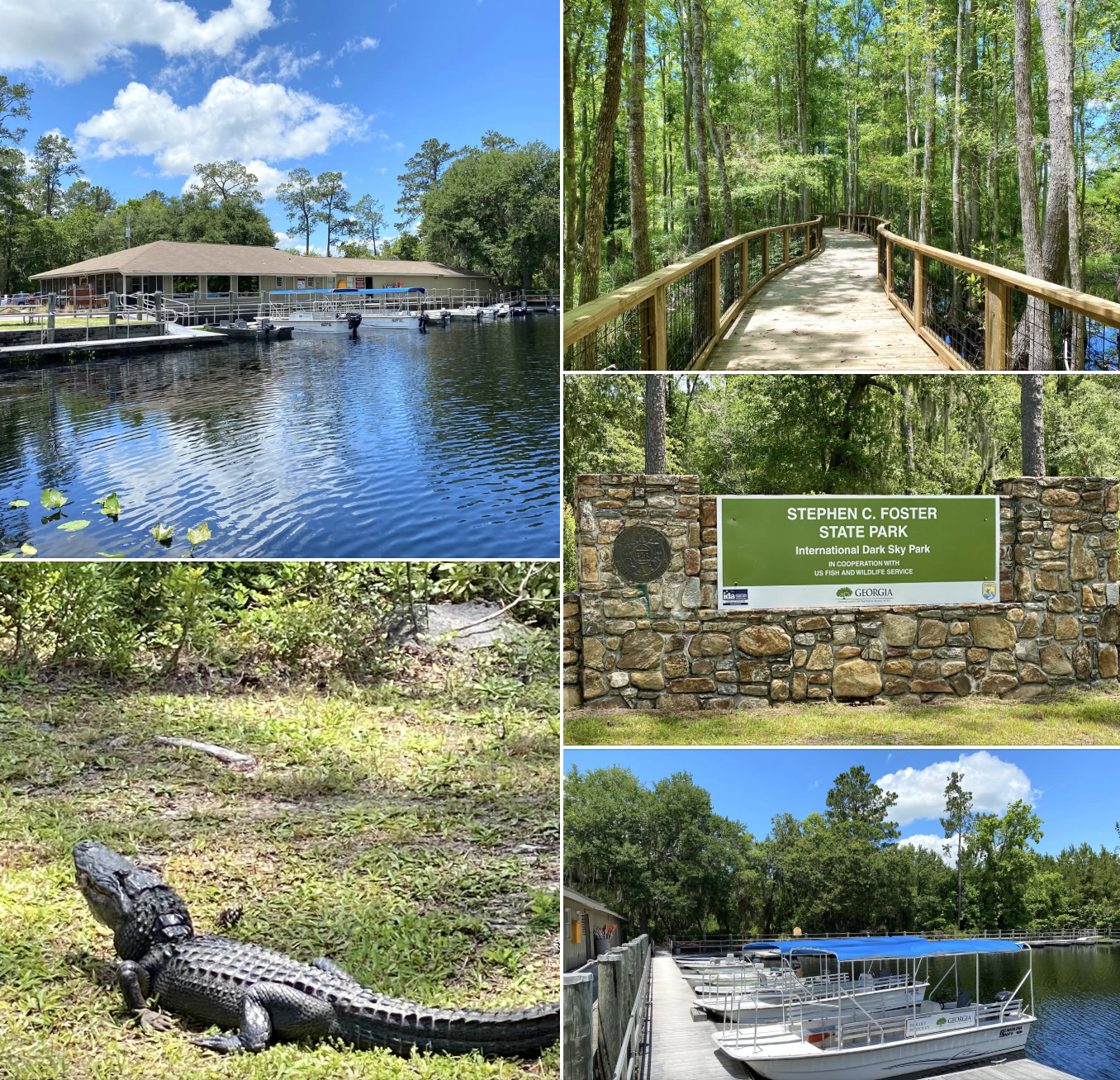 COASTAL GEORGIA covers the region from Savannah down to St. Mary’s near the Florida border and east across part of the southern region of the state. For this area, with the multitude of parks along or near the Atlantic Coast of the state, we rented a condo for a week in early May at St. Simons Island, Georgia, and used that point as home base for our park visits. The first park we visited was Crooked River State Park in St. Mary’s, along a tidal river leading out to the sea, and then we drove back into Florida’s 402,000-acre Okefenokee Swamp to the Stephen S. Foster Park. As you see from the photos, the park was tucked along lake and marshlands with boardwalk trails leading through cypress trees growing out of the water, with rich wildlife, birds, and alligators. Visitors can take boat tours into the swamp, stay at the park’s campgrounds or cabins and visit other areas around this ecologically diverse area. Each day after was a continual adventure as we visited at least two parks a day up the coast or inland, exploring beautiful parks like Skidaway Island State Park, Fort McAllister State Park, and a multitude of historic sites like the Reynolds Mansion on Sapelo Island, Fort Morris and Fort King George.
 MIDLANDS GEORGIA spreads above the coastal region, reaching back into the heart of Georgia. There are less parks here, all more spread out, and we had a chance to travel parts of Georgia we’d never seen, often past miles and miles and miles of pine tree forests. We now know where all the telephone poles of the south come from!! In this region we discovered broad, beautiful parks tucked around scenic lakes like Jack Hill, Little Ocmulgee, and Magnolia Springs built around a historic springs that has bubbled up clear waters from below the earth for thousands of years. A favorite park here was General Coffee State Park because of its diversity. It offered campgrounds, cottages, hiking, an idyllic lake, as well as boardwalks leading back into a cypress swamp and a wonderful Heritage Farm, full of historic log cabins, barns, and farm animals.
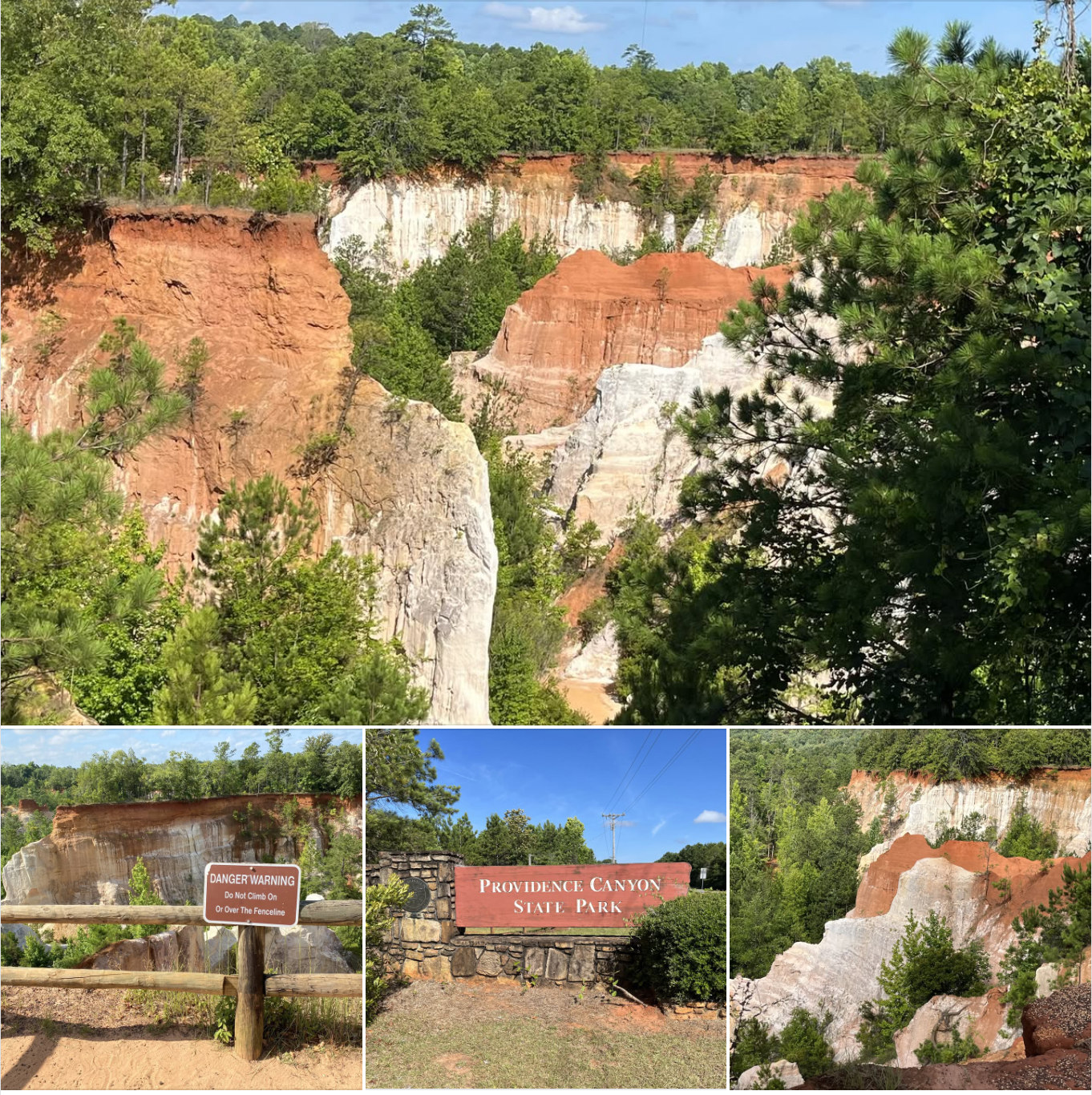 THE SOUTHWEST REGION we visited in summer took us across the state to visit parks from Georgia’s border with Florida, like Seminole State Park, to lovely parks along Lake Eufala on the Alabama border like the George T. Bagby and Florence Marina parks to inland treasures like the huge Georgia Veterans State Park and Resort. Further north we visited parks like the F.D. Roosevelt State Park tucked in the mountains near Callaway Resort, where J.L. and I spent our honeymoon. A favorite park in this region, and certainly an unexpected one, was Providence Canyon. We felt like we were visiting the Grand Canyon out west and this unique park is called the Grand Canyon of the South and is one of Georgia’s Seven Wonders. So don’t miss visiting this one!
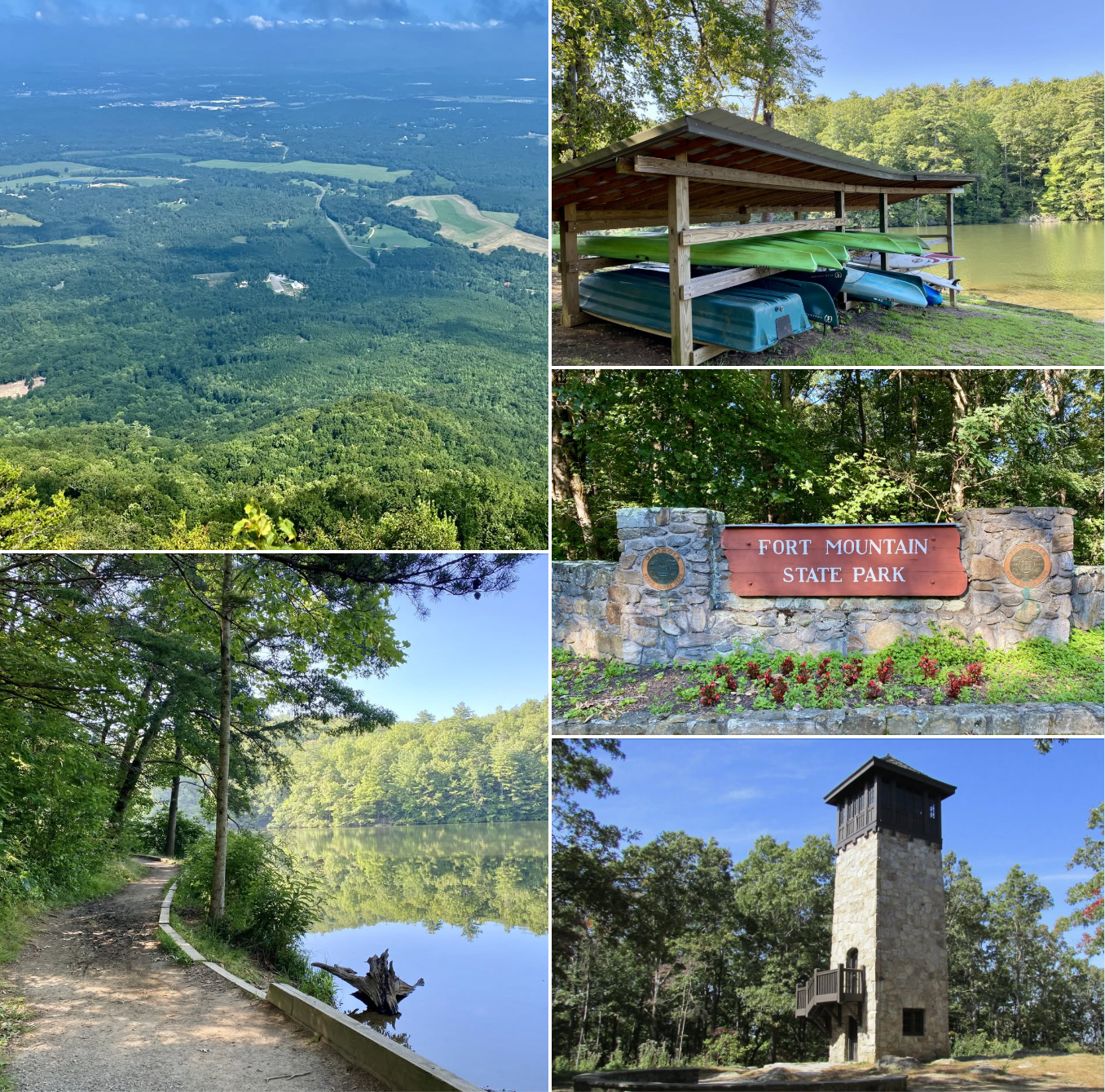 The NORTH MOUNTAINS region lies in the northwest section of the state, bordering Alabama and Tennessee, and it holds a large number of parks with a wide diversity. We visited parks near Atlanta like Sweetwater Creek, Chattahoochie Bend, and Red Top Mountain and others further north like James H. Floyd and the stunning Cloudland Canyon State Park with its fabulous views. A favorite mountain park we had never visited before was Fort Mountain State Park high in the Cohutta Mountains near Chatsworth. It covers over 4000 acres and offers lakeside pleasures, a fine campground, scenic overlooks, and some especially interesting hiking trails rising to excellent views.
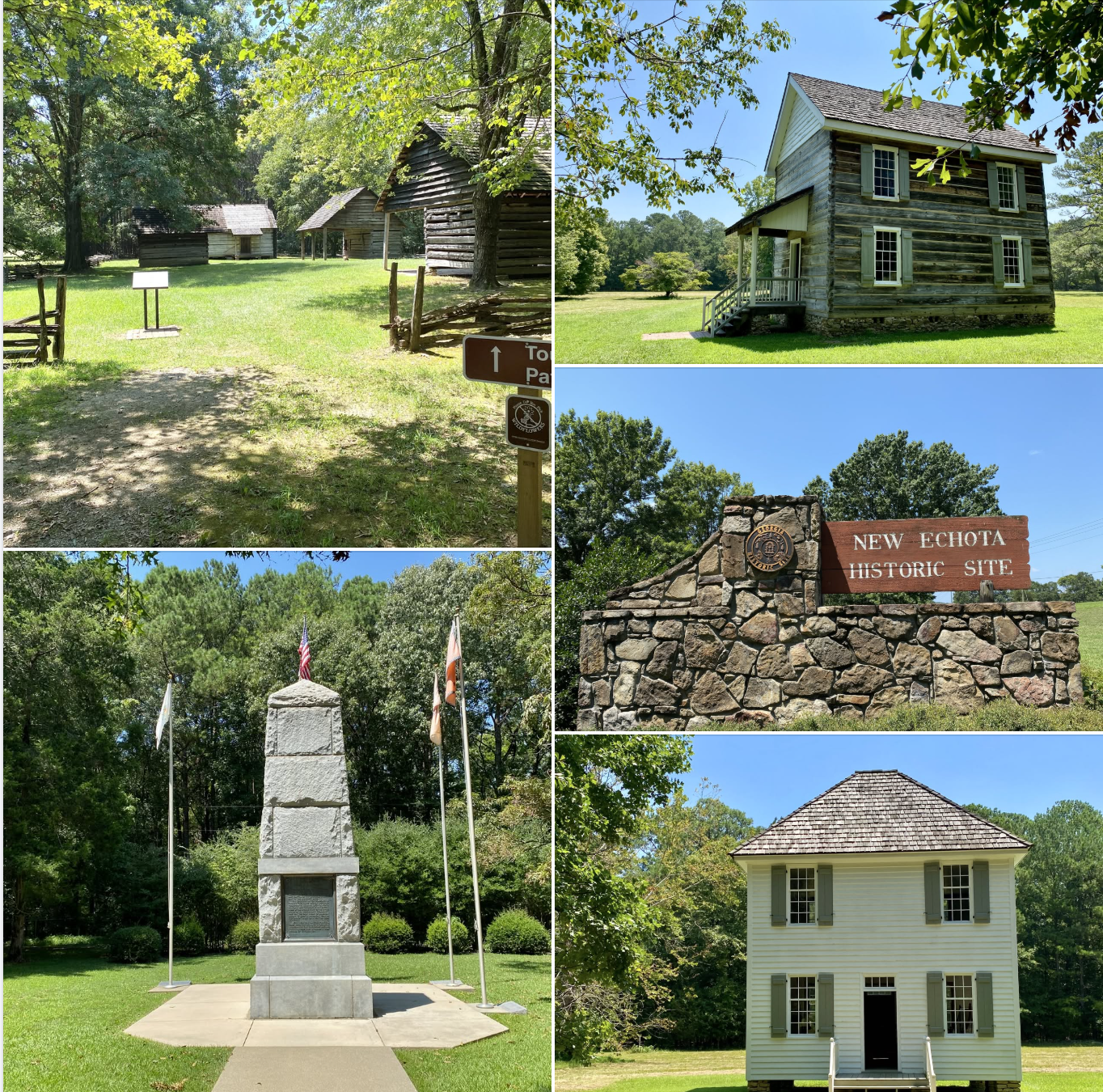 Throughout our parks’ regions, we visited many interesting historic sites, learning so much about American history, Georgia’s own history, and about famous men and women and their accomplishments we hadn’t learned of before. I do hope that as you visit around Georgia, or in the parks in other states, that you’ll take time to see the many sites where the states work hard to preserve our history. One site we especially enjoyed visiting in the North Mountains area was the New Echota State Historic Site in Calhoun, Georgia, easy to get to from I-75 South. New Echota served as the capital of the Cherokee Nation from 1825 to 1838 and visitors can learn so much about Cherokee history here at the museum and in walking around the grounds of the original and reconstructed buildings that held significance to the Cherokee people.
 Georgia’s PIEDMONT REGION, somewhat like the Midlands Region, stretches across a middle area of Georgia from the South Carolina border to areas south of Atlanta. We visited lovely Mistletoe State Park, Hard Labor Creek State Park, and a wide variety of historic parks. Two favorites were Indian Springs State Park and High Falls State Park. Indian Springs was one of the state’s first parks, established around an old natural spring beloved first by the Indians and then by visitors in the Gilded Age. You can visit the spring house, learn about this park’s rich history, and enjoy its fine lake, campgrounds, cottages, and rich amenities. High Falls State Park is only fifteen minutes away, with the highest waterfall south of Georgia, so it is easy to visit both parks in a day.
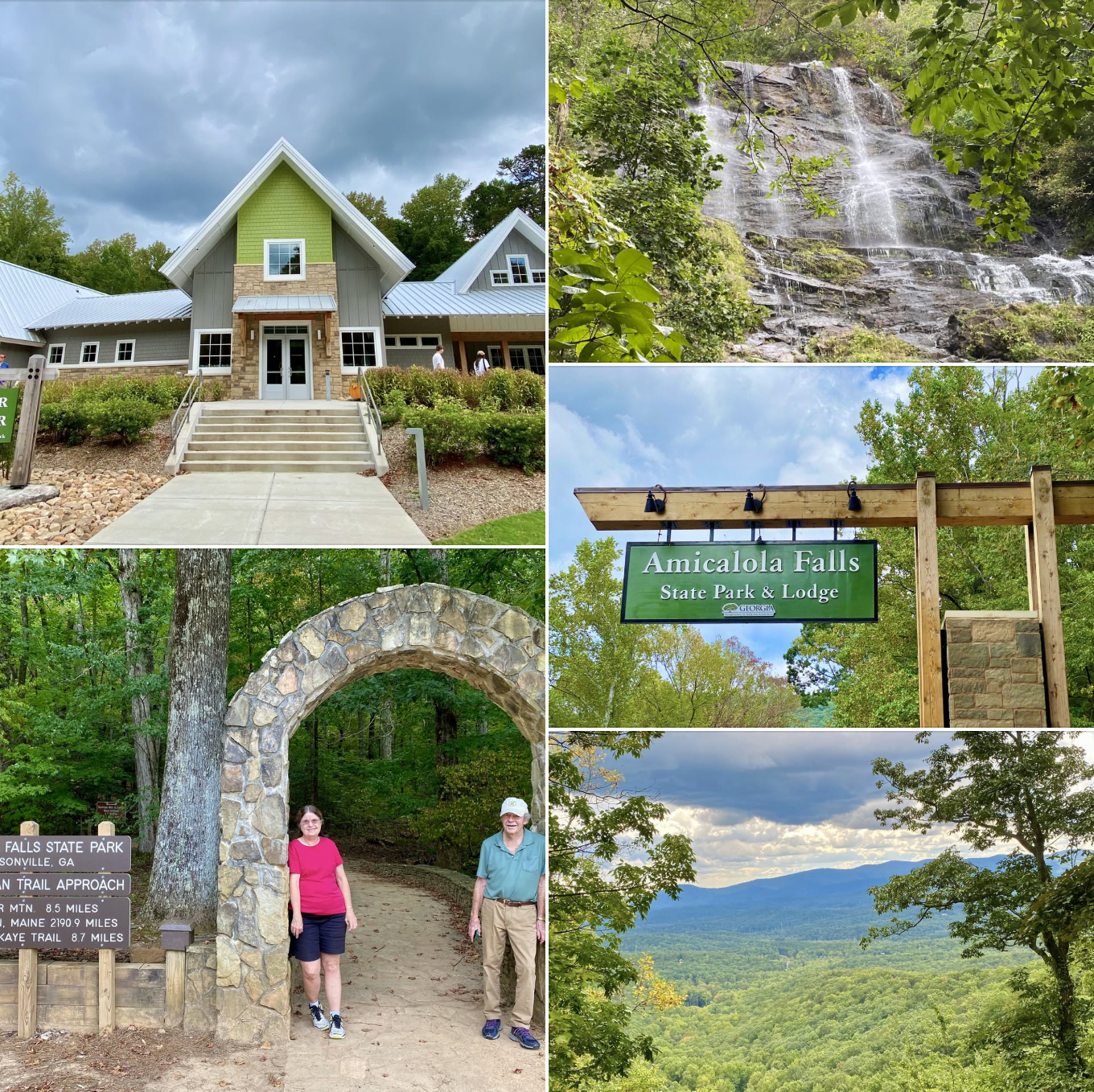 The last Georgia parks region we visited, the BLUE RIDGE REGION took us closer to our home and the familiarity of the mountains. The Blue Ridge Region has more parks than any Georgia state region and it took us two different week-long trips to visit and explore them all. Some of the parks lay near the midlands region like Fort Yargo, Don Carter, and Victoria Bryant while others nestled along South Carolina’s border or near the Tennessee and North Carolina borders. We loved the parks in this area, enjoying visiting Tallulah Gorge State Park again, Black Rock Mountain and Unicoi. Visits took us to many historic sites, too, like to the Dahlonega Gold Museum and Hardman Farm. A special favorite was our visit to Amicalola Falls State Park with its incredible 729-foot waterfall, glorious views and overlooks. The park has a new visitor center rich with displays, and the rock entrance to the Appalachian Trail Advance behind the center, where many begin the long hike 2100.9 miles of the Appalachian Trails from Georgia to Maine, is a popular spot for photos.
 For every park in our Georgia guidebook, we provide clear directions to get to each park, a description of all the interesting and diverse things to do and see in every park, plus we often include a History Note when appropriate to add to your understanding about the history of that particular park, along with our photos. …. I hope you’ll order one of our new Georgia parks books and plan some visits to the state’s diverse variety of parks soon. You can purchase our other guidebooks, as well, through your favorite retailers in-store or online to the states of Tennessee, North Carolina, and South Carolina for more park adventures. J.L. and I hope you’ll enjoy your parks visits to Georgia as much as we did … and if you enjoy these guidebooks, please pop over to Barnes & Noble or Amazon to leave a review and consider buying some extra copies for Christmas gifts.
Enjoy September, click to “follow” this blog, and I’ll see you again at the first of October…. Lin
________________________________________________________________________________________
Note: All photos my own, from royalty free sites, or used only as a part of my author repurposed storyboards shown only for educational and illustrative purposes, acc to the Fair Use Copyright law, Section 107 of the Copyright Act.
 Lin Stepp